Affiliate disclosure: This article contains Amazon affiliate links. As an Amazon Associate, Cat Costs UK earns from qualifying purchases.
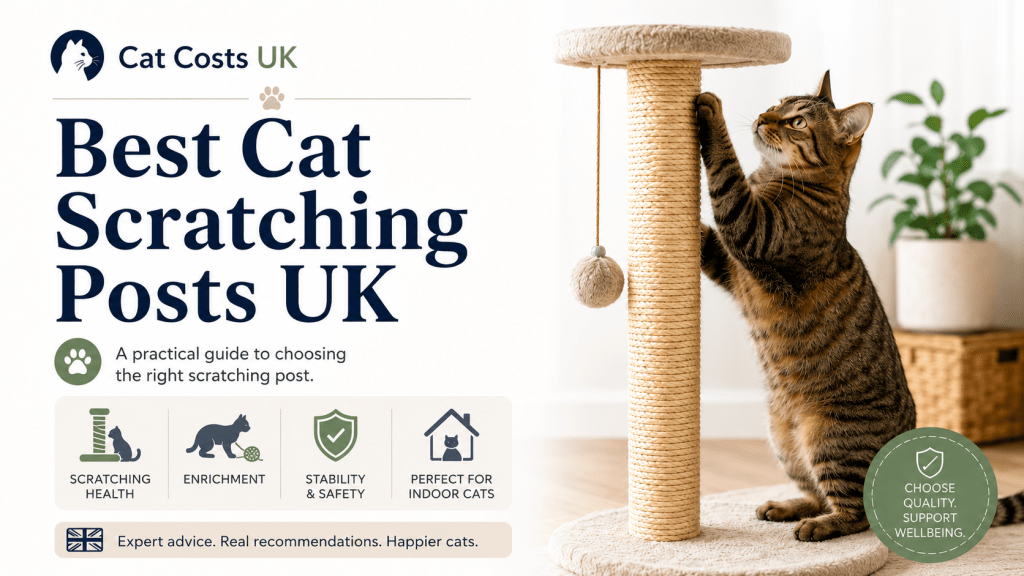
A scratching post is one of the most important cat products you can buy. Scratching is normal cat behaviour, so the goal is not to stop it. The goal is to give your cat something better to scratch than your sofa, carpet or door frame.
The best scratching post depends on how your cat likes to scratch. Some cats stretch upwards on tall posts. Others prefer horizontal cardboard scratchers. Many homes benefit from having more than one type.
For most cats, start with a tall, stable sisal scratching post. It should be high enough for your cat to stretch fully and sturdy enough that it does not wobble when used.
Placement matters. A good post hidden in a spare room may not get used. Put it where your cat already scratches or rests, such as near a sofa, hallway or favourite sleeping area.
Cardboard vs sisal scratchers
Sisal posts tend to last longer and suit cats who like vertical scratching. Cardboard scratchers are usually cheaper and can work well for cats who prefer horizontal scratching. Some cats like both.
What to check before buying
Height for a full stretch.
Stable base that does not wobble.
Scratch material your cat likes.
Whether your cat scratches vertically or horizontally.
Where it will sit in your home.
Replacement cost if it wears out.
My recommendation
Choose a tall sisal post first, then add a cardboard or horizontal scratcher if your cat still targets carpets or furniture. The best setup is usually practical rather than fancy.
Affiliate disclosure: This article contains Amazon affiliate links. As an Amazon Associate, Cat Costs UK earns from qualifying purchases.
Quick buying route
Want to compare cat trees quickly? Start with medium multi-level cat trees, then narrow by heavy-duty options for large cats or taller towers for indoor enrichment.
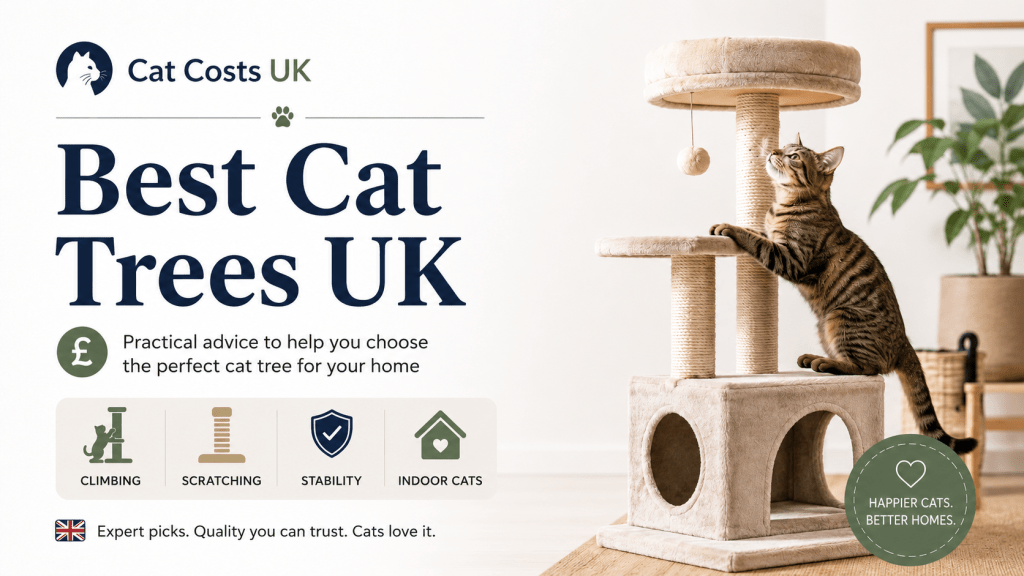
A cat tree can be one of the best purchases for an indoor cat. It gives your cat somewhere to climb, scratch, sleep and watch the room from a higher point. The best cat tree is not always the biggest one. It is the one that fits your space, feels stable, and matches how your cat actually behaves.
If your cat loves height, choose a taller tree with stable platforms. If your cat is older or less agile, a lower tree with easy steps may be safer. For kittens, focus on stability and avoid very high drops.
For most homes, a medium-height multi-level cat tree is the safest starting point. It gives enough height to feel useful without dominating the room. Look for a wide base, secure platforms, scratching posts and at least one comfortable resting spot.
Best cat tree for large cats
Large cats need stronger platforms and a heavier base. Avoid narrow towers that wobble when your cat jumps. Check dimensions carefully and choose a design with larger beds or platforms.
What to check before buying
Stability: a wide base is important.
Height: taller is not always better.
Scratching surfaces: sisal posts are useful.
Platform size: large cats need more space.
Placement: many cats enjoy trees near windows or busy rooms.
Assembly: check whether replacement parts are available.
My recommendation
Buy for your cat’s behaviour, not just the biggest discount. For most homes, a medium multi-level cat tree with strong scratch posts and a wide base is the best first choice.
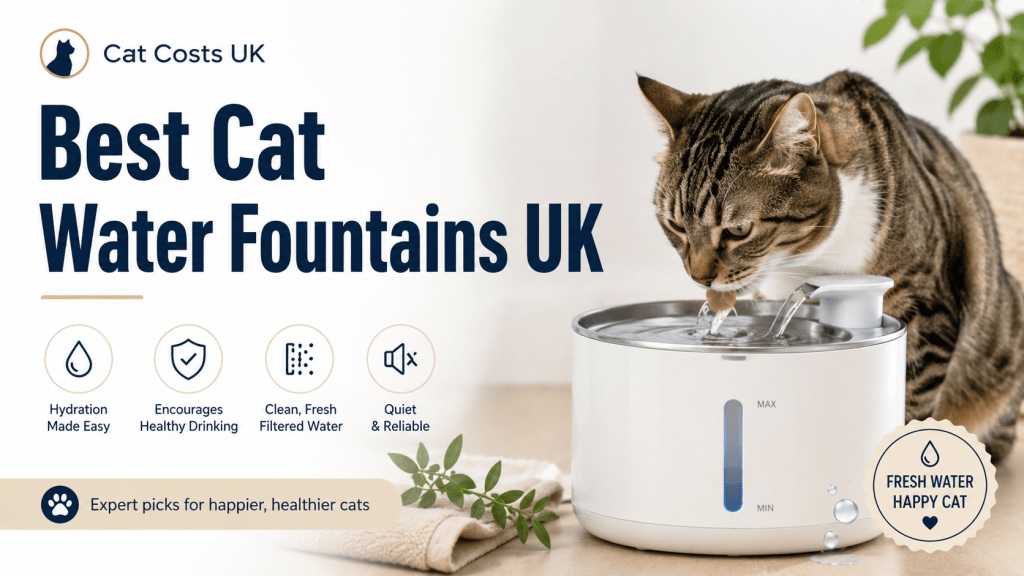
A cat drinking fountain can be useful if your cat prefers moving water, drinks from taps, or ignores a normal bowl. It is not essential for every cat, but it can be a helpful upgrade if you choose one that is quiet, easy to clean and simple to maintain.
The best choice is not always the fanciest model. It is the fountain your cat will use and you will clean regularly.
For most owners, start with an easy-clean fountain with replacement filters that are easy to buy. A design with removable parts and a simple bowl area is usually more practical than a complicated design.
Stainless steel vs plastic
Stainless steel fountains can feel more durable and easier to keep clean. Plastic fountains can be cheaper and lighter, but scratches and awkward corners can make cleaning harder over time.
Choose an easy-clean model first. If you want a more premium option, compare stainless steel models. Only pay extra for smart features if you will actually use refill or filter reminders.
If your cat suddenly drinks much more or much less than usual, contact a vet.
Affiliate disclosure: This article contains Amazon affiliate links. As an Amazon Associate, Cat Costs UK earns from qualifying purchases.
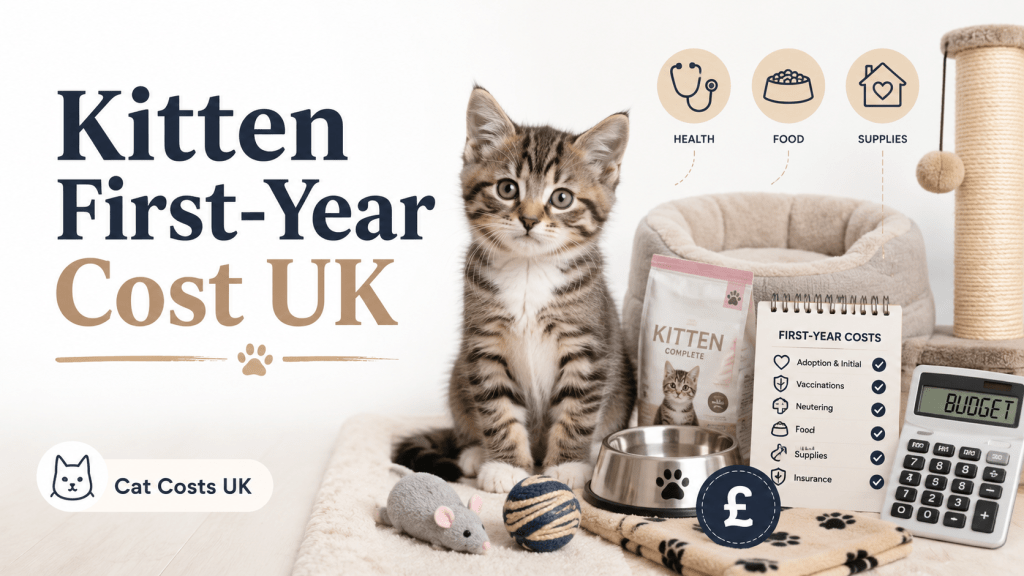
A kitten’s first year is usually more expensive than a normal adult-cat year. You may need to pay for starter equipment, food, litter, routine vet care, insurance and one-off essentials before your monthly costs settle down.
The key is to buy the essentials first and avoid wasting money on products your kitten may ignore. Start practical, then upgrade once you know your kitten’s habits.
The first shop normally includes a carrier, litter tray, litter, bowls, a scratching post, a bed or blanket, toys and grooming basics. You do not need the most expensive version of every item.
For kittens, choose practical products that are safe, easy to clean and not too fragile. Avoid buying a huge cat tree until you have measured your space and know whether your kitten enjoys climbing.
Kitten food is an ongoing cost from day one. If your kitten is already eating a specific food, do not switch suddenly just to save money. A gradual change is usually safer if you decide to move to another food.
Litter can also become a steady monthly cost, especially for indoor kittens. Start with a tray and litter type your kitten will actually use.
Ask the rescue, breeder or previous owner exactly what vet care has already been completed. Depending on your kitten’s age, you may need to budget for vaccinations, microchipping, neutering and routine checks.
Insurance is optional, but it is worth comparing early, before known health problems appear. Always check exclusions, excesses and annual vet fee limits.
What not to overbuy in year one
Expensive beds before you know where your kitten sleeps.
Large cat trees before checking your space.
Too many toys before learning your kitten’s preferences.
Premium gadgets before basic routines are sorted.
Specialist food unless recommended by a vet or rescue.
My recommendation
For the first year, plan for three separate budgets: starter kit, routine monthly costs and vet or insurance costs. This gives you a more realistic view than only looking at the price of the kitten.
Buy the essentials before collection, then add optional products like fountains, automatic feeders and cat trees once you understand your kitten’s behaviour.
Affiliate disclosure: This article contains Amazon affiliate links. As an Amazon Associate, Cat Costs UK earns from qualifying purchases.
The cost of owning a cat in the UK can vary a lot, but a realistic monthly budget should include more than food. You also need to think about litter, insurance or vet savings, routine care, replacement products and one-off starter items.
As a practical starting point, many owners should budget at least around £80 per month for a cat, before unexpected vet bills or premium product choices. Your actual cost may be lower or higher depending on your cat’s age, diet, health, lifestyle and insurance decision.
Indoor cats usually cost more in litter because they rely on trays all the time. Odour control, tracking and dust are often worth paying attention to, especially in smaller homes.
Clumping litter can be easier to scoop. Wood pellet litter may track less. Silica litter can be lighter, but some cats dislike the texture. The best litter is the one your cat uses consistently.
Insurance is optional, but unexpected vet bills can be expensive. If you do not take out insurance, consider building a separate vet savings pot. If you do choose insurance, read the policy wording carefully.
Check annual vet fee limits.
Check excess and co-payment rules.
Check whether dental issues are covered.
Check pre-existing condition exclusions.
Check how premiums may change as your cat ages.
One-off costs to remember
The first month can be much more expensive because you may need a carrier, litter tray, bowls, scratcher, bed, toys, microchipping, neutering or vaccinations depending on your cat’s age and where they come from.
Buy durable essentials instead of replacing cheap items often.
Compare food by cost per day, not just pack price.
Do not switch food suddenly just to save money.
Keep up with routine care to reduce avoidable problems.
Use scratchers and toys to protect furniture and keep indoor cats active.
Avoid buying premium gadgets unless they solve a real problem.
My recommendation
Budget for food, litter, insurance or savings, routine care and replacements. Then treat products like feeders, fountains, cat trees and premium beds as optional upgrades, not essential day-one spending.
If you are getting a cat soon, start with a practical starter kit and avoid overbuying until you know your cat’s preferences.
Useful product guides for controlling cat costs
Some products cost more upfront but can help with daily routines, waste, mess or repeat purchases. Start with essentials first, then compare upgrades once you know your cat’s habits.
Affiliate disclosure: This article contains Amazon affiliate links. As an Amazon Associate, Cat Costs UK earns from qualifying purchases.
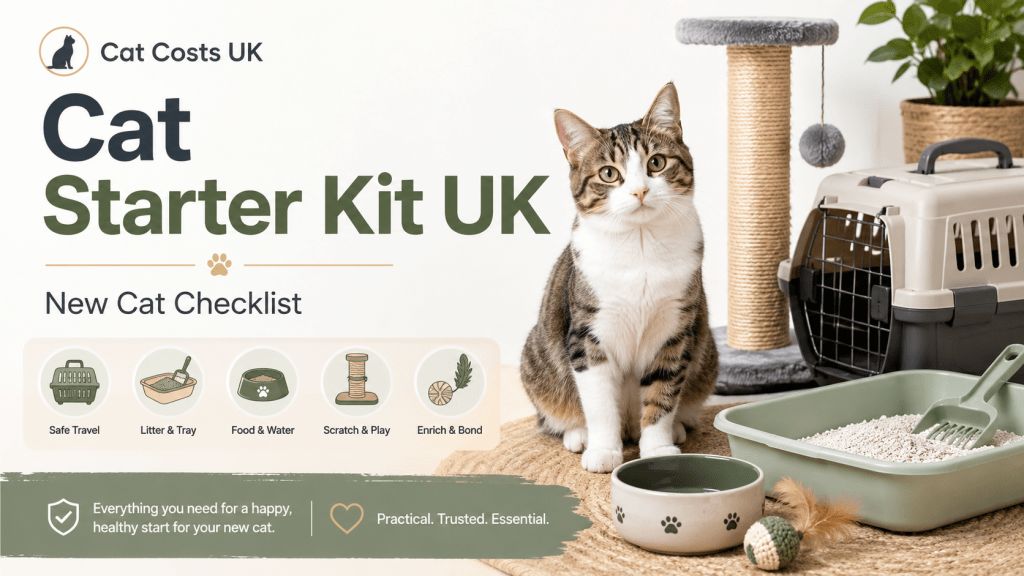
Bringing home a new cat is exciting, but it is easy to overspend on things you do not need yet. A good cat starter kit should cover the essentials first: transport, food, water, litter, scratching, sleeping and a few safe toys.
You do not need to buy every premium cat product on day one. Start with practical basics, then upgrade once you know your cat’s habits.
A cat carrier is essential before your cat comes home. You need it for collection, vet trips and emergencies. For most owners, a rigid or top-opening carrier is more practical than a soft fashion-style bag.
Set up the litter area before your cat arrives. If you are adopting, ask what litter your cat already uses and start with something similar where possible. A sudden change can make settling in harder.
For indoor cats, consider a spare tray, scoop and litter mat. These small extras can make day-to-day cleaning easier.
Choose simple bowls that are easy to wash. Wide, shallow bowls can be more comfortable for some cats than deep narrow bowls. You can always upgrade to a fountain or automatic feeder later.
A scratching post is not optional if you want to protect furniture. Scratching is normal cat behaviour, so give your cat somewhere appropriate to scratch from day one.
Buy a small selection of toys rather than a huge bundle. Wand toys, small balls and soft toys can all work, but cats have individual preferences. A blanket or quiet bed area is also useful while they settle.
Expensive beds before you know where your cat likes to sleep.
Large cat trees before measuring your space.
Specialist diet products unless advised by a vet or rescue.
Too many toys before learning what your cat enjoys.
Automatic feeders or fountains unless they solve a real routine problem.
My recommendation
Prioritise the essentials first: carrier, litter setup, bowls, scratching post and a few toys. Once your cat has settled, you can upgrade based on actual behaviour rather than guessing.
If you want the easiest shopping route, compare the starter items on Amazon, but avoid buying large bundles full of things you may not use.
Use these guides to compare individual starter items before buying. This is usually better than buying a large bundle with products your cat may not use.
Affiliate disclosure: This article contains Amazon affiliate links. As an Amazon Associate, Cat Costs UK earns from qualifying purchases.
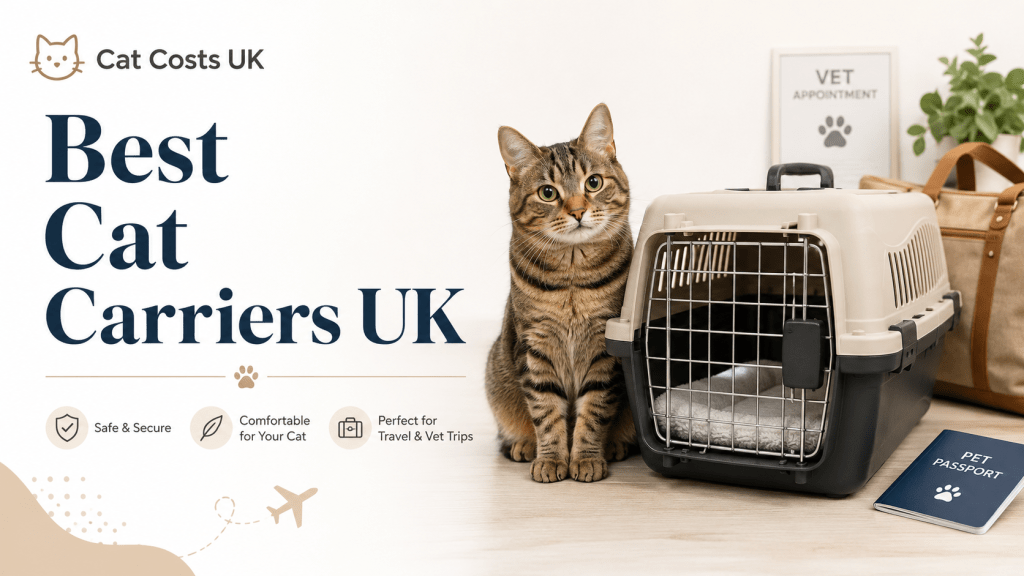
A good cat carrier is not just a nice-to-have. It is one of the first products every cat owner should buy, because you need it for collecting a new cat, vet appointments, moving house and emergencies.
For most UK cat owners, the best choice is a secure rigid carrier with either a front door, a top opening, or both. It should be stable, easy to clean and comfortable enough for short journeys. Soft-sided carriers can be useful for calm cats, but they are not always the best first choice if your cat dislikes travel.
A rigid plastic carrier is usually the safest starting point. It is generally easier to wipe clean than fabric, holds its shape better, and gives your cat a more stable space during vet trips.
Look for a secure door, strong clips, good ventilation and enough room for your cat to sit, turn and lie down. A carrier with both front and top access can be especially useful because it gives you more than one way to place your cat inside.
A top-opening carrier can make life easier if your cat does not like entering through a front door. You can gently lower your cat in from above, and some designs also make vet handling simpler.
Before buying, check that the top opening closes securely. The hinge, clips and lid should feel strong enough for repeated use.
Soft-sided carriers are lighter and easier to store. They can work well for calm cats and short trips, but check the zips, mesh panels, base support and ventilation carefully.
If your cat claws at mesh or pushes against doors, a rigid carrier may be a better first buy.
Size: your cat should be able to sit, turn and lie down.
Security: check doors, zips, locks and clips.
Cleaning: wipe-clean materials are useful after accidents.
Ventilation: your cat should have good airflow.
Access: top opening can make loading easier.
Storage: collapsible designs save space, but stability still matters.
My recommendation
If this is your first cat carrier, choose a rigid or top-opening carrier before buying a soft fashion-style bag. It is the product you will rely on when your cat needs to travel, so safety, cleaning and build quality matter most.
For a large adult cat, check dimensions and maximum weight carefully. For a kitten, avoid going too tiny unless you are happy to replace it later.
For most owners, a rigid plastic carrier with secure fastenings and good ventilation is the best starting point. A top-opening design is especially useful for cats who dislike being guided through a front door.
Are soft cat carriers worth it?
They can be worth it for calm cats and short trips, but they are not always as easy to clean or as sturdy as rigid carriers.
What size cat carrier do I need?
Your cat should be able to sit, turn around and lie down comfortably, while still feeling secure.
Affiliate disclosure: This article contains Amazon affiliate links. As an Amazon Associate, Cat Costs UK earns from qualifying purchases.
Quick buying route
Want to compare feeders quickly? Start with dry-food automatic feeders, then check wet-food feeders or microchip feeders if your cat has more specific needs.
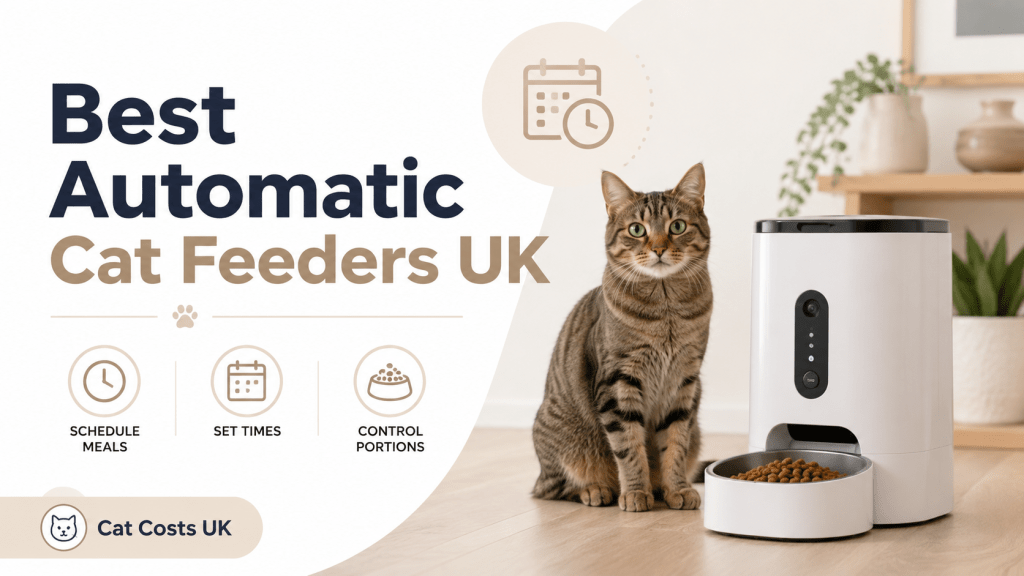
An automatic cat feeder can be one of the most useful cat products you buy, especially if your cat wakes you up early, eats too quickly, needs smaller meals through the day, or you want a more reliable feeding routine.
But the best automatic cat feeder depends on how your cat eats. A dry-food feeder is usually the easiest option. A wet-food feeder needs more care around freshness and cleaning. A microchip feeder is better for multi-cat homes where one cat steals another cat’s food.
This guide keeps things practical. No made-up prices, no fake testing claims, and no pretending one feeder suits every cat. Use the table below to jump to the type that fits your home.
For most cat owners, the best starting point is a programmable dry-food feeder. These feeders store dry food in a hopper and release measured portions at scheduled times.
This type works well if your cat eats kibble, needs a regular routine, or wakes you up early for breakfast. It is also a good option if you want to split food into smaller meals rather than leaving a full bowl out all day.
PETLIBRO is one of the better-known names in smart pet-feeding products, and WIRED has described the brand as strong for high-tech automatic feeders and pet fountains. That does not mean every model is right for every cat, but it is a sensible brand to compare when shopping.
Useful for scheduled meals and early morning feeding.
Can help with portion control if used carefully.
Often available in simple and smart/app-controlled versions.
Check before buying
Whether your cat’s kibble size is suitable.
How many meals it can schedule per day.
Whether it has battery backup.
How easy the food tank and bowl are to clean.
Whether greedy cats can break into the lid.
Best budget automatic cat feeder
If you just want timed dry-food meals, you probably do not need the most expensive smart feeder. A basic automatic feeder can still solve the main problem: releasing food at set times.
Budget feeders are best for straightforward dry-food feeding. They are less ideal if your cat is on wet food, has medical feeding needs, or needs very precise portions.
Wet food is trickier than dry food because freshness matters. If your cat eats wet food, look for a feeder designed specifically for wet meals, usually with covered compartments and ice packs.
The Cat Mate C500-style feeder is one of the common formats to compare. It normally uses rotating compartments rather than a dry-food hopper, which makes more sense for wet food portions.
shorter feeding windows, depending on room temperature and instructions
Watch-outs
Wet-food feeders need proper cleaning after use.
Ice packs do not last forever.
They are not the same as a refrigerated feeder.
You should follow the manufacturer’s food safety instructions.
Best refrigerated wet-food feeder
If your cat eats wet food and you want a more advanced option, a refrigerated wet-food feeder may be worth comparing. PETLIBRO’s Polar feeder has been covered as a refrigerated wet-food feeder using thermoelectric cooling, designed to keep wet food fresh for longer than a standard ice-pack solution.
This is likely to be overkill for some owners, but it may make sense if wet food is your cat’s main diet and you need more flexibility than a basic timed tray.
homes where a basic ice-pack tray feels too limited
cats that do not eat dry food
Best automatic feeder for multi-cat homes
Multi-cat homes are where feeder choice gets more complicated. If both cats eat the same food and do not steal from each other, a dual-bowl automatic feeder may be enough. If one cat steals food, eats a different diet, or needs controlled access, a microchip feeder is usually the better route.
A microchip feeder does not work like a normal timed feeder. It opens only for the matched cat, which can help stop food stealing and protect prescription or weight-control diets.
A smart feeder can be useful if you want app control, feeding logs, reminders or remote scheduling. Some models also include cameras, though that is a nice-to-have rather than a must-have.
Smart features are only worth paying for if the basics are right. The feeder still needs to be reliable, easy to clean, suitable for your cat’s food, and secure enough that your cat cannot break into it.
What to check before buying an automatic cat feeder
Feature
Why it matters
Food type
Dry-food feeders are not suitable for wet food unless the product says so.
Portion control
Important for cats that overeat or need measured meals.
Cleaning
Bowls, trays and food containers should be easy to remove and wash.
Power backup
Battery backup can help if the mains power fails.
Security
Some cats are very good at breaking into weak lids.
Kibble size
Large or awkward-shaped kibble may jam some dry-food feeders.
Noise
Nervous cats may dislike loud motors or sudden dispensing sounds.
Are automatic cat feeders worth it?
An automatic cat feeder is worth it if it solves a real routine problem. The strongest reasons to buy one are early morning feeding, portion control, splitting meals through the day, or managing feeding when you are out for a normal working day.
It is less worth it if your cat eats only wet food and you do not want the cleaning hassle, or if your cat has medical needs that require close monitoring. If your cat has diabetes, weight issues, appetite changes or a prescribed diet, speak to your vet before relying on an automatic feeder.
Can you leave a cat alone with an automatic feeder?
An automatic feeder can help with meals, but it does not replace proper care. Your cat still needs fresh water, a clean litter tray, a safe home environment and regular checks.
For overnight stays or longer periods away, arrange for someone to check your cat. Do not rely on a feeder as the only safety measure.
My recommendation
If your cat eats dry food, start by comparing programmable dry-food feeders from established pet-tech brands and choose one with strong cleaning, backup power and portion features. For most people, that is the best balance of usefulness and value.
If your cat eats wet food, do not buy a normal dry-food hopper. Compare proper wet-food feeders instead, especially Cat Mate-style compartment feeders or refrigerated wet-food feeders.
If you have more than one cat and food stealing is the issue, go straight to microchip feeder options. A normal timed feeder may simply give the greedy cat more opportunities to steal.
For most cats, a programmable dry-food feeder is the best starting point. PETLIBRO-style feeders are worth comparing if you want a known pet-tech brand. Wet-food cats need a wet-food feeder, not a dry-food hopper.
Can automatic cat feeders be used for wet food?
Only if the feeder is designed for wet food. Standard dry-food feeders are usually designed for kibble and should not be used for wet meals unless the product instructions say it is suitable.
Are automatic cat feeders good for portion control?
They can help, especially for dry food, but portion accuracy varies by model and kibble size. If your cat needs a strict diet, check with your vet and monitor portions carefully.
Do automatic feeders stop cats waking you up?
They can help if your cat wakes you for breakfast. Scheduling an early meal may reduce the habit, although some cats still want attention as well as food.
Are smart cat feeders worth the extra money?
Smart feeders are worth it if you will use the app, feeding logs or remote controls. If you only need timed meals, a simpler feeder may be better value.
Sources and notes
WIRED has covered PETLIBRO as a strong pet-tech brand for automatic feeders, fountains and smart pet products.
TIME covered PETLIBRO’s Polar wet-food feeder and its refrigerated approach to wet-food feeding.
Pet health note: if your cat has appetite changes, medical conditions, weight issues or a prescribed diet, speak to your vet before changing feeding routines.
 Cat Costs UK