Tag: new cat owner

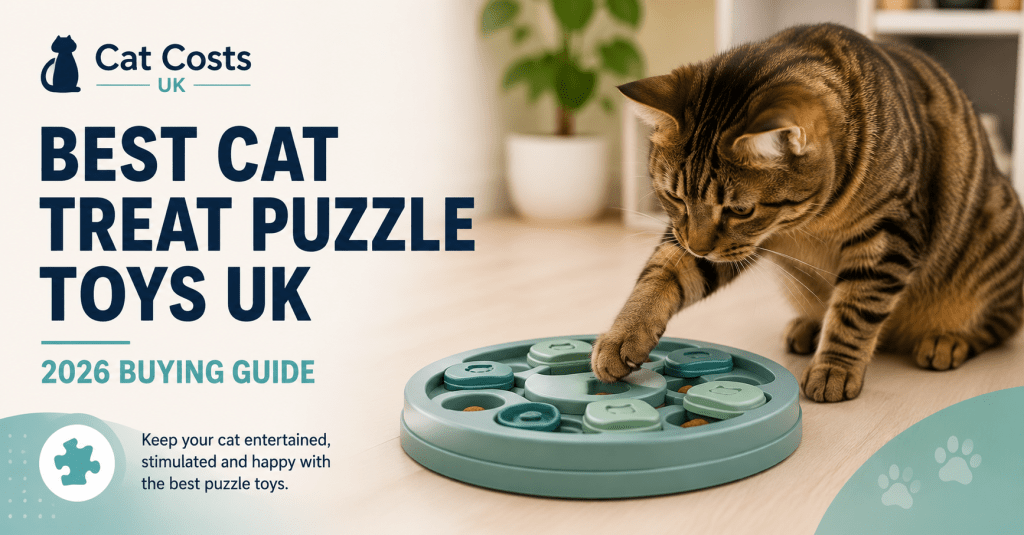
  • Best Cat Treat Puzzle Toys UK: 2026 Buying Guide

    Best Cat Treat Puzzle Toys UK: 2026 Buying Guide

    Affiliate disclosure: This article contains Amazon affiliate links. As an Amazon Associate, Cat Costs UK earns from qualifying purchases.

    Cat treat puzzle toys can be a low-cost way to add enrichment to your cat’s routine. They encourage your cat to work for small rewards, which can be especially useful for indoor cats, food-motivated cats and cats that need more activity at home.

    Best cat treat puzzle toys UK: quick answer

    For most cats, the best first choice is a simple beginner treat puzzle or lick mat. They are usually easier to introduce than complex puzzle boards, easier to clean than some multi-part toys, and a safer starting point before spending more on advanced enrichment toys.

    Quick picks: cat treat puzzle toys UK

    Best forProduct typeWhy it makes senseCompare options
    BeginnersSimple treat puzzleGood first step before buying harder puzzles.Compare beginner treat puzzles
    Wet treatsLick matUseful for paste treats and slower treat time.Compare cat lick mats
    Active catsRolling treat toyAdds movement for cats that enjoy chasing.Compare treat balls
    Indoor catsEnrichment toy setHelps rotate play and feeding activities.Compare cat enrichment toys

    How to choose safely

    This guide compares enrichment toys by practical factors such as difficulty level, cleaning, stability, supervision, food suitability and whether the toy fits your cat’s interest level.

    Unless stated otherwise, products have not been hands-on tested by Cat Costs UK. Always check current product details, safety notes, dimensions, return policies and customer feedback before buying.

    Best for beginners: simple treat puzzles

    A simple treat puzzle is usually the safest first buy. Look for a design with shallow sections, smooth edges and no small loose parts. If the toy is too difficult, many cats simply walk away, so beginner-friendly is usually better than clever-looking.

    Compare beginner cat treat puzzles on Amazon.

    Best for wet treats: cat lick mats

    Lick mats can work well with cat-safe paste treats or wet food. They are useful if you want a simple enrichment product that slows treat time without needing lots of moving pieces. Choose one that is easy to wash and check whether it is suitable for dishwasher cleaning before buying.

    Compare cat lick mats on Amazon.

    Best for active cats: treat balls

    Treat balls can suit cats that enjoy chasing, batting and moving around. They are less ideal for nervous cats or cats that become frustrated quickly. Check that the opening works with the treats you already buy, otherwise the toy may release food too quickly or not at all.

    Compare cat treat balls on Amazon.

    What to check before buying

    • Difficulty: start with an easy toy and increase complexity later.
    • Cleaning: choose simple shapes if you plan to use soft treats or wet food.
    • Stability: avoid toys that slide around too easily or frustrate your cat.
    • Size and parts: small pieces should not come loose.
    • Supervision: watch your cat the first few times they use it.
    • Food suitability: check whether it works with dry treats, kibble, wet food or paste treats.
    • Interest: some cats prefer wand toys, tunnels, scratchers or climbing furniture instead.

    Are cat puzzle toys worth it?

    Cat puzzle toys can be worth it for indoor cats, playful cats and cats that enjoy treat-based games. They are usually a lower-cost enrichment option compared with larger products like cat trees, cat wall shelves or exercise wheels.

    They are less useful if your cat is not food-motivated, gets frustrated quickly, or already prefers interactive play with you. In that case, a wand toy, tunnel, scratching post or window perch may be a better first purchase.

    My recommendation

    Start with a simple treat puzzle or lick mat rather than an expensive advanced puzzle. If your cat enjoys it, rotate different enrichment toys to keep things interesting and avoid relying on one toy every day.

    Related guides

    FAQs

    Are treat puzzle toys good for cats?

    They can be good for enrichment, especially for indoor cats that enjoy treat-based games. Start with an easy puzzle and supervise your cat at first.

    What is the best first puzzle toy for a cat?

    A simple beginner treat puzzle or lick mat is usually the best first option. It lets you see whether your cat enjoys food-based enrichment before buying more complex toys.

    Can cats use dog puzzle toys?

    Some dog puzzle toys may be too large, heavy or difficult for cats. If you use one, check the size, moving parts and treat openings carefully and supervise your cat.

    Last updated: 2 July 2026
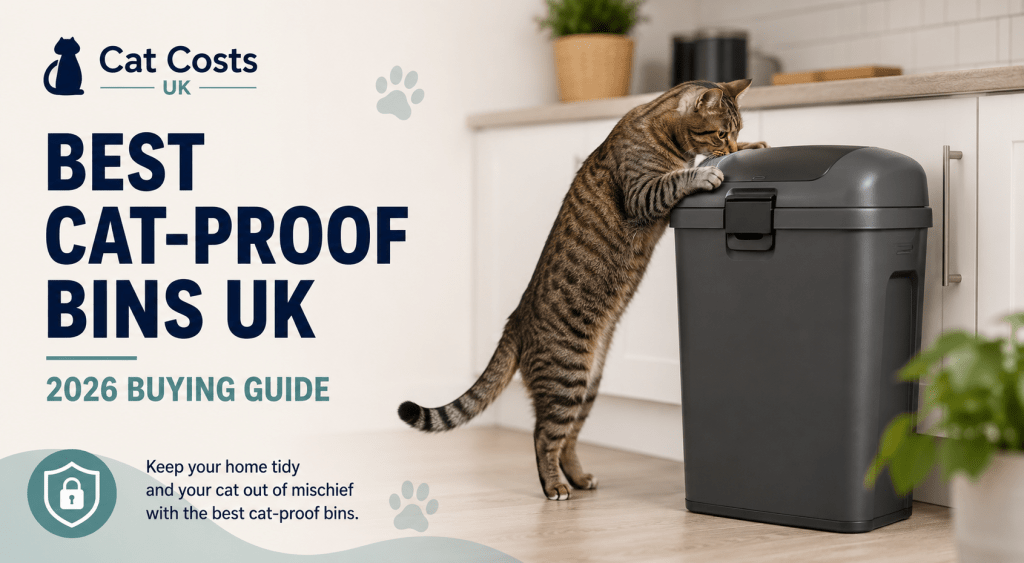
  • Best Cat-Proof Bins UK: 2026 Buying Guide

    Best Cat-Proof Bins UK: 2026 Buying Guide

    Affiliate disclosure: This article contains Amazon affiliate links. As an Amazon Associate, Cat Costs UK earns from qualifying purchases.

    A cat-proof bin can be a surprisingly useful purchase if your cat raids food waste, knocks bins over, chews packaging or plays with rubbish. The best option is usually a stable kitchen bin with a secure lid, easy cleaning and enough weight that your cat cannot tip it over easily.

    Best cat-proof bins UK: quick answer

    For most homes, the best cat-proof bin is a sturdy kitchen bin with a firm, secure lid. If your cat is especially persistent around food waste, a locking kitchen bin or a separate lidded food waste caddy kept out of reach may be a better choice.

    Quick picks: cat-proof bins UK

    Best forBin typeWhy it helpsCompare options
    Most homesSecure-lid kitchen binA sensible first upgrade if your cat lifts loose lids.Compare secure-lid bins
    Food wasteLocking kitchen binBetter for cats that repeatedly get into food packaging or scraps.Compare locking bins
    ConveniencePedal binHands-free, but the lid still needs to close firmly.Compare pedal bins
    Small kitchensSlim lidded binUseful where floor space is limited.Compare slim lidded bins

    How to choose safely

    This guide compares bin types by practical factors such as lid security, stability, cleaning, capacity, placement and whether a standard kitchen bin or locking bin is the better option.

    Unless stated otherwise, products have not been hands-on tested by Cat Costs UK. Always check current product details, dimensions, return policies and customer feedback before buying.

    Best for most homes: secure-lid kitchen bins

    A secure-lid kitchen bin is the best starting point for most cat owners. Look for a lid that closes firmly, a base that feels stable, and a design that does not leave tempting gaps around the top.

    Compare secure-lid kitchen bins on Amazon.

    Best for persistent cats: locking bins

    If your cat keeps getting into food waste, wrappers or packaging, a locking bin may be worth considering. It is usually more useful for determined cats than a basic swing-top bin, which can be easy to push open.

    Compare locking kitchen bins on Amazon.

    Best budget option: moving or separating food waste

    Before buying a new bin, try moving food waste somewhere inaccessible, using a lidded food caddy, or emptying food packaging more often. If the problem is mostly smell-led, changing where food waste is stored may fix the issue without replacing your main kitchen bin.

    Compare lidded food waste caddies on Amazon.

    What to check before buying

    • Lid security: the lid should not lift easily or leave a gap.
    • Stability: avoid lightweight bins that tip over easily.
    • Capacity: smaller bins need emptying more often.
    • Cleaning: removable inner buckets are useful if food packaging leaks.
    • Pedal design: check whether the lid closes firmly after use.
    • Placement: sometimes moving the bin solves the issue.
    • Material: smooth, wipe-clean surfaces are usually easier to manage.

    When a cat-proof bin is worth it

    It is worth considering if your cat repeatedly gets into rubbish, food packaging or waste. It may also help reduce mess and keep harmful scraps, wrappers or string-like packaging away from curious cats.

    If your cat has eaten something from the bin and you are worried, contact a vet rather than relying on a bin change alone.

    My recommendation

    Choose a stable kitchen bin with a firm lid before looking at specialist options. If your cat is persistent, compare locking bins or move food waste somewhere your cat cannot access.

    Related guides

    FAQs

    Why does my cat go in the bin?

    Cats may be attracted by food smells, packaging, texture or curiosity. Some cats also enjoy knocking objects over or exploring noisy materials.

    What type of bin is best for cats?

    A stable bin with a secure lid is usually the best starting point. For very persistent cats, a locking bin or inaccessible food waste caddy may be better.

    Are pedal bins cat-proof?

    Some pedal bins work well, but they are not automatically cat-proof. The lid needs to close firmly and the bin should be heavy enough that your cat cannot tip it over.

    Last updated: 2 July 2026

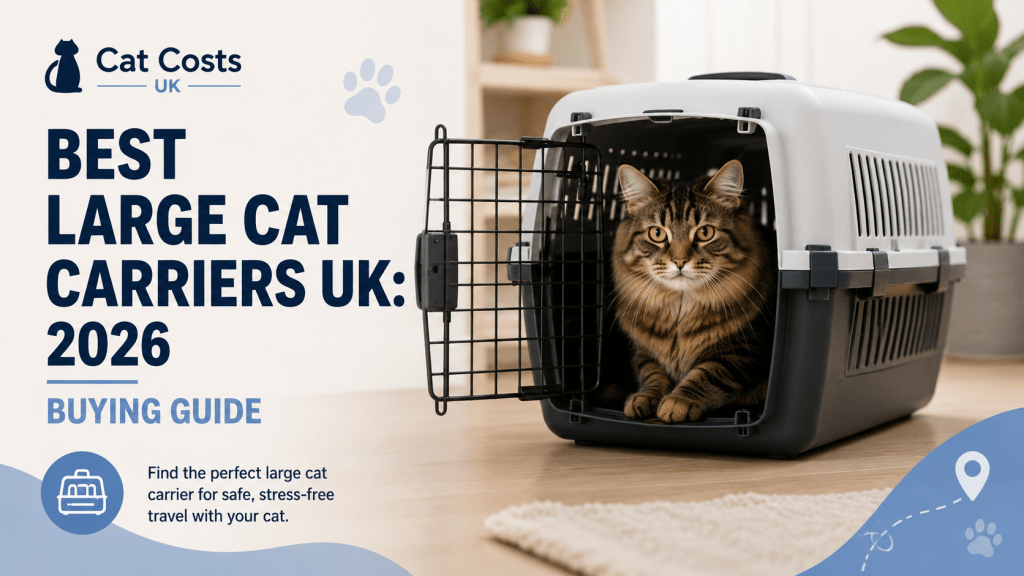
  • Best Large Cat Carriers UK: 2026 Buying Guide

    Best Large Cat Carriers UK: 2026 Buying Guide

    Affiliate disclosure: This article contains Amazon affiliate links. As an Amazon Associate, Cat Costs UK earns from qualifying purchases.

    A large cat carrier is worth considering if your cat feels cramped in a standard carrier, is difficult to load, or needs more room for vet trips and car journeys. The right choice should feel secure, easy to clean and practical to carry, not just bigger.

    Best large cat carriers UK: quick answer

    For most large cats, a rigid, top-opening carrier is the best starting point. It gives better structure than many soft carriers, is usually easier to clean, and the top opening can make vet visits easier for nervous cats.

    Quick picks: large cat carriers UK

    Best forCarrier typeWhy it helpsCompare options
    Most large catsRigid large carrierMore structure and easier cleaning.Compare rigid large carriers
    Nervous catsTop-opening carrierCan make loading and vet handling easier.Compare top-opening carriers
    Short car tripsLarge soft-sided carrierLighter to carry, but check structure and zips.Compare soft-sided carriers
    Vet tripsEasy-clean carrierUseful after accidents or travel stress.Compare easy-clean carriers

    How to choose safely

    This guide compares large cat carriers by practical factors such as internal space, door access, cleaning, ventilation, security, weight, handles and whether the carrier suits your cat’s temperament.

    Unless stated otherwise, products have not been hands-on tested by Cat Costs UK. Always check current product dimensions, maximum weight guidance, lock design, return policies and customer feedback before buying.

    What size carrier does a large cat need?

    A cat carrier should usually give your cat enough room to turn around and sit comfortably, while still feeling secure. Bigger is not always better if the carrier becomes awkward to carry or your cat slides around inside during travel.

    Before buying, measure your cat and compare this with the internal dimensions shown by the retailer. Do not rely only on product names such as large or extra-large, because sizing can vary between brands.

    Best overall: rigid top-opening carriers

    A rigid top-opening carrier is the best all-round option for many large cats. The firm base is useful for heavier cats, the plastic shell is usually easier to clean, and the top opening can make it less stressful to place your cat inside.

    Compare large top-opening cat carriers on Amazon.

    Best for nervous cats: removable-top carriers

    Some carriers allow the top section to be removed. This can be helpful for nervous cats because it may reduce the need to pull them out through a front door at the vet. Check the locking clips carefully before buying, especially for heavier cats.

    Compare removable-top cat carriers on Amazon.

    Best lightweight option: soft-sided large carriers

    Soft-sided carriers can be lighter and easier to store, but they are not always the best choice for strong or anxious cats. Check the base support, zip quality, ventilation panels and whether the carrier keeps its shape when lifted.

    Compare large soft-sided cat carriers on Amazon.

    What to check before buying

    • Internal dimensions: compare measurements with your cat, not just the product title.
    • Maximum weight guidance: check the retailer’s current information.
    • Door access: top-opening designs can be easier for nervous cats.
    • Base strength: the floor should not sag when lifted.
    • Locks and clips: check doors, zips and side clips carefully.
    • Cleaning: rigid plastic is usually easier to wipe down.
    • Carrying comfort: larger carriers can become awkward once your cat is inside.

    My recommendation

    For most larger cats, start by comparing rigid top-opening carriers. Choose a soft-sided carrier only if your cat is calm, the base is supportive, and the zips and structure look secure enough for travel.

    Related guides

    FAQs

    What is the best carrier for a large cat?

    A rigid top-opening carrier is often the best starting point for a large cat because it gives structure, easier cleaning and more flexible access.

    Are soft carriers good for large cats?

    They can work for calm cats and short trips, but check the base support, zips and weight guidance carefully. Some large or anxious cats may be safer in a rigid carrier.

    Should a cat carrier be bigger than the cat?

    It should be big enough for your cat to turn around and sit comfortably, but not so large that it becomes unstable or awkward to carry.

    Last updated: 2 July 2026

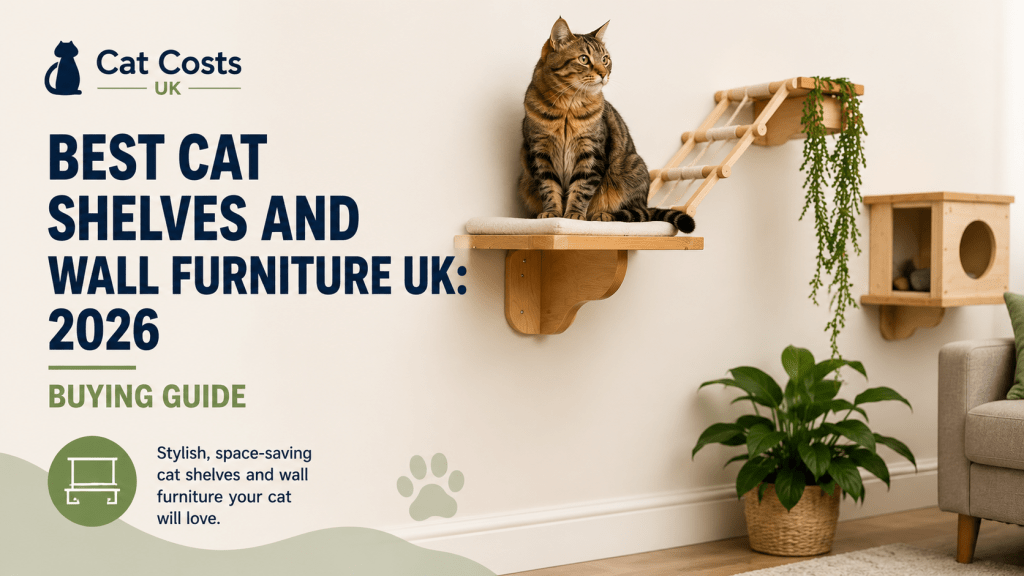
  • Best Cat Shelves and Wall Furniture UK: 2026 Buying Guide

    Best Cat Shelves and Wall Furniture UK: 2026 Buying Guide

    Affiliate disclosure: This article contains Amazon affiliate links. As an Amazon Associate, Cat Costs UK earns from qualifying purchases.

    Cat shelves and wall furniture can help indoor cats climb, perch, scratch and explore without taking up as much floor space as a large cat tree. They can be especially useful in flats, small homes and multi-cat households, but only if they are installed safely.

    Best cat shelves UK: quick answer

    For most homes, the best cat shelves are sturdy wall-mounted platforms with clear weight guidance, secure fixings and a surface your cat can grip. If you rent or do not want to drill into walls, a cat tree or window perch may be a safer alternative.

    Quick picks: cat shelves and wall furniture UK

    Best forProduct typeWhy it helpsCompare options
    Most homesWall-mounted cat shelvesFlexible climbing space without taking up floor area.Compare cat shelves
    Full setupsCat wall furniture setCreates a longer route with shelves, steps and bridges.Compare wall furniture sets
    LoungingWall-mounted cat hammockGives cats a raised resting spot.Compare wall cat hammocks
    RentersCat tree or window perchAvoids drilling into walls.Compare non-wall options

    How to choose safely

    This guide compares wall-mounted cat furniture by practical factors such as weight guidance, wall type, fixings, surface grip, spacing, cleaning, installation and whether it suits your cat’s age and confidence level.

    Unless stated otherwise, products have not been hands-on tested by Cat Costs UK. Always check current product details, dimensions, weight guidance, installation instructions, return policies and customer feedback before buying.

    Best overall: wall-mounted cat shelves

    Wall-mounted cat shelves are the best starting point if you want a simple climbing route. Look for shelves with a grippy surface, clear fitting instructions and enough depth for your cat to land and turn comfortably.

    Compare wall-mounted cat shelves on Amazon.

    Best premium setup: cat wall furniture sets

    A cat wall furniture set can include shelves, steps, bridges, hammocks and scratcher sections. This can be better than buying one shelf at a time if you want a full climbing route, but measure your wall carefully before ordering.

    Compare cat wall furniture sets on Amazon.

    Best for small spaces: vertical climbing routes

    For small rooms, shelves can create vertical space without using much floor area. Place shelves so your cat can move up and down gradually rather than making one large jump. This is especially important for kittens, older cats or less confident cats.

    Important safety checks before buying

    • Wall type: plasterboard, brick and stud walls may need different fixings.
    • Weight guidance: check the retailer’s current maximum weight information.
    • Fixings: use the correct wall plugs and screws for your wall.
    • Spacing: avoid jumps that are too high or too far apart.
    • Grip: smooth shelves may need carpet, sisal or another grippy surface.
    • Escape route: your cat should be able to get down easily.
    • Rental homes: check permission before drilling into walls.

    Cat shelves vs cat trees

    Cat shelves are better if you want to save floor space and create a custom climbing route. Cat trees are better if you do not want to drill, you rent, or you want an easier setup that can be moved around.

    If you are unsure, start with a cat tree or window perch before committing to wall-mounted furniture.

    My recommendation

    Choose cat shelves only if you are confident they can be installed securely on your wall type. For renters, nervous cats or anyone unsure about drilling, a sturdy cat tree or window perch is usually the safer first buy.

    Related guides

    FAQs

    Are cat shelves worth it?

    They can be worth it for indoor cats, confident climbers and small homes, as long as they are installed securely and spaced safely.

    Can I use normal shelves for cats?

    Only if they are strong enough, fixed correctly and have a surface your cat can grip. Purpose-made cat shelves are usually easier to assess because they should include pet-focused weight and fitting guidance.

    Are cat wall shelves good for renters?

    They may not be ideal for renters because they normally require drilling. Check your tenancy agreement or ask permission before installing wall-mounted cat furniture.

    Last updated: 2 July 2026

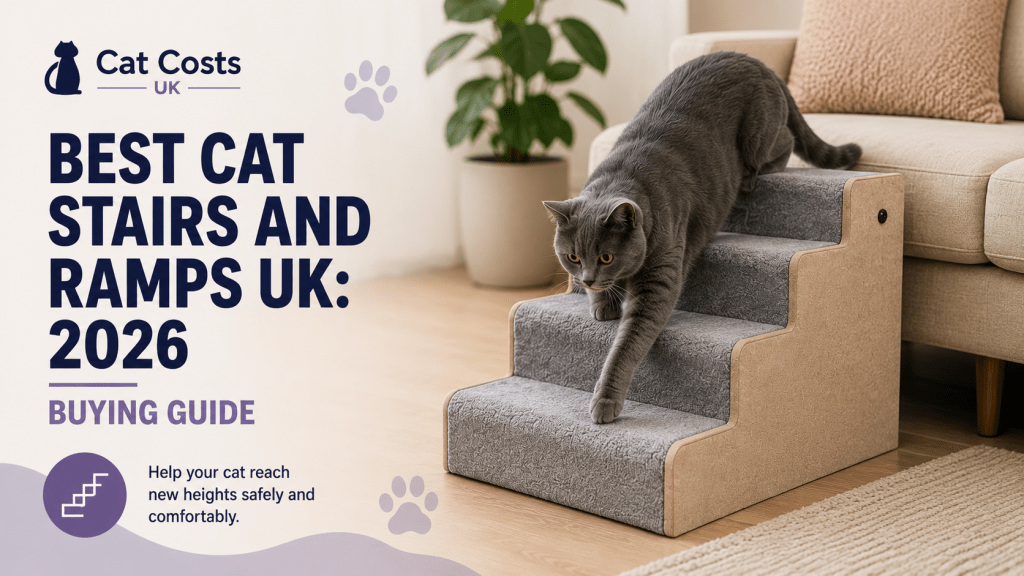
  • Best Cat Stairs and Ramps UK: 2026 Buying Guide

    Best Cat Stairs and Ramps UK: 2026 Buying Guide

    Affiliate disclosure: This article contains Amazon affiliate links. As an Amazon Associate, Cat Costs UK earns from qualifying purchases.

    Cat stairs and ramps can help cats reach beds, sofas, windowsills and other favourite spots more easily. They can be useful for kittens, small cats, older cats and cats that are cautious about jumping, but they should not be used as a substitute for veterinary advice if your cat is suddenly limping or in pain.

    Best cat stairs and ramps UK: quick answer

    For most beds and sofas, soft or carpeted pet stairs are the easiest first option. Cat ramps can be better for cats that dislike steps, but they need enough grip and a gentle enough angle to feel safe.

    Quick picks: cat stairs and ramps UK

    Best forProduct typeWhy it helpsCompare options
    BedsPet stairsSimple access for cats that can manage steps.Compare cat stairs for beds
    SofasSmall pet rampUseful where a ramp angle is not too steep.Compare sofa ramps
    KittensLow pet stepsHelps reduce big jumps while they are small.Compare small pet steps
    Older catsWide, grippy rampMay feel easier than narrow steps for some cats.Compare grippy pet ramps

    How to choose safely

    This guide compares cat stairs and ramps by practical factors such as height, width, grip, stability, step depth, ramp angle, cleaning and whether the product suits your cat’s confidence level.

    Unless stated otherwise, products have not been hands-on tested by Cat Costs UK. Always check current product dimensions, weight guidance, material, return policies and customer feedback before buying.

    Cat stairs vs cat ramps: which is better?

    Cat stairs are usually better for beds and sofas if your cat is comfortable stepping up and down. They take up less floor space than many ramps and are easier to place beside furniture.

    Cat ramps can be better for cats that dislike steps, but the ramp needs to be wide, stable and grippy. A steep ramp can be harder to use than steps, so check the length and angle before buying.

    Best for beds: pet stairs

    Pet stairs are a sensible option if your cat jumps onto the bed but struggles with the height. Look for steps that are wide enough, stable at the base and covered with a surface your cat can grip.

    Compare cat stairs for beds on Amazon.

    Best for sofas: small ramps or low steps

    For sofas, a small ramp or low set of steps is usually enough. The key is stability: if the ramp slides or the steps wobble, your cat may avoid using them.

    Compare pet steps for sofas on Amazon.

    Best for kittens: low, lightweight steps

    Kittens may benefit from lower steps while they are still small, especially if they are climbing onto beds, sofas or window spots. Choose something stable and easy to move rather than a tall staircase designed for larger dogs.

    Compare small pet steps for cats on Amazon.

    Older cats and mobility concerns

    If your cat is older, a ramp or steps may make favourite spots easier to access. However, if your cat has suddenly stopped jumping, seems stiff, cries when moving, limps or appears painful, speak to a vet. A ramp can help access, but it cannot diagnose or treat the reason your cat is struggling.

    What to check before buying

    • Furniture height: measure the bed or sofa before choosing stairs or a ramp.
    • Grip: carpeted or textured surfaces can feel safer than smooth plastic.
    • Stability: avoid anything that wobbles or slides.
    • Step depth: very narrow steps may feel awkward for cats.
    • Ramp angle: a steep ramp may be difficult to use.
    • Cleaning: removable covers are useful for long-term use.
    • Storage: foldable ramps can be useful in smaller homes.

    My recommendation

    For most cats, start with grippy pet stairs for beds or sofas. Choose a ramp if your cat dislikes steps or needs a gentler route, but check that the ramp is not too steep for the furniture height.

    Related guides

    FAQs

    Are stairs or ramps better for cats?

    Stairs are often better for beds and sofas if your cat is confident with steps. Ramps may be better for cats that dislike stepping, but they need good grip and a gentle angle.

    Do older cats need ramps?

    Some older cats benefit from ramps or stairs, but sudden changes in jumping, stiffness or signs of pain should be checked by a vet.

    How do I get my cat to use pet stairs?

    Place the stairs beside a favourite spot, keep them stable, and encourage your cat gradually. Avoid forcing your cat, as this can make them less likely to use them.

    Last updated: 2 July 2026

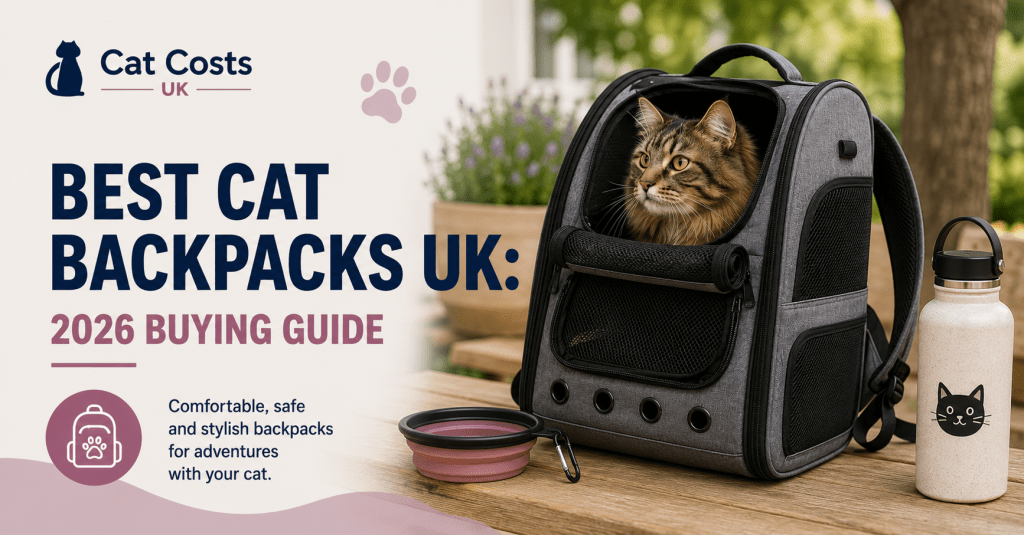
  • Best Cat Backpacks UK: 2026 Buying Guide

    Best Cat Backpacks UK: 2026 Buying Guide

    Affiliate disclosure: This article contains Amazon affiliate links. As an Amazon Associate, Cat Costs UK earns from qualifying purchases.

    Cat backpacks can be useful for short trips, travel and some vet visits, but they are not right for every cat. The best cat backpack should feel secure, well ventilated and comfortable for your cat, not just convenient for you to carry.

    Best cat backpacks UK: quick answer

    For most cats, a well-ventilated expandable cat backpack is the best starting point because it gives more space when you stop. For nervous cats, long journeys or stressful vet visits, a rigid cat carrier may still be the safer option.

    Quick picks: cat backpacks UK

    Best forBackpack typeWhy it helpsCompare options
    Most catsVentilated cat backpackBetter airflow and visibility for short trips.Compare ventilated backpacks
    Travel stopsExpandable cat backpackGives extra space when stationary.Compare expandable backpacks
    Nervous catsRigid carrier alternativeOften more secure and less exposed.Compare secure carriers
    Short walksBackpack with tetherAdds an extra internal safety point.Compare tether backpacks

    How to choose safely

    This guide compares cat backpacks by practical factors such as ventilation, internal space, security, zips, base support, comfort, cleaning and whether a backpack suits your cat’s temperament.

    Unless stated otherwise, products have not been hands-on tested by Cat Costs UK. Always check current product dimensions, maximum weight guidance, safety notes, return policies and customer feedback before buying.

    Best overall: ventilated cat backpacks

    Ventilation is one of the most important features in a cat backpack. Look for mesh panels, airflow openings and enough room for your cat to sit without being pressed against the sides.

    Compare ventilated cat backpacks on Amazon.

    Best premium option: expandable cat backpacks

    Expandable cat backpacks can be useful for travel because they give your cat more space when you are stationary. They are not a replacement for a proper rest area, but they can make short breaks more comfortable.

    Compare expandable cat backpacks on Amazon.

    When a backpack is not the best choice

    A cat backpack may not be right for anxious cats, very large cats, hot days, long journeys or cats that panic in enclosed spaces. In those cases, a rigid carrier with good ventilation and secure doors may be a better option.

    What to check before buying

    • Ventilation: choose mesh panels and airflow openings rather than style alone.
    • Internal space: check dimensions against your cat’s size.
    • Base support: the floor should not sag when lifted.
    • Zips and clips: check security carefully before use.
    • Internal tether: useful, but it should never replace a secure zipped enclosure.
    • Weather: avoid overheating and never leave your cat unattended in a backpack.
    • Temperament: nervous cats may prefer a traditional carrier.

    My recommendation

    Choose a ventilated, expandable backpack only if your cat is calm enough for it and the dimensions suit them. For routine vet trips, a rigid top-opening carrier is often the safer first purchase.

    Related guides

    FAQs

    Are cat backpacks safe?

    They can be safe for some cats when they are well ventilated, secure and used for suitable short trips. They are not ideal for every cat, especially anxious cats or hot weather.

    Are cat backpacks better than carriers?

    Cat backpacks are more convenient to carry, but rigid carriers are often better for nervous cats, vet trips and cats that need more structure and privacy.

    Can I take my cat for a walk in a backpack?

    Some calm cats may tolerate short outings in a backpack, but introduce it gradually and avoid busy, noisy or hot environments.

    Last updated: 2 July 2026

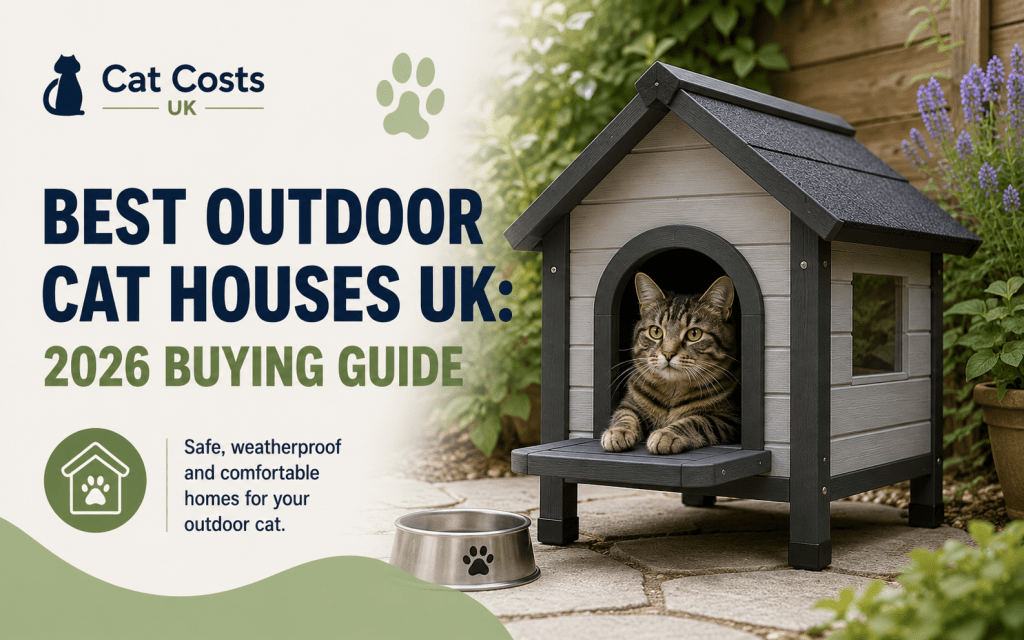
  • Best Outdoor Cat Houses UK: 2026 Buying Guide

    Best Outdoor Cat Houses UK: 2026 Buying Guide

    Affiliate disclosure: This article contains Amazon affiliate links. As an Amazon Associate, Cat Costs UK earns from qualifying purchases.

    An outdoor cat house can give a cat a sheltered garden spot to rest. The best option should be weather-resistant, easy to clean, stable and placed somewhere protected from wind and heavy rain.

    Best outdoor cat houses UK: quick answer

    For most UK gardens, the best outdoor cat house is a weather-resistant shelter with a raised base, sloped roof and protected entrance. Insulated cat houses may be useful in colder months, but the shelter still needs sensible placement and regular checking.

    Quick picks: outdoor cat houses UK

    Best forShelter typeWhy it helpsCompare options
    Most gardensWeather-resistant cat houseA practical basic shelter from rain and wind.Compare weatherproof cat houses
    Colder monthsInsulated cat shelterUsually more suitable than a basic open shelter.Compare insulated shelters
    Covered patiosOutdoor cat shelterWorks best where the area is already protected.Compare outdoor shelters
    Larger catsLarger outdoor cat houseMore room, but check the entrance and cleaning access.Compare large cat houses

    How to choose safely

    This guide compares outdoor cat houses by practical factors such as weather resistance, insulation, size, entrance design, cleaning access, raised bases, placement and whether the shelter suits your garden setup.

    Unless stated otherwise, products have not been hands-on tested by Cat Costs UK. Always check current product dimensions, weather-resistance claims, materials, safety notes, return policies and customer feedback before buying.

    Best overall: weather-resistant outdoor cat houses

    A weather-resistant outdoor cat house is the best starting point for most UK gardens. Look for a raised floor, sloped roof, durable outer material and an entrance that does not face directly into wind or rain.

    Compare weatherproof outdoor cat houses on Amazon.

    Best for colder months: insulated cat houses

    Insulated cat houses are worth comparing if the shelter will be used during colder parts of the year. Check whether the product is designed for outdoor use and whether the inside can be kept dry and clean.

    Compare insulated outdoor cat houses on Amazon.

    Where to place an outdoor cat house

    • Choose a quiet, sheltered spot.
    • Avoid low areas where water collects.
    • Face the entrance away from direct rain where possible.
    • Raise it from the ground if the design allows.
    • Keep it accessible for cleaning and checking.
    • Make sure your cat can enter and leave easily.

    What to check before buying

    • Weather resistance: check whether it is designed for outdoor use.
    • Insulation: useful for colder months, but not the only factor.
    • Raised base: helps reduce damp from the ground.
    • Cleaning access: removable roofs or panels can make maintenance easier.
    • Entrance size: large enough to enter, but not so open that rain blows in easily.
    • Materials: check how wood, plastic or fabric will handle UK weather.
    • Placement: a sheltered location can make a big difference.

    My recommendation

    Choose a raised, weather-resistant outdoor cat house for most gardens. If it will be used in colder months, compare insulated options and place the shelter somewhere protected rather than fully exposed.

    Related guides

    FAQs

    Are outdoor cat houses worth it?

    They can be worth it if you want to provide a sheltered garden resting spot, as long as the shelter is weather-resistant, stable and kept clean.

    Do outdoor cat houses need insulation?

    Insulation is useful in colder months, but the shelter should also be dry, well placed and suitable for outdoor use.

    Where should I put an outdoor cat house?

    Put it somewhere quiet, dry and sheltered from wind and direct rain. Avoid areas where water collects.

    Last updated: 2 July 2026

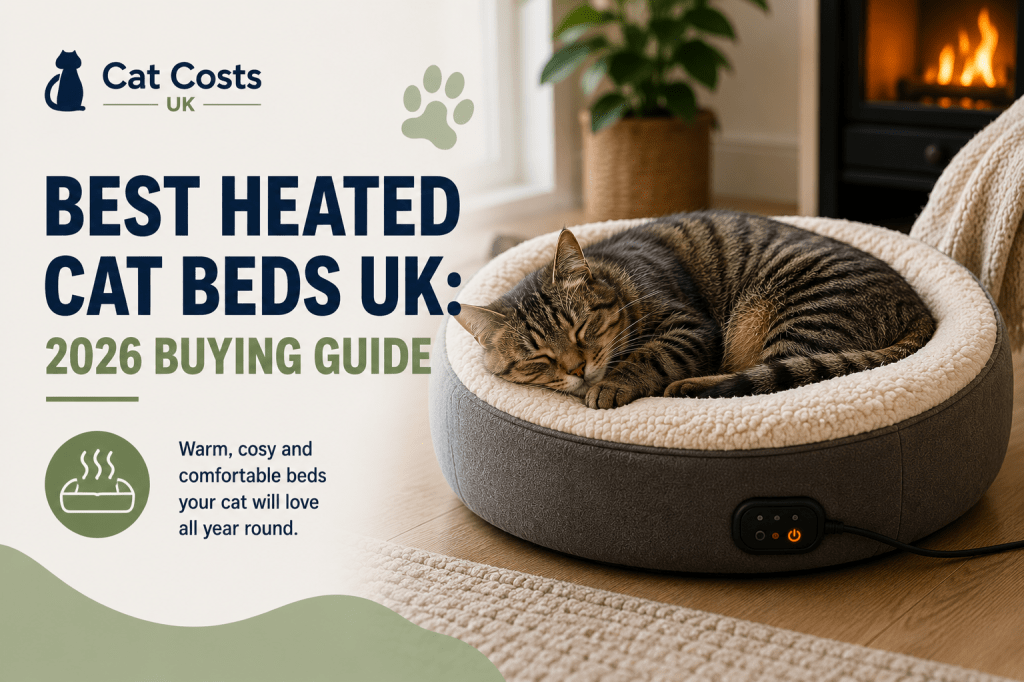
  • Best Heated Cat Beds UK: 2026 Buying Guide

    Best Heated Cat Beds UK: 2026 Buying Guide

    Affiliate disclosure: This article contains Amazon affiliate links. As an Amazon Associate, Cat Costs UK earns from qualifying purchases.

    Heated cat beds can make a cosy resting spot for indoor cats, older cats and cats that naturally seek warm places. The safest choice depends on whether you want a self-warming bed, a low-heat pad or a standard cat bed with extra comfort.

    Best heated cat beds UK: quick answer

    For most homes, a self-warming cat bed is the best first option because it does not need plugging in. Electric heated cat beds and heated pads can be useful, but you should check safety instructions, cable protection, temperature control and whether your cat can move away easily.

    Quick picks: heated cat beds UK

    Best forBed typeWhy it helpsCompare options
    Most catsSelf-warming cat bedCosy without cables or plugs.Compare self-warming beds
    Extra warmthHeated cat padUseful if used exactly as instructed.Compare heated pads
    Older catsLow-entry cosy bedEasier to step into than high-sided beds.Compare low-entry beds
    Outdoor sheltersOutdoor-rated heat padOnly consider products designed for that use.Compare outdoor-rated pads

    How to choose safely

    This guide compares heated and self-warming cat beds by practical factors such as safety instructions, warmth type, cleaning, cable protection, size, entry height, material and whether your cat can leave the warm area freely.

    Unless stated otherwise, products have not been hands-on tested by Cat Costs UK. Always check current product instructions, safety information, dimensions, return policies and customer feedback before buying.

    Best overall: self-warming cat beds

    Self-warming cat beds are a sensible first choice because they use reflective materials rather than electricity. They are usually easier to place around the home and avoid the cable concerns that come with plug-in options.

    Compare self-warming cat beds on Amazon.

    Best for extra warmth: heated cat pads

    Heated cat pads can be useful if you want a warmer resting area, but they need more care. Check whether the pad has temperature control, chew-resistant cable protection and clear instructions for safe use.

    Compare heated cat pads on Amazon.

    Important safety checks

    • Instructions: follow the manufacturer’s current guidance.
    • Cables: avoid exposed cables if your cat chews.
    • Temperature: check whether the product has heat control or a safe low-heat design.
    • Escape space: your cat should be able to move away from the warm area.
    • Cleaning: check whether covers are removable and washable.
    • Outdoor use: only use products specifically designed for outdoor use.
    • Health concerns: speak to a vet if your cat seems painful, unusually cold, lethargic or unwell.

    My recommendation

    Start with a self-warming cat bed for simple indoor comfort. Consider an electric heated pad only if you are comfortable with the safety checks and your cat can move away from the heat whenever they want.

    Related guides

    FAQs

    Are heated cat beds safe?

    They can be safe when used exactly as instructed, but self-warming beds are often a simpler first choice because they do not need electricity.

    Are self-warming cat beds worth it?

    They can be worth it for cats that like warm resting spots, especially if you want a cosy option without cables or plugs.

    Can older cats use heated beds?

    Some older cats may enjoy warmer beds, but speak to a vet if your cat has pain, mobility changes or health concerns.

    Last updated: 2 July 2026

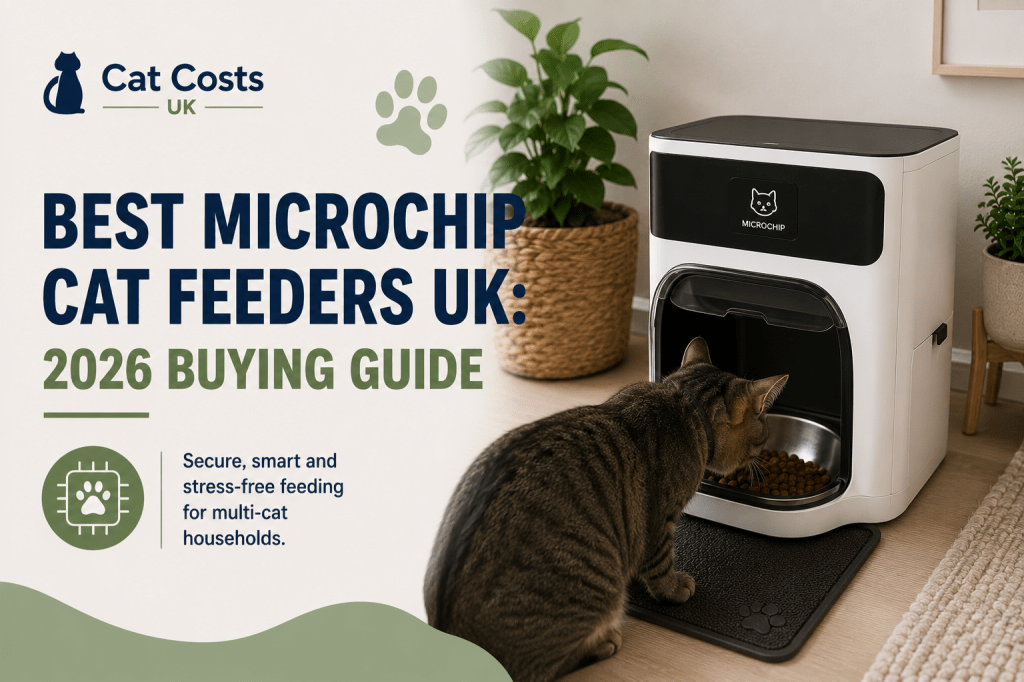
  • Best Microchip Cat Feeders UK: 2026 Buying Guide

    Best Microchip Cat Feeders UK: 2026 Buying Guide

    Affiliate disclosure: This article contains Amazon affiliate links. As an Amazon Associate, Cat Costs UK earns from qualifying purchases.

    A microchip cat feeder can be worth it if one cat steals another cat’s food, you have a multi-cat household, or you need to keep wet food covered between meals. They are usually more expensive than standard bowls, so it is worth checking the features carefully before buying.

    Best microchip cat feeders UK: quick answer

    For most multi-cat homes, the best microchip cat feeder is one that reads your cat’s existing microchip, has a sealed lid, is easy to clean and can also work with collar tags if needed. If you only need timed meals, an automatic cat feeder may be cheaper.

    Quick picks: microchip cat feeders UK

    Best forFeeder typeWhy it helpsCompare options
    Multi-cat homesMicrochip feederHelps stop one cat eating another cat’s food.Compare microchip feeders
    Wet foodSealed microchip feederKeeps food covered between visits.Compare sealed feeders
    Routine feedingAutomatic cat feederMay be cheaper if selective access is not needed.Compare automatic feeders
    Manual budget optionRaised cat bowlCheaper, but no selective access.Compare raised bowls

    How to choose safely

    This guide compares microchip cat feeders by practical factors such as chip compatibility, collar tag options, lid speed, cleaning, bowl size, wet food use, batteries, noise and whether it solves the problem you actually have.

    Unless stated otherwise, products have not been hands-on tested by Cat Costs UK. Always check current product details, compatibility, dimensions, warranty, return policies and customer feedback before buying.

    Best overall: microchip cat feeders for multi-cat homes

    A microchip feeder is most useful when one cat eats another cat’s food. It can help if cats are on different diets, one cat grazes slowly, or you want to reduce food stealing without separating bowls into different rooms.

    Compare microchip cat feeders on Amazon.

    Best for wet food: sealed feeders

    If your cat eats wet food slowly, a sealed feeder can help keep food covered between visits. Check how easy the bowl and lid are to clean, and whether replacement bowls or mats are available.

    Compare sealed wet food feeders on Amazon.

    Microchip feeder vs automatic feeder

    Choose a microchip feeder if the main problem is selective access: one cat should be able to eat while another should not. Choose an automatic feeder if the main problem is timing meals while you are out.

    If you need both selective access and timed feeding, check product details carefully, as many feeders only solve one of those problems.

    What to check before buying

    • Microchip compatibility: check the feeder works with your cat’s chip type.
    • Collar tag option: useful if chip reading is unreliable.
    • Lid speed: nervous cats may dislike fast or noisy lids.
    • Cleaning: wet food feeders need easy-to-remove bowls.
    • Power: check battery type and expected battery life.
    • Space: some feeders take up more room than a normal bowl.
    • Training: your cat may need gradual introduction.

    My recommendation

    Buy a microchip feeder only if you need selective access. If your main issue is feeding times, compare automatic cat feeders first because they may be cheaper and simpler.

    Related guides

    FAQs

    Are microchip cat feeders worth it?

    They can be worth it in multi-cat homes where one cat steals food or cats need separate diets. They are less necessary if you only need timed feeding.

    Do microchip feeders work with all cats?

    Not always. Check chip compatibility and whether the feeder can also use collar tags. Some cats also need time to get used to the lid movement.

    Can microchip feeders be used for wet food?

    Many can be used for wet food, but check the bowl design, cleaning instructions and how well the lid covers the food between visits.

    Last updated: 2 July 2026

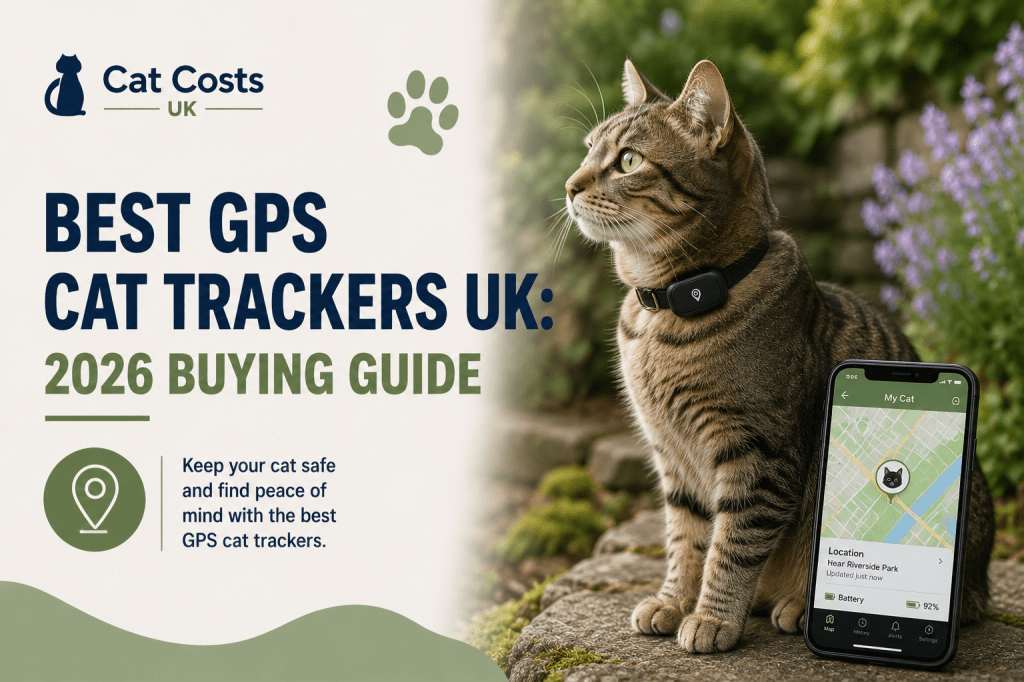
  • Best GPS Cat Trackers UK: 2026 Buying Guide

    Best GPS Cat Trackers UK: 2026 Buying Guide

    Affiliate disclosure: This article contains Amazon affiliate links. As an Amazon Associate, Cat Costs UK earns from qualifying purchases.

    A GPS cat tracker can help you understand where your cat goes and may make it easier to find them if they are missing nearby. The best choice depends on whether you want live tracking, location history, a lighter Bluetooth tag, or a lower-cost option without an ongoing subscription.

    Best GPS cat trackers UK: quick answer

    For most outdoor cats, a dedicated GPS cat tracker is the best option if you want live location features, but many require a subscription. Bluetooth tags are usually cheaper and lighter, but they are not the same as GPS and have shorter range.

    Quick picks: GPS cat trackers UK

    Best forTracker typeWhy it helpsCompare options
    Live trackingGPS cat trackerBest for location updates and route history.Compare GPS trackers
    Lower costBluetooth cat tagCheaper, but shorter range than GPS.Compare Bluetooth trackers
    Collar setupCat tracker collarUseful if you want a tracker and collar system together.Compare tracker collars
    Indoor escape riskLightweight tagMay help locate cats close to home.Compare lightweight trackers

    How to choose safely

    This guide compares cat trackers by practical factors such as GPS vs Bluetooth, subscription costs, collar compatibility, tracker weight, battery life, app features, water resistance and whether the device suits your cat’s routine.

    Unless stated otherwise, products have not been hands-on tested by Cat Costs UK. Always check current product details, subscription fees, coverage, dimensions, safety guidance, return policies and customer feedback before buying.

    GPS cat tracker vs Bluetooth tracker

    A GPS cat tracker is usually better if you want location updates over a wider area. These devices often need a mobile connection and subscription. A Bluetooth tracker is usually lighter and cheaper, but it is mainly useful over shorter distances.

    If your priority is knowing where your cat roams, compare GPS trackers. If your priority is finding a cat hiding nearby, a Bluetooth tag may be enough.

    Best overall: GPS cat trackers

    Dedicated GPS cat trackers are the best option for owners who want live location features, history and alerts. Check the monthly or annual subscription cost before buying, as the cheapest device may not be the cheapest long-term option.

    Compare GPS cat trackers on Amazon.

    Best lower-cost option: Bluetooth cat trackers

    Bluetooth trackers can be a lower-cost option for cats that stay close to home, but they do not offer the same wider tracking ability as GPS. Check range, app compatibility and how the tag attaches to a cat-safe collar.

    Compare Bluetooth cat trackers on Amazon.

    What to check before buying

    • Subscription cost: check monthly or annual fees before buying.
    • Tracker weight: avoid anything too heavy for your cat.
    • Collar safety: use cat-safe quick-release collars where appropriate.
    • Battery life: frequent charging may become annoying.
    • Coverage: check whether the tracker works well in your area.
    • Water resistance: useful for cats that go outside in wet weather.
    • App features: compare live tracking, alerts and location history.

    My recommendation

    Choose a GPS cat tracker if you want wider tracking and location history. Choose a Bluetooth tag only if you understand the shorter range and mainly want help finding your cat close to home.

    Related guides

    FAQs

    Are GPS cat trackers worth it?

    They can be worth it for outdoor cats if you want wider location tracking and route history, but check subscription fees before buying.

    Do GPS cat trackers need a subscription?

    Many GPS cat trackers require a subscription for mobile data and app features. Always check the current product listing before buying.

    Is a Bluetooth tracker the same as a GPS tracker?

    No. Bluetooth trackers are usually shorter range and depend on nearby devices or app networks, while GPS trackers are designed for wider location tracking.

    Last updated: 2 July 2026