Affiliate disclosure: This article contains Amazon affiliate links. As an Amazon Associate, Cat Costs UK earns from qualifying purchases.
Cat litter tracking is one of the most common annoyances for indoor cat owners. Litter can spread from the tray into hallways, kitchens, bedrooms and sofas, especially if the tray is in a busy area or your cat kicks litter when digging.
How to stop cat litter tracking: quick answer
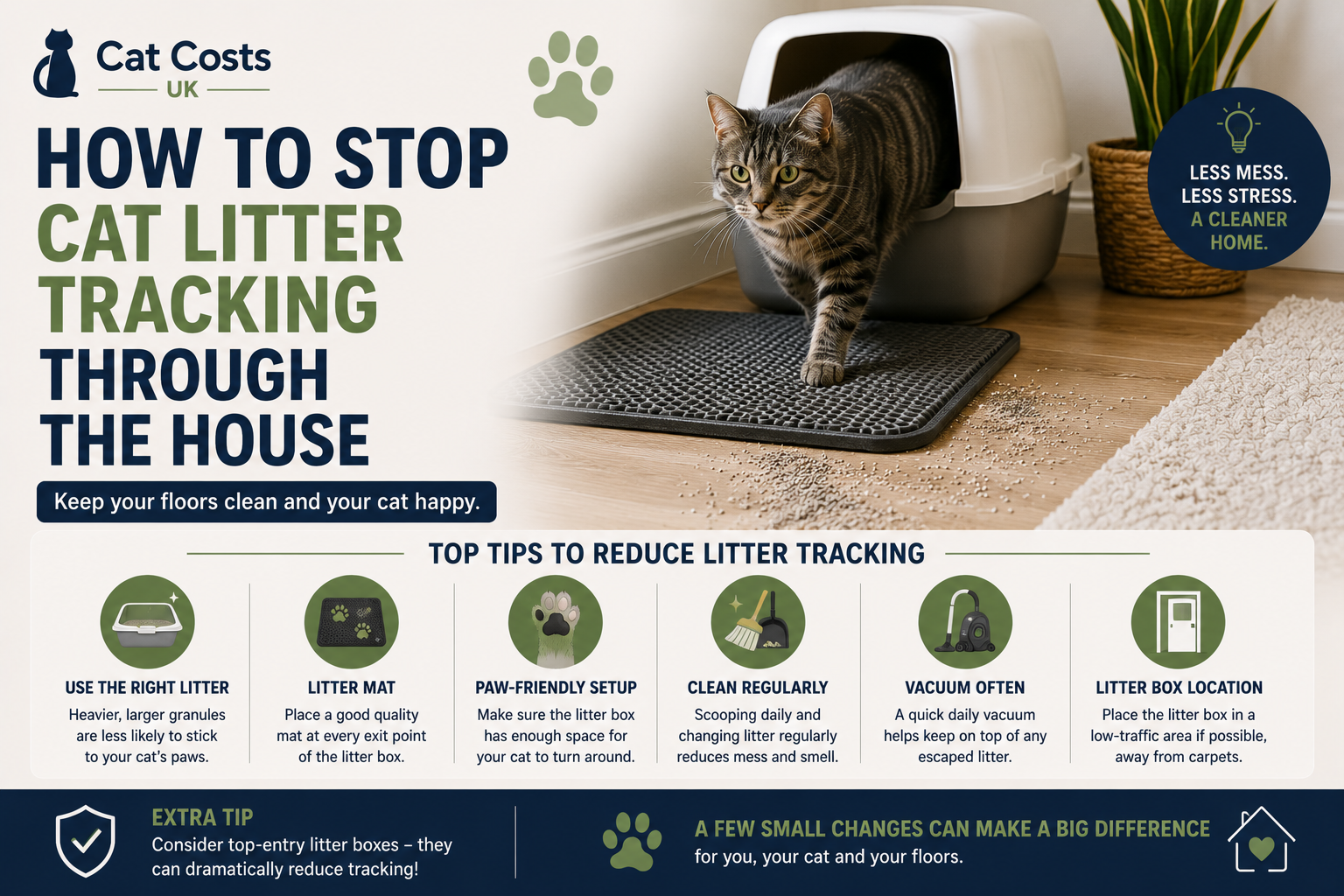
The best way to reduce cat litter tracking is to use a good litter mat, place the tray in a lower-traffic area, keep the tray clean, and consider a larger or covered litter box if your cat kicks litter out. Changing litter type may also help, but do it gradually.
Quick fixes for litter tracking
| Fix | Best for | Compare options |
|---|---|---|
| Litter mat | Catching litter as your cat exits the tray | (Ad) Compare litter mats |
| Larger litter tray | Cats that dig or kick litter out | (Ad) Compare large trays |
| Covered litter box | Containing kicked litter | (Ad) Compare covered boxes |
| Low-tracking litter | Reducing spread from paws | (Ad) Compare low-tracking litter |
1. Use a proper litter mat
A litter mat is usually the easiest first fix. Place it directly outside the tray entrance so your cat has to step onto it when leaving. Larger mats usually work better than tiny mats because cats often jump or step over small ones.
(Ad) Compare large cat litter mats on Amazon.
2. Move the tray away from high-traffic areas
If the tray sits beside a doorway, kitchen walkway or living room entrance, litter is more likely to spread. Moving the tray slightly can reduce how far litter travels, as long as the new location still feels safe and accessible for your cat.
3. Try a larger litter tray
Some cats track litter because the tray is too small or they kick litter over the sides. A larger tray gives them more room to turn, dig and cover without throwing as much litter onto the floor.
(Ad) Compare large cat litter trays on Amazon.
4. Consider a covered litter box
Covered litter boxes can help contain kicked litter, but not every cat likes them. If your cat dislikes enclosed spaces or stops using the tray, switch back to an open tray and try a mat or larger tray instead.
(Ad) Compare covered cat litter boxes on Amazon.
5. Change litter type carefully
Some litters track more than others. Larger granules may spread less, while very lightweight litter can travel further. Change litter gradually where possible, as sudden changes can put some cats off using the tray.
(Ad) Compare low-tracking cat litter on Amazon.
What to avoid
- Do not move the tray somewhere your cat feels unsafe.
- Do not suddenly change every part of the litter setup at once.
- Do not use strong-smelling cleaning products around the tray.
- Do not force a covered box if your cat clearly dislikes it.
- Do not ignore sudden litter tray issues, as they can sometimes indicate stress or health concerns.
My recommendation
Start with a large litter mat and a sensible tray position. If litter still spreads, try a larger tray or covered litter box before changing litter type completely.
Related guides
- Best Cat Litter Mats UK
- Best Cat Litter Trays UK
- Best Covered Cat Litter Boxes UK
- Best Cat Litter for Odour Control UK
FAQs
What is the best way to stop cat litter tracking?
The best first step is usually a large litter mat placed directly outside the tray, combined with a clean, well-positioned litter tray.
Do covered litter boxes stop tracking?
They can reduce kicked litter, but they do not stop all tracking from paws. Some cats also dislike covered boxes.
Does low-tracking cat litter work?
It may help, but results vary by cat, tray and home layout. Change litter gradually to avoid putting your cat off the tray.
Plan the wider cat setup
The product is only one part of the decision. Use the calculator to estimate the wider monthly budget, then browse the product hub for related essentials before you buy.
Last updated: 2 July 2026