Affiliate disclosure: This article contains Amazon affiliate links. As an Amazon Associate, Cat Costs UK earns from qualifying purchases at no extra cost to you.
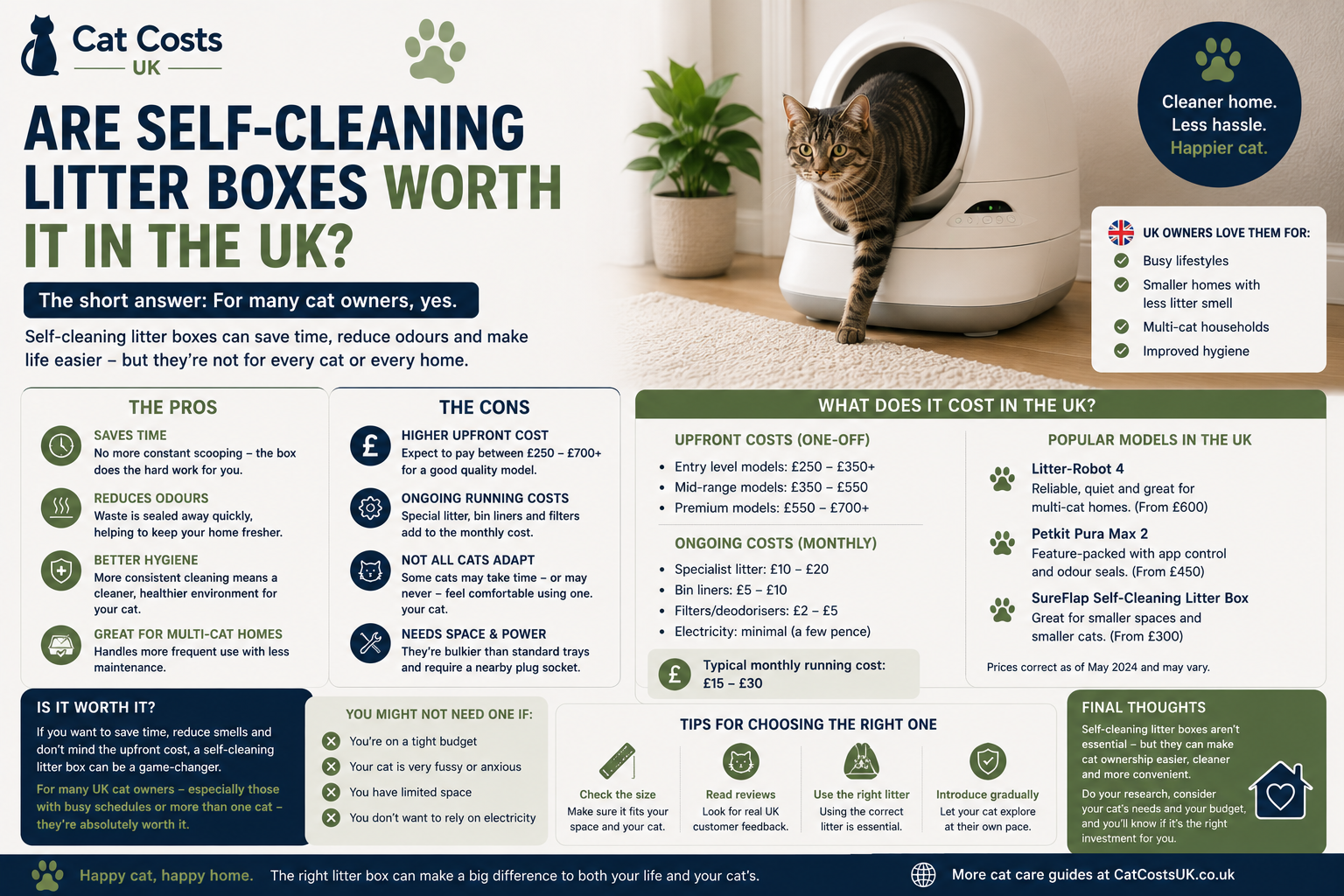
If you are busy, work long hours, travel regularly, or simply hate scooping the litter tray every day, a self-cleaning litter box can be one of the most tempting cat tech upgrades you can buy. The catch is that these machines are expensive, bulky and not always right for every cat.
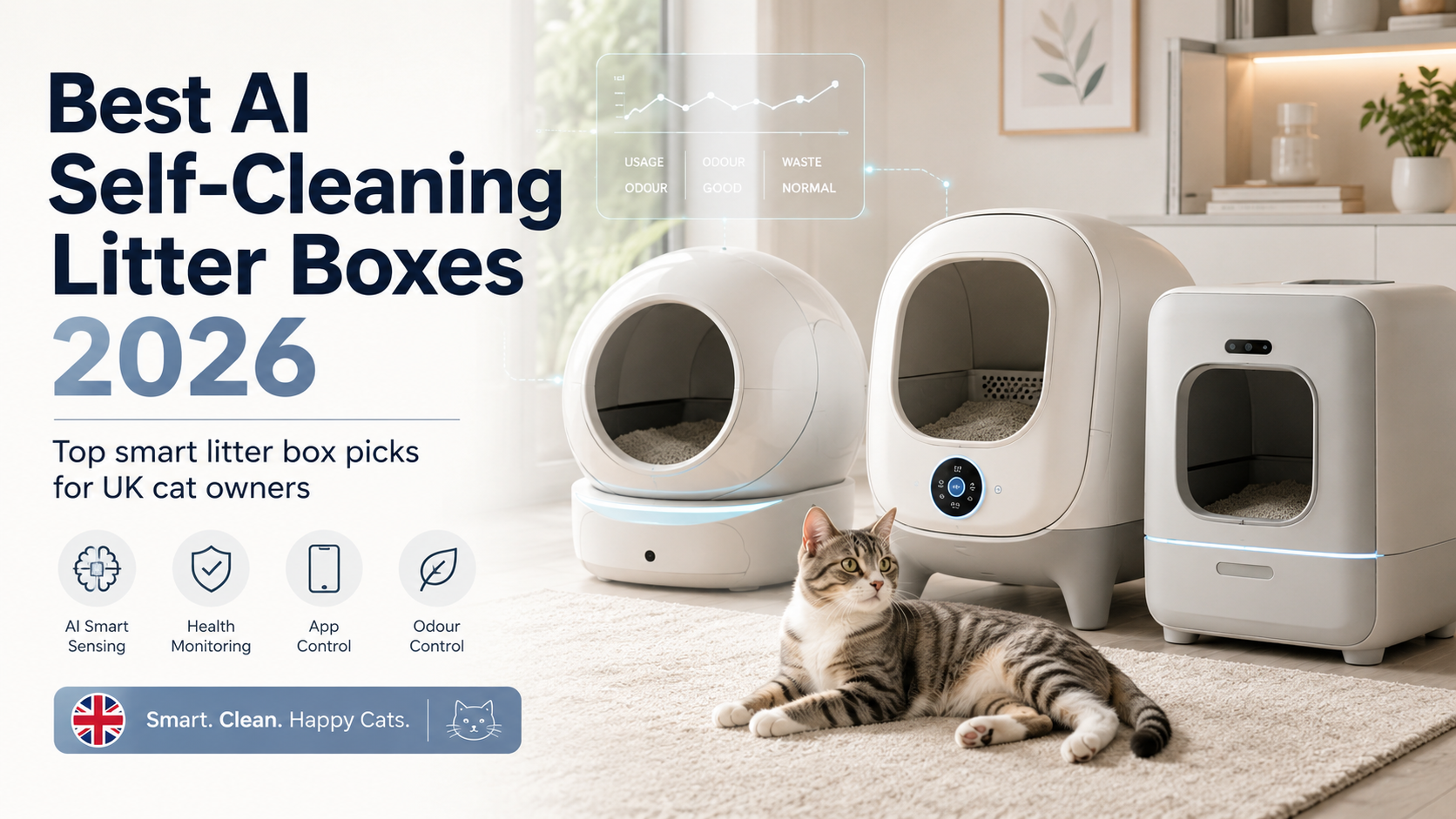
This UK buying guide compares named automatic litter tray options for 2026, including premium smart models, open-top designs and lower-maintenance alternatives. The aim is simple: help you decide which self-cleaning litter box is worth clicking through to, and which one you should avoid for your home.
Important: Cat Costs UK has not hands-on tested every product listed here. Always check the latest Amazon UK listing, product dimensions, litter compatibility, safety guidance, returns policy and ongoing costs before buying.
Quick picks: best self-cleaning litter boxes UK
- Best overall: Whisker Litter-Robot 4
- Best for odour control: PETKIT PuraMax 2
- Best open-top design: Neakasa M1
- Best for multi-cat convenience: PetSnowy SNOW+
- Best lower-maintenance crystal litter option: PetSafe ScoopFree
- Worth checking if available: CATLINK self-cleaning litter boxes
Comparison table
| Product | Best for | Key benefit | Main drawback | Price position | Amazon CTA |
|---|---|---|---|---|---|
| Whisker Litter-Robot 4 | Premium smart litter box buyers | App-connected self-cleaning with strong brand recognition | Very expensive and needs plenty of floor space | Premium | (Ad) Check Amazon UK |
| PETKIT PuraMax 2 | Odour-conscious homes | Smart automatic cleaning with enclosed waste storage | Still a large, high-ticket appliance | Premium / upper mid-range | (Ad) Check Amazon UK |
| Neakasa M1 | Cats that prefer open trays | Open-top automatic design may feel less enclosed | Open design may not suit every home for litter scatter | Upper mid-range | (Ad) Check Amazon UK |
| PetSnowy SNOW+ | Multi-cat homes wanting less handling | Designed around sealed waste handling and convenience | Replacement bags and parts can add ongoing cost | Premium | (Ad) Check Amazon UK |
| PetSafe ScoopFree | Crystal litter users | Lower-maintenance tray system versus daily scooping | May require specific trays or crystal litter refills | Mid-range | (Ad) Check Amazon UK |
| CATLINK self-cleaning litter box | Smart pet tech shoppers comparing alternatives | Another app-led automatic litter tray brand to compare | Availability and exact models can vary | Premium / upper mid-range | (Ad) Check Amazon UK |
1. Whisker Litter-Robot 4: best overall premium option
The Whisker Litter-Robot 4 is the name many UK shoppers search for first when comparing self-cleaning litter boxes. It is a premium automatic litter box designed to separate waste from clean litter after your cat has used it, then store waste in a drawer below.
It is best suited to owners who want the most recognised premium option and are happy to pay more for smart features, app connectivity and a more established product ecosystem.
- Best for: busy owners who want a high-end smart litter box.
- Why consider it: strong brand recognition, app-led monitoring and a premium design.
- Main drawback: high upfront price and a large footprint.
- Ongoing costs: waste liners, odour accessories and suitable clumping litter.
- Who should avoid it: owners in very small flats, owners with nervous cats, or anyone who cannot justify a premium appliance.
2. PETKIT PuraMax 2: best for odour control
The PETKIT PuraMax 2 is a strong option to compare if odour control, app features and modern design matter to you. It sits in the same high-ticket smart pet tech space as other automatic litter boxes, but is often considered by shoppers who want an alternative to Litter-Robot.
This could be a good fit for multi-cat households or owners who want a smarter litter setup without manually scooping every day. As with any enclosed automatic litter tray, check the internal size carefully before buying, especially if your cat is large or nervous in covered trays.
- Best for: homes where odour control is a major priority.
- Why consider it: smart design, enclosed waste storage and strong comparison appeal.
- Main drawback: still expensive, and some cats dislike enclosed tray designs.
- Ongoing costs: litter, waste bags, filters or deodorising accessories depending on the model.
- Who should avoid it: cats that refuse covered trays or owners who want the simplest possible setup.
3. Neakasa M1: best open-top self-cleaning litter box
The Neakasa M1 is worth comparing if your cat prefers a more open litter tray. Some cats dislike enclosed boxes because they feel trapped or restricted. An open-top self-cleaning litter box can be a more realistic upgrade if your cat already uses an open tray comfortably.
The trade-off is that an open design may be less discreet and may not contain litter scatter as well as some enclosed options. For small UK homes, think carefully about where it will sit, whether there is a nearby plug socket and how easy it will be to empty and clean.
- Best for: cats that dislike enclosed litter boxes.
- Why consider it: open-top design may feel more familiar to some cats.
- Main drawback: may not hide odour or litter scatter as well as enclosed options.
- Ongoing costs: liners, suitable clumping litter and replacement accessories.
- Who should avoid it: owners who want the most discreet covered option.
4. PetSnowy SNOW+: best for multi-cat convenience
The PetSnowy SNOW+ is another premium self-cleaning litter box to compare if you want a less hands-on setup. It is particularly interesting for owners looking at waste handling, odour control and multi-cat convenience.
Before buying, check the exact model, waste bag requirements and replacement accessory costs. With premium self-cleaning litter boxes, the cheapest initial listing is not always the cheapest long-term option.
- Best for: owners who want a more contained waste system.
- Why consider it: premium convenience and strong appeal for multi-cat homes.
- Main drawback: high price and potential ongoing accessory costs.
- Ongoing costs: waste bags, filters or accessories depending on the model.
- Who should avoid it: owners who prefer standard clumping litter trays with no proprietary extras.
5. PetSafe ScoopFree: best crystal litter alternative
The PetSafe ScoopFree range is a different style of low-maintenance litter system. Rather than being a rotating robot-style litter box, it is usually associated with crystal litter tray systems and automatic raking depending on the model.
This type of product may suit owners who want less daily scooping but do not necessarily want a large premium globe-style machine. The key thing to check is refill cost, because disposable trays or crystal litter can add up over time.
- Best for: owners open to crystal litter systems.
- Why consider it: can reduce day-to-day scooping and may suit smaller spaces better than some robot boxes.
- Main drawback: refill trays or specific litter may increase long-term cost.
- Ongoing costs: crystal litter, disposable trays or replacement parts depending on the exact model.
- Who should avoid it: owners who only want standard clumping litter compatibility.
6. CATLINK self-cleaning litter boxes: worth comparing
CATLINK is another smart litter box brand that appears in automatic litter tray comparisons. Availability, model names and UK pricing can vary, so it is best treated as a comparison option rather than a guaranteed best buy.
If you see CATLINK models on Amazon UK, compare the entry size, safety sensors, app features, warranty information and whether replacement accessories are easy to buy before choosing it over a more established alternative.
- Best for: shoppers comparing smart litter box alternatives.
- Why consider it: app-led automatic litter tray features.
- Main drawback: exact UK availability and support can vary by model.
- Ongoing costs: litter, liners and any model-specific accessories.
- Who should avoid it: anyone who wants the safest choice with the clearest UK support route.
What about SiiPet LitterLens price?
SiiPet LitterLens is a search term some shoppers may come across when researching AI pet tech and litter box monitoring. Before treating it as a main buying option, check whether the exact product is available in the UK, whether it is a full self-cleaning litter box or a monitoring accessory, and whether Amazon UK has a reliable current listing.
Because prices and availability can change quickly, avoid choosing any SiiPet LitterLens option purely from a headline price. Check the exact product type, whether it needs a subscription, and whether it works with your cat’s current litter setup.
How to choose the best automatic litter tray UK owners can actually live with
Measure the space first
Self-cleaning litter boxes are often much bigger than they look online. Measure the footprint, height, entry point and the extra room needed to remove drawers or waste bags. This matters even more in small UK flats.
Check whether your cat likes covered trays
If your cat already avoids covered litter boxes, a fully enclosed robot may be risky. An open-top option such as the Neakasa M1 may be easier to transition to, but it may also be less discreet.
Look at ongoing costs, not just the machine price
Replacement bags, filters, deodoriser packs, crystal trays, app subscriptions and specific litter types can all change the real monthly cost. Before buying, check what you will need to reorder.
Do not ignore litter compatibility
Many automatic litter boxes work best with specific clumping litter types. If the clumps are too soft, too dusty or the wrong size, the machine may not clean as well. See our guide to the best cat litter to use with a Litter-Robot-style tray before buying a robot litter box.
Think about nervous, senior or very large cats
Some cats need a slow transition. Keep their old tray nearby at first, avoid forcing them into the new box, and check the entry height if your cat is older or less mobile. Speak to your vet if your cat suddenly changes toilet habits.
Related Cat Costs UK guides
- Best Cat Litter to Use with a Litter Robot UK
- Best Cat Litter for Smell UK
- Recommended Cat Litter UK
- Cheap Cat Litter UK
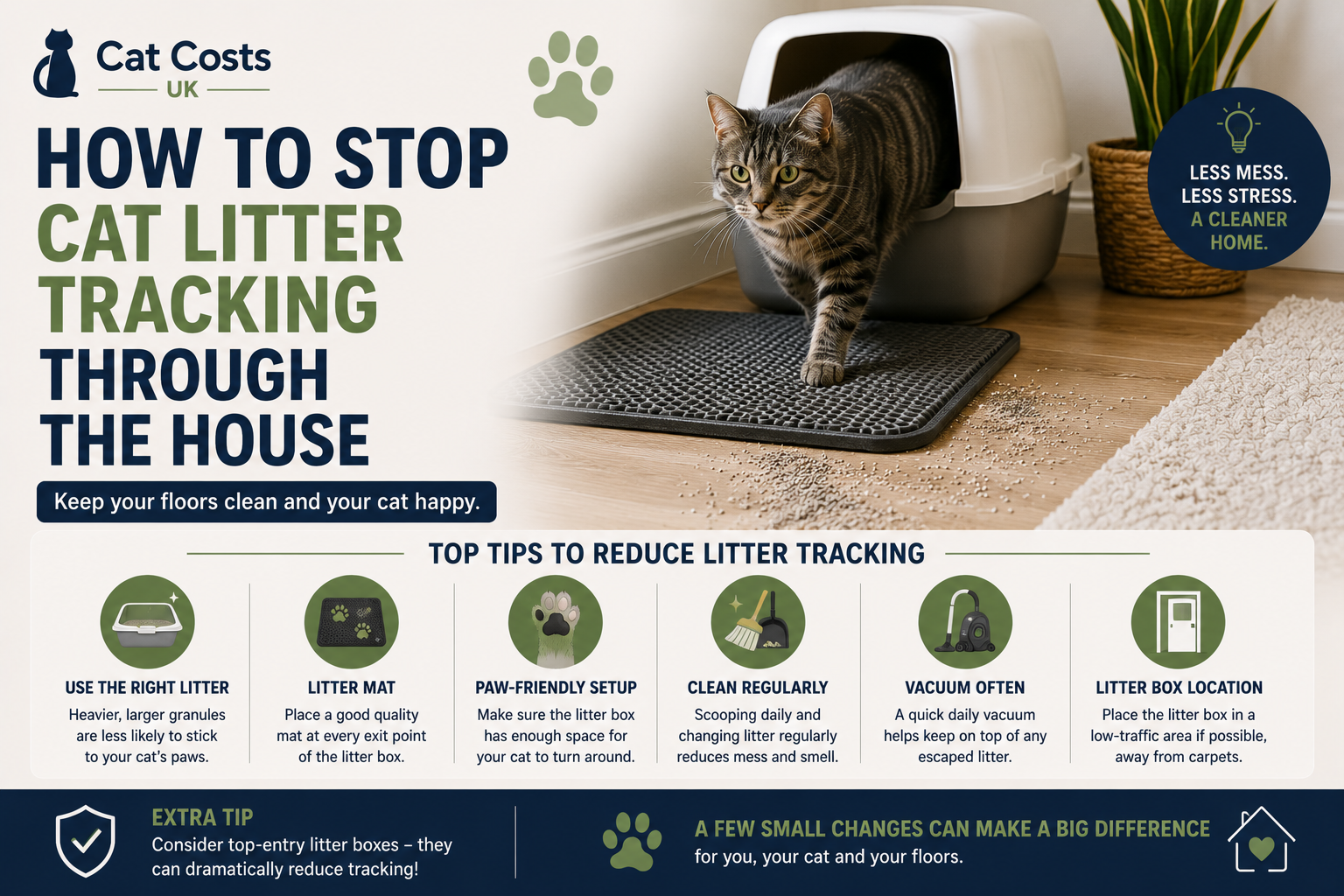
- How to Stop Cat Litter Tracking Through the House
FAQs
Are self-cleaning litter boxes worth it?
They can be worth it if scooping is the job you hate most, you have multiple cats, or you are often out of the house. They are less convincing if you have one cat, limited space, a tight budget or a cat that dislikes covered trays.
What is the best self cleaning litter box UK owners should compare first?
For a premium smart option, start by comparing the Whisker Litter-Robot 4. For alternatives, compare PETKIT PuraMax 2, Neakasa M1, PetSnowy SNOW+ and PetSafe ScoopFree depending on your budget and your cat’s tray preferences.
Do automatic litter trays smell?
They can still smell if the waste drawer is full, the wrong litter is used, the machine is not cleaned properly, or filters and bags are not replaced. A self-cleaning tray reduces scooping, but it does not remove maintenance completely.
Can kittens use automatic litter boxes?
Check the manufacturer’s age and weight guidance before allowing kittens to use an automatic litter box. For young kittens, a simple low-entry manual tray is often the safer starting point.
Is Litter-Robot better than PETKIT?
Litter-Robot is the better-known premium name, while PETKIT is a strong alternative for shoppers comparing smart features and odour control. The better choice depends on price, space, litter compatibility, your cat’s size and how much you value app features.
Final verdict
If you want the safest premium starting point, compare the Whisker Litter-Robot 4 first. If odour control and smart features matter but you want to compare alternatives, look at the PETKIT PuraMax 2. If your cat dislikes enclosed trays, the Neakasa M1 may be the more realistic upgrade.
The best automatic litter tray is not simply the most expensive one. It is the one your cat will actually use, that fits your home, and that you can afford to maintain every month.
Last updated: 8 July 2026