Affiliate disclosure: This article contains Amazon affiliate links. As an Amazon Associate, Cat Costs UK earns from qualifying purchases.
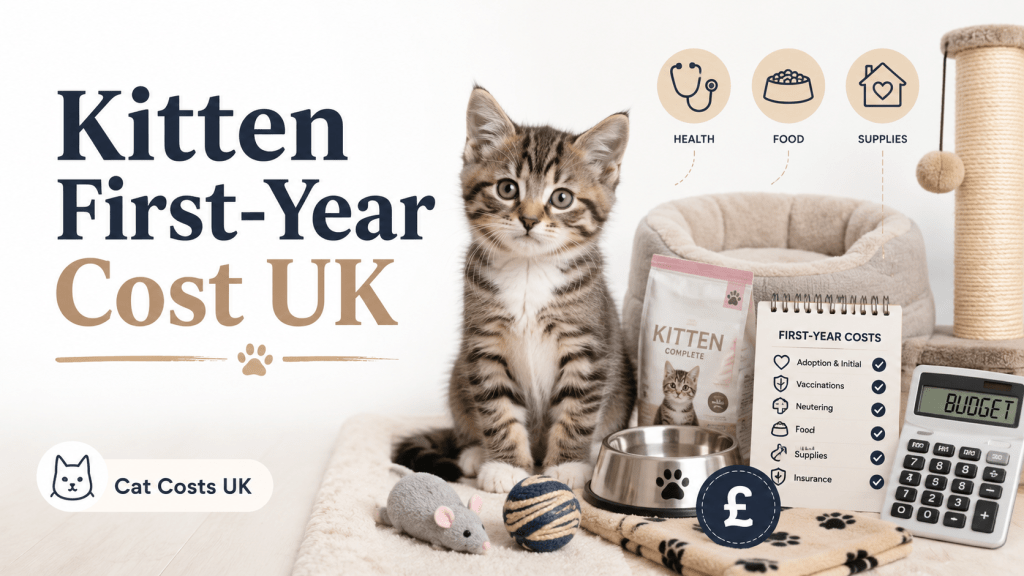
A kitten’s first year is usually more expensive than a normal adult-cat year. You may need to pay for starter equipment, food, litter, routine vet care, insurance and one-off essentials before your monthly costs settle down.
The key is to buy the essentials first and avoid wasting money on products your kitten may ignore. Start practical, then upgrade once you know your kitten’s habits.
Kitten first-year cost checklist
| Cost | When it happens | Compare options |
|---|---|---|
| Carrier | Before collection | Kitten carriers |
| Litter tray and litter | Before collection | Kitten litter trays |
| Food and bowls | Immediately | Kitten bowls |
| Scratching post | First week | Kitten scratching posts |
| Toys | First week | Kitten toys |
| Vet care | Early months | Check with your vet or rescue |
| Insurance | Early months | Compare policy limits and exclusions |
Starter kit costs
The first shop normally includes a carrier, litter tray, litter, bowls, a scratching post, a bed or blanket, toys and grooming basics. You do not need the most expensive version of every item.
For kittens, choose practical products that are safe, easy to clean and not too fragile. Avoid buying a huge cat tree until you have measured your space and know whether your kitten enjoys climbing.
Food and litter costs
Kitten food is an ongoing cost from day one. If your kitten is already eating a specific food, do not switch suddenly just to save money. A gradual change is usually safer if you decide to move to another food.
Litter can also become a steady monthly cost, especially for indoor kittens. Start with a tray and litter type your kitten will actually use.
Vet and insurance costs
Ask the rescue, breeder or previous owner exactly what vet care has already been completed. Depending on your kitten’s age, you may need to budget for vaccinations, microchipping, neutering and routine checks.
Insurance is optional, but it is worth comparing early, before known health problems appear. Always check exclusions, excesses and annual vet fee limits.
What not to overbuy in year one
- Expensive beds before you know where your kitten sleeps.
- Large cat trees before checking your space.
- Too many toys before learning your kitten’s preferences.
- Premium gadgets before basic routines are sorted.
- Specialist food unless recommended by a vet or rescue.
My recommendation
For the first year, plan for three separate budgets: starter kit, routine monthly costs and vet or insurance costs. This gives you a more realistic view than only looking at the price of the kitten.
Buy the essentials before collection, then add optional products like fountains, automatic feeders and cat trees once you understand your kitten’s behaviour.
Helpful buying guides
- Cat Starter Kit UK
- Best Cat Carriers UK
- Best Cat Litter for Odour Control UK
- How Much Does a Cat Cost Per Month in the UK?
FAQs
Is a kitten more expensive than an adult cat?
The first year can be more expensive because of starter items and early vet care. After that, costs may become more predictable.
What should I buy before getting a kitten?
Buy a carrier, litter tray, litter, bowls, suitable food, a scratching post, a few toys and a quiet safe space.
Do kittens need insurance?
Insurance is optional, but many owners compare cover early. Read the policy wording carefully and check exclusions.
Last updated: 1 July 2026
 Cat Costs UK