Category: New Cat Guides

Helpful guides for new cat and kitten owners in the UK.

  • New Cat Essentials You Should Not Waste Money On

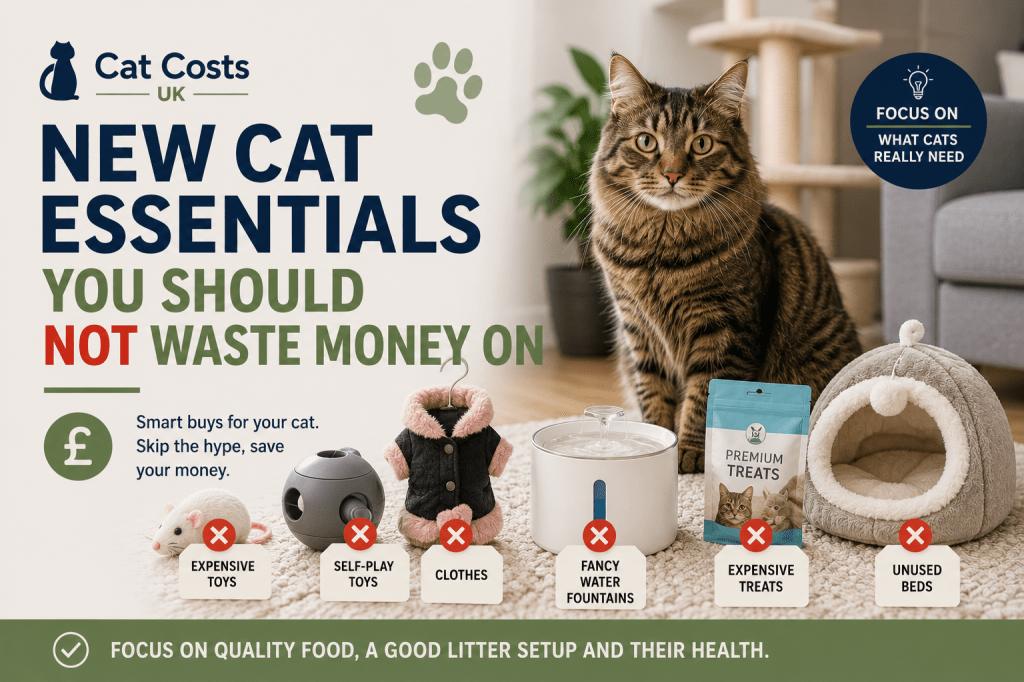
    New Cat Essentials You Should Not Waste Money On

    Affiliate disclosure: This article contains Amazon affiliate links. As an Amazon Associate, Cat Costs UK earns from qualifying purchases.

    It is easy to overspend when getting a new cat. Shops and online guides can make everything feel essential, but many products are optional, can wait, or are only worth buying once you know your cat’s habits.

    New cat essentials: quick answer

    The essentials for most new cats are food, bowls, litter, a litter tray, a secure carrier, a scratching option, a simple bed or blanket, and a few toys. Expensive extras like fountains, automatic feeders, cat cameras, backpacks and large cat trees can wait until you know what your cat actually uses.

    What to buy first

    PriorityProductWhy it mattersCompare options
    EssentialCat carrierNeeded for collection, vet trips and emergencies.Compare cat carriers
    EssentialLitter tray and scoopOne of the first things your cat will need at home.Compare litter trays
    EssentialFood and water bowlsSimple bowls are enough to start with.Compare cat bowls
    UsefulScratching postGives your cat somewhere acceptable to scratch.Compare scratching posts

    Products you probably do not need straight away

    These products can be useful, but they are not always day-one essentials. Waiting can save money because you will understand your cat’s personality, space needs and routine first.

    1. Expensive cat trees

    A cat tree can be a great purchase, but you do not need to buy the biggest one immediately. Start with a scratching post or smaller tree, then upgrade if your cat enjoys climbing and you have the space.

    Compare starter scratching posts on Amazon or compare cat trees.

    2. Automatic feeders

    Automatic feeders are handy for routines, but a normal bowl is usually fine when your cat first arrives. Consider one later if you need timed meals or you are often out at feeding times.

    Compare automatic cat feeders on Amazon.

    3. Cat water fountains

    Some cats drink more happily from fountains, but not all cats use them. Start with simple water bowls and only upgrade if your cat ignores still water or seems to prefer running water.

    Compare cat water fountains on Amazon.

    4. Cat cameras and GPS trackers

    These can be useful for peace of mind, but they are optional. A camera may suit indoor cats when you are out, while a GPS tracker is mainly relevant for cats that go outside.

    Compare cat cameras or compare GPS cat trackers.

    5. Cat backpacks

    A cat backpack can look appealing, but a secure carrier is usually the better first buy. Consider a backpack only if your cat is calm, the design is well ventilated and it fits your actual travel plans.

    Compare cat backpacks on Amazon.

    Where spending more can make sense

    • Cat carrier: worth choosing carefully because it affects vet trips and travel.
    • Litter tray: size and access matter more than fancy design.
    • Scratching post: a stable post may protect furniture better than a cheap wobbly one.
    • Food storage: useful if you buy larger bags of dry food.
    • Insurance or vet costs: budget for care rather than spending everything on accessories.

    My recommendation

    Buy the basics first, then upgrade based on your cat’s behaviour. The biggest waste usually comes from buying premium products before you know whether your cat will use them.

    Related guides

    FAQs

    What do I actually need for a new cat?

    Most new cats need food, bowls, litter, a litter tray, a carrier, a scratching option, somewhere to sleep and a few simple toys.

    Are cat fountains and automatic feeders essential?

    No. They can be useful later, but most new cat owners can start with normal bowls and upgrade only if there is a clear need.

    Should I buy a cat tree straight away?

    A small cat tree or scratching post is sensible, but a large premium cat tree can wait until you know whether your cat enjoys climbing.

    Last updated: 2 July 2026
  • Best Cat Collars and ID Tags UK: 2026 Buying Guide

    Best Cat Collars and ID Tags UK: 2026 Buying Guide

    Affiliate disclosure: This article contains Amazon affiliate links. As an Amazon Associate, Cat Costs UK earns from qualifying purchases.

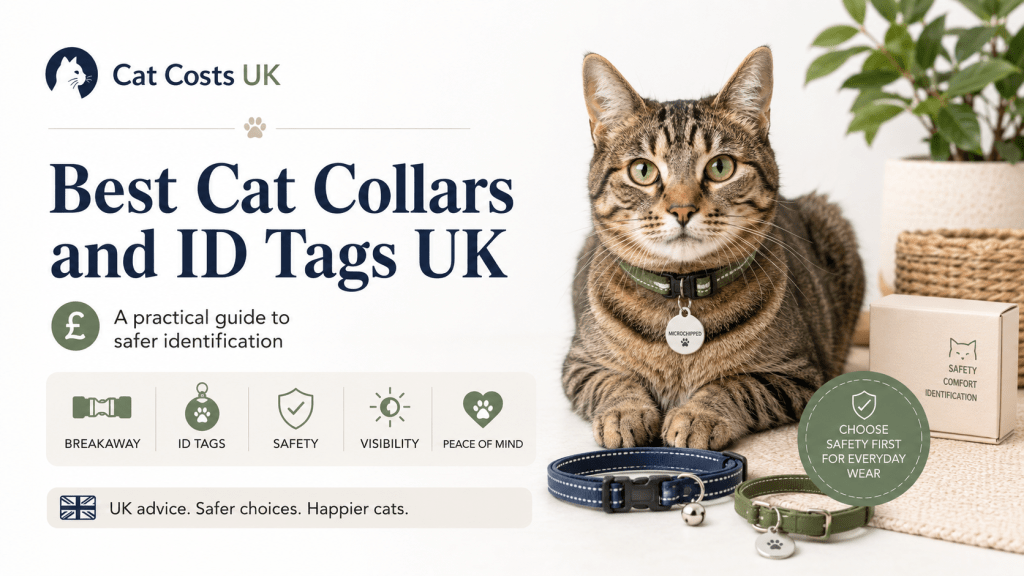
    A cat collar and ID tag can help identify your cat, but safety matters more than style. For most cats, a quick-release or breakaway collar is the safest starting point.

    Even if your cat is microchipped, an ID tag can make it easier for a neighbour to contact you quickly if your cat wanders or gets lost.

    Quick picks: cat collars and ID tags UK

    Best forTypeCompare options
    Most catsBreakaway collarBreakaway cat collars
    VisibilityReflective collarReflective cat collars
    IdentificationEngraved ID tagEngraved cat ID tags
    New cat ownersCollar and tag setCollar and ID tag sets

    What to check before buying

    • Quick release: choose a breakaway fastening for safety.
    • Fit: it should be snug but not tight.
    • Weight: tags should not be too heavy.
    • Noise: some cats dislike bells or jangly tags.
    • Details: use contact details you are comfortable sharing.

    Should indoor cats wear collars?

    Some indoor cats wear collars in case they escape, but not every cat tolerates one. If you use a collar indoors, choose a safe breakaway design and check the fit regularly.

    My recommendation

    Choose a lightweight breakaway collar and a simple ID tag. Avoid collars that are too tight, too heavy or purely decorative.

    Related guides

    FAQs

    What type of collar is safest for cats?

    A quick-release or breakaway collar is usually the safest option.

    Does my cat need an ID tag if microchipped?

    An ID tag can still help someone contact you quickly, but keep microchip details up to date too.

    Are bells on cat collars a good idea?

    Some owners use bells, but some cats dislike them. Watch your cat’s behaviour and comfort.

    Last updated: 1 July 2026

  • Best Cat Harnesses and Leads UK: 2026 Buying Guide

    Best Cat Harnesses and Leads UK: 2026 Buying Guide

    Affiliate disclosure: This article contains Amazon affiliate links. As an Amazon Associate, Cat Costs UK earns from qualifying purchases.

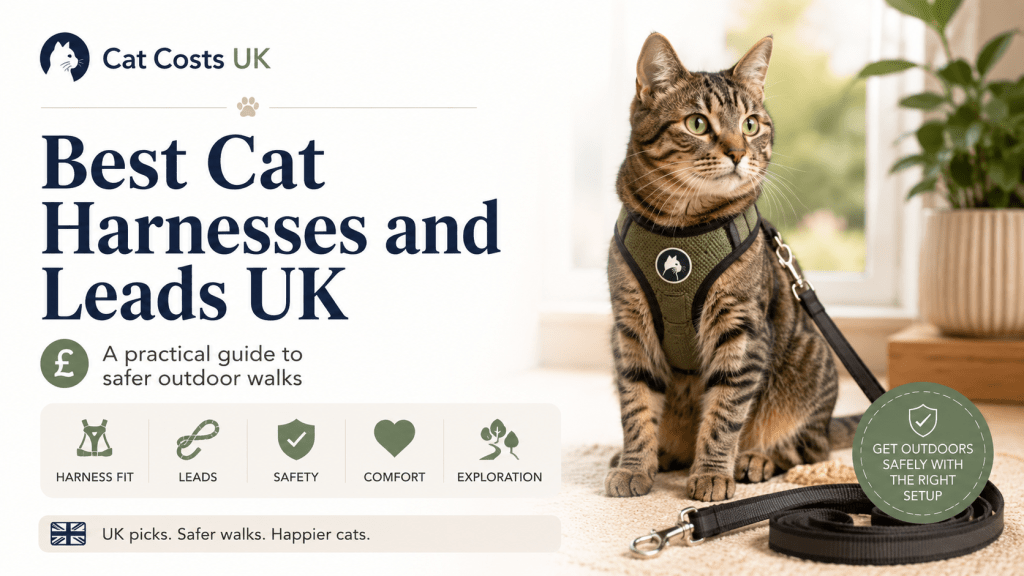
    A cat harness can be useful for safe garden time, travel practice or supervised outdoor access, but it only works if the fit is secure and your cat is introduced to it slowly.

    The best cat harness should be adjustable, comfortable and difficult for your cat to slip out of. Do not assume a dog-style harness will suit a cat.

    Quick picks: cat harnesses and leads UK

    Best forHarness typeCompare options
    Most catsAdjustable vest harnessAdjustable cat harnesses
    Escape-prone catsEscape-resistant harnessEscape-resistant cat harnesses
    KittensSmall adjustable harnessKitten harnesses
    TravelHarness and lead setHarness and lead sets

    How to introduce a cat harness

    • Let your cat sniff the harness before putting it on.
    • Try short indoor sessions first.
    • Reward calm behaviour with treats or play.
    • Do not drag your cat on the lead.
    • Use supervised outdoor time only once your cat is comfortable.

    What to check before buying

    • Measurements: measure your cat’s chest and neck before ordering.
    • Adjustability: useful as kittens grow or cats change weight.
    • Security: check clips, stitching and fit.
    • Comfort: soft materials can help with longer sessions.
    • Visibility: reflective details may help outdoors.

    My recommendation

    Start with an adjustable cat-specific harness and lead set. Prioritise fit and security over style, especially if this is your cat’s first harness.

    Related guides

    FAQs

    Are cat harnesses safe?

    They can be safe when fitted correctly and used under supervision. Never leave a cat unattended in a harness.

    Can any cat be trained to use a harness?

    Some cats adapt well, while others strongly dislike it. Go slowly and stop if your cat is distressed.

    What is the best harness for an indoor cat?

    An adjustable, secure vest-style harness is usually a sensible starting point for supervised garden or travel practice.

    Last updated: 1 July 2026

  • Kitten First-Year Cost UK: 2026 Budget Guide

    Kitten First-Year Cost UK: 2026 Budget Guide

    Affiliate disclosure: This article contains Amazon affiliate links. As an Amazon Associate, Cat Costs UK earns from qualifying purchases.

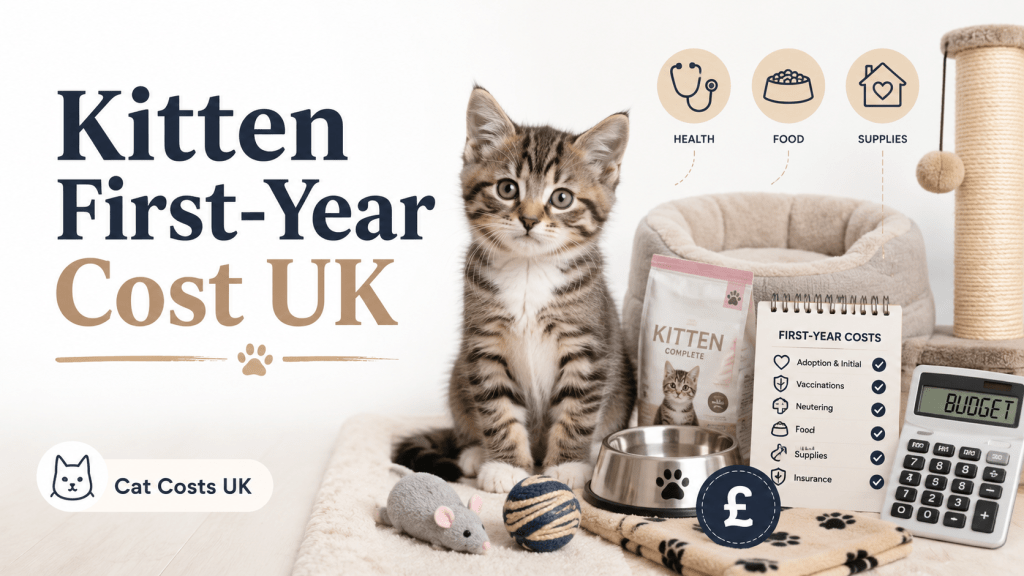
    A kitten’s first year is usually more expensive than a normal adult-cat year. You may need to pay for starter equipment, food, litter, routine vet care, insurance and one-off essentials before your monthly costs settle down.

    The key is to buy the essentials first and avoid wasting money on products your kitten may ignore. Start practical, then upgrade once you know your kitten’s habits.

    Kitten first-year cost checklist

    CostWhen it happensCompare options
    CarrierBefore collectionKitten carriers
    Litter tray and litterBefore collectionKitten litter trays
    Food and bowlsImmediatelyKitten bowls
    Scratching postFirst weekKitten scratching posts
    ToysFirst weekKitten toys
    Vet careEarly monthsCheck with your vet or rescue
    InsuranceEarly monthsCompare policy limits and exclusions

    Starter kit costs

    The first shop normally includes a carrier, litter tray, litter, bowls, a scratching post, a bed or blanket, toys and grooming basics. You do not need the most expensive version of every item.

    For kittens, choose practical products that are safe, easy to clean and not too fragile. Avoid buying a huge cat tree until you have measured your space and know whether your kitten enjoys climbing.

    Food and litter costs

    Kitten food is an ongoing cost from day one. If your kitten is already eating a specific food, do not switch suddenly just to save money. A gradual change is usually safer if you decide to move to another food.

    Litter can also become a steady monthly cost, especially for indoor kittens. Start with a tray and litter type your kitten will actually use.

    Vet and insurance costs

    Ask the rescue, breeder or previous owner exactly what vet care has already been completed. Depending on your kitten’s age, you may need to budget for vaccinations, microchipping, neutering and routine checks.

    Insurance is optional, but it is worth comparing early, before known health problems appear. Always check exclusions, excesses and annual vet fee limits.

    What not to overbuy in year one

    • Expensive beds before you know where your kitten sleeps.
    • Large cat trees before checking your space.
    • Too many toys before learning your kitten’s preferences.
    • Premium gadgets before basic routines are sorted.
    • Specialist food unless recommended by a vet or rescue.

    My recommendation

    For the first year, plan for three separate budgets: starter kit, routine monthly costs and vet or insurance costs. This gives you a more realistic view than only looking at the price of the kitten.

    Buy the essentials before collection, then add optional products like fountains, automatic feeders and cat trees once you understand your kitten’s behaviour.

    Helpful buying guides

    FAQs

    Is a kitten more expensive than an adult cat?

    The first year can be more expensive because of starter items and early vet care. After that, costs may become more predictable.

    What should I buy before getting a kitten?

    Buy a carrier, litter tray, litter, bowls, suitable food, a scratching post, a few toys and a quiet safe space.

    Do kittens need insurance?

    Insurance is optional, but many owners compare cover early. Read the policy wording carefully and check exclusions.

    Last updated: 1 July 2026

  • Cat Starter Kit UK: 2026 New Cat Checklist

    Cat Starter Kit UK: 2026 New Cat Checklist

    Affiliate disclosure: This article contains Amazon affiliate links. As an Amazon Associate, Cat Costs UK earns from qualifying purchases.

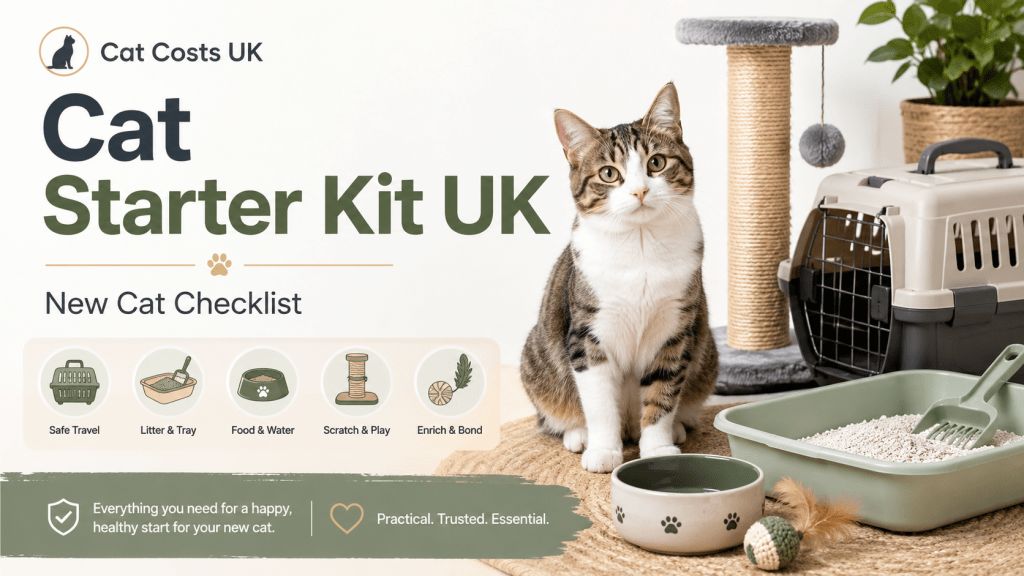
    Bringing home a new cat is exciting, but it is easy to overspend on things you do not need yet. A good cat starter kit should cover the essentials first: transport, food, water, litter, scratching, sleeping and a few safe toys.

    You do not need to buy every premium cat product on day one. Start with practical basics, then upgrade once you know your cat’s habits.

    Cat starter kit checklist UK

    ItemEssential?Compare options
    Cat carrierYesCat carriers
    Litter trayYesLitter trays
    Cat litterYesCat litter
    Food and water bowlsYesCat bowls
    Scratching postYesScratching posts
    Cat bed or blanketUsefulCat beds
    ToysUsefulCat toys
    Grooming brushUsefulCat brushes

    1. Cat carrier

    A cat carrier is essential before your cat comes home. You need it for collection, vet trips and emergencies. For most owners, a rigid or top-opening carrier is more practical than a soft fashion-style bag.

    2. Litter tray and litter

    Set up the litter area before your cat arrives. If you are adopting, ask what litter your cat already uses and start with something similar where possible. A sudden change can make settling in harder.

    For indoor cats, consider a spare tray, scoop and litter mat. These small extras can make day-to-day cleaning easier.

    3. Food and water bowls

    Choose simple bowls that are easy to wash. Wide, shallow bowls can be more comfortable for some cats than deep narrow bowls. You can always upgrade to a fountain or automatic feeder later.

    4. Scratching post

    A scratching post is not optional if you want to protect furniture. Scratching is normal cat behaviour, so give your cat somewhere appropriate to scratch from day one.

    5. Toys and comfort items

    Buy a small selection of toys rather than a huge bundle. Wand toys, small balls and soft toys can all work, but cats have individual preferences. A blanket or quiet bed area is also useful while they settle.

    What not to buy straight away

    • Expensive beds before you know where your cat likes to sleep.
    • Large cat trees before measuring your space.
    • Specialist diet products unless advised by a vet or rescue.
    • Too many toys before learning what your cat enjoys.
    • Automatic feeders or fountains unless they solve a real routine problem.

    My recommendation

    Prioritise the essentials first: carrier, litter setup, bowls, scratching post and a few toys. Once your cat has settled, you can upgrade based on actual behaviour rather than guessing.

    If you want the easiest shopping route, compare the starter items on Amazon, but avoid buying large bundles full of things you may not use.

    Related starter-kit buying guides

    Use these guides to compare individual starter items before buying. This is usually better than buying a large bundle with products your cat may not use.

    Best next guides to read

    These guides go deeper on the starter-kit items that usually matter most for new cat owners.

    FAQs

    What do I need before bringing a cat home?

    You need a carrier, litter tray, litter, food and water bowls, suitable food, a scratching post, and a quiet safe space for your cat to settle.

    Do I need a cat tree straight away?

    Not always. A scratching post and safe resting spot are enough to start, but a cat tree can be useful later, especially for indoor cats.

    How much does a cat starter kit cost?

    It depends on whether you buy basic or premium items. Keep the first shop practical and spend more later only where it clearly helps your cat.

    Last updated: 1 July 2026

  • Best Cat Carriers UK: 2026 Buying Guide

    Best Cat Carriers UK: 2026 Buying Guide

    Affiliate disclosure: This article contains Amazon affiliate links. As an Amazon Associate, Cat Costs UK earns from qualifying purchases.

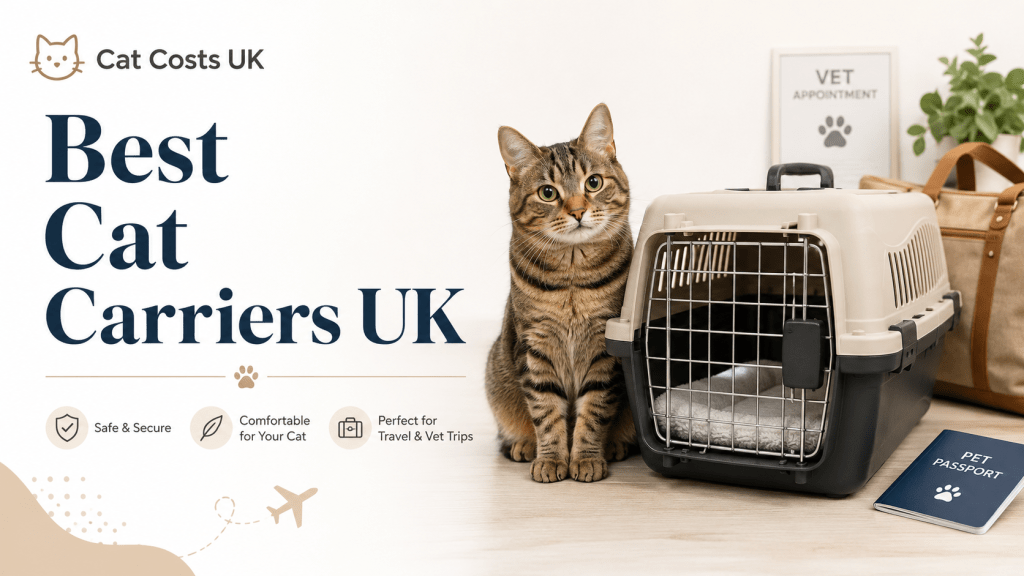
    A good cat carrier is not just a nice-to-have. It is one of the first products every cat owner should buy, because you need it for collecting a new cat, vet appointments, moving house and emergencies.

    For most UK cat owners, the best choice is a secure rigid carrier with either a front door, a top opening, or both. It should be stable, easy to clean and comfortable enough for short journeys. Soft-sided carriers can be useful for calm cats, but they are not always the best first choice if your cat dislikes travel.

    Quick picks: best cat carriers UK

    Best forCarrier typeCompare options
    Most ownersRigid plastic carrierPlastic cat carriers
    Easier loadingTop-opening carrierTop-opening cat carriers
    Short calm tripsSoft-sided carrierSoft cat carriers
    Large catsLarge rigid carrierLarge cat carriers
    KittensSecure starter carrierKitten carriers

    Best cat carrier for most owners

    A rigid plastic carrier is usually the safest starting point. It is generally easier to wipe clean than fabric, holds its shape better, and gives your cat a more stable space during vet trips.

    Look for a secure door, strong clips, good ventilation and enough room for your cat to sit, turn and lie down. A carrier with both front and top access can be especially useful because it gives you more than one way to place your cat inside.

    Best top-opening cat carrier

    A top-opening carrier can make life easier if your cat does not like entering through a front door. You can gently lower your cat in from above, and some designs also make vet handling simpler.

    Before buying, check that the top opening closes securely. The hinge, clips and lid should feel strong enough for repeated use.

    Best soft-sided cat carrier

    Soft-sided carriers are lighter and easier to store. They can work well for calm cats and short trips, but check the zips, mesh panels, base support and ventilation carefully.

    If your cat claws at mesh or pushes against doors, a rigid carrier may be a better first buy.

    What to check before buying

    • Size: your cat should be able to sit, turn and lie down.
    • Security: check doors, zips, locks and clips.
    • Cleaning: wipe-clean materials are useful after accidents.
    • Ventilation: your cat should have good airflow.
    • Access: top opening can make loading easier.
    • Storage: collapsible designs save space, but stability still matters.

    My recommendation

    If this is your first cat carrier, choose a rigid or top-opening carrier before buying a soft fashion-style bag. It is the product you will rely on when your cat needs to travel, so safety, cleaning and build quality matter most.

    For a large adult cat, check dimensions and maximum weight carefully. For a kitten, avoid going too tiny unless you are happy to replace it later.

    Related guides

    If you are buying a carrier for a new cat or kitten, these guides can help with the rest of your setup.

    FAQs

    What is the best cat carrier in the UK?

    For most owners, a rigid plastic carrier with secure fastenings and good ventilation is the best starting point. A top-opening design is especially useful for cats who dislike being guided through a front door.

    Are soft cat carriers worth it?

    They can be worth it for calm cats and short trips, but they are not always as easy to clean or as sturdy as rigid carriers.

    What size cat carrier do I need?

    Your cat should be able to sit, turn around and lie down comfortably, while still feeling secure.

    Last updated: 1 July 2026