Category: Cat Costs

UK cat ownership cost guides, monthly budgets and first-year cost breakdowns.

  • New Cat Essentials You Should Not Waste Money On

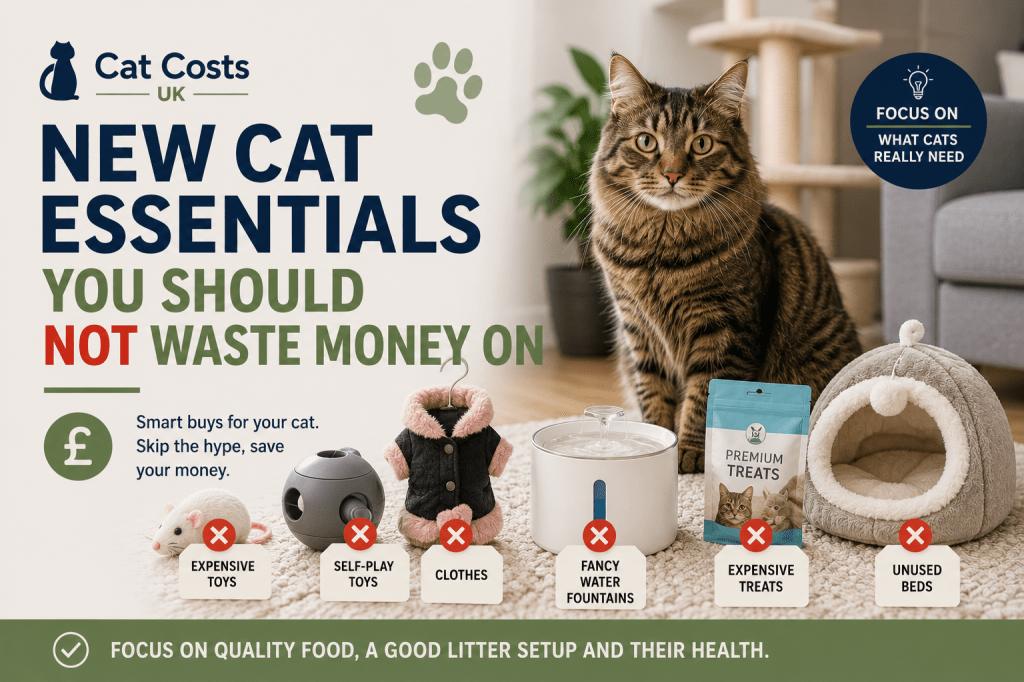
    New Cat Essentials You Should Not Waste Money On

    Affiliate disclosure: This article contains Amazon affiliate links. As an Amazon Associate, Cat Costs UK earns from qualifying purchases.

    It is easy to overspend when getting a new cat. Shops and online guides can make everything feel essential, but many products are optional, can wait, or are only worth buying once you know your cat’s habits.

    New cat essentials: quick answer

    The essentials for most new cats are food, bowls, litter, a litter tray, a secure carrier, a scratching option, a simple bed or blanket, and a few toys. Expensive extras like fountains, automatic feeders, cat cameras, backpacks and large cat trees can wait until you know what your cat actually uses.

    What to buy first

    PriorityProductWhy it mattersCompare options
    EssentialCat carrierNeeded for collection, vet trips and emergencies.Compare cat carriers
    EssentialLitter tray and scoopOne of the first things your cat will need at home.Compare litter trays
    EssentialFood and water bowlsSimple bowls are enough to start with.Compare cat bowls
    UsefulScratching postGives your cat somewhere acceptable to scratch.Compare scratching posts

    Products you probably do not need straight away

    These products can be useful, but they are not always day-one essentials. Waiting can save money because you will understand your cat’s personality, space needs and routine first.

    1. Expensive cat trees

    A cat tree can be a great purchase, but you do not need to buy the biggest one immediately. Start with a scratching post or smaller tree, then upgrade if your cat enjoys climbing and you have the space.

    Compare starter scratching posts on Amazon or compare cat trees.

    2. Automatic feeders

    Automatic feeders are handy for routines, but a normal bowl is usually fine when your cat first arrives. Consider one later if you need timed meals or you are often out at feeding times.

    Compare automatic cat feeders on Amazon.

    3. Cat water fountains

    Some cats drink more happily from fountains, but not all cats use them. Start with simple water bowls and only upgrade if your cat ignores still water or seems to prefer running water.

    Compare cat water fountains on Amazon.

    4. Cat cameras and GPS trackers

    These can be useful for peace of mind, but they are optional. A camera may suit indoor cats when you are out, while a GPS tracker is mainly relevant for cats that go outside.

    Compare cat cameras or compare GPS cat trackers.

    5. Cat backpacks

    A cat backpack can look appealing, but a secure carrier is usually the better first buy. Consider a backpack only if your cat is calm, the design is well ventilated and it fits your actual travel plans.

    Compare cat backpacks on Amazon.

    Where spending more can make sense

    • Cat carrier: worth choosing carefully because it affects vet trips and travel.
    • Litter tray: size and access matter more than fancy design.
    • Scratching post: a stable post may protect furniture better than a cheap wobbly one.
    • Food storage: useful if you buy larger bags of dry food.
    • Insurance or vet costs: budget for care rather than spending everything on accessories.

    My recommendation

    Buy the basics first, then upgrade based on your cat’s behaviour. The biggest waste usually comes from buying premium products before you know whether your cat will use them.

    Related guides

    FAQs

    What do I actually need for a new cat?

    Most new cats need food, bowls, litter, a litter tray, a carrier, a scratching option, somewhere to sleep and a few simple toys.

    Are cat fountains and automatic feeders essential?

    No. They can be useful later, but most new cat owners can start with normal bowls and upgrade only if there is a clear need.

    Should I buy a cat tree straight away?

    A small cat tree or scratching post is sensible, but a large premium cat tree can wait until you know whether your cat enjoys climbing.

    Last updated: 2 July 2026
  • Best Indoor Cat Enrichment Ideas UK

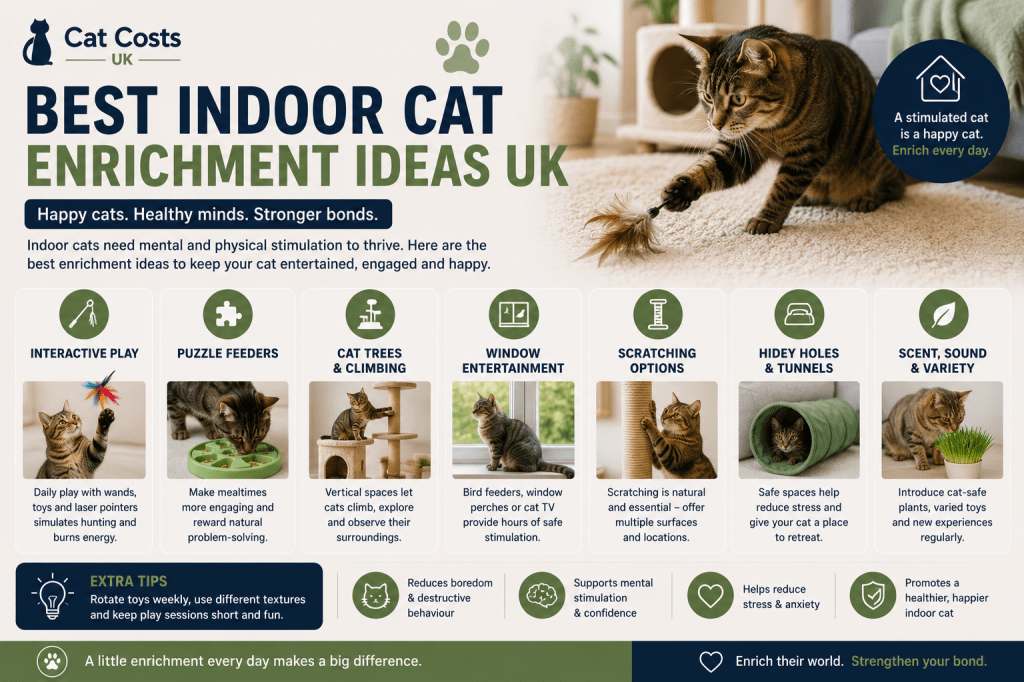
    Best Indoor Cat Enrichment Ideas UK

    Affiliate disclosure: This article contains Amazon affiliate links. As an Amazon Associate, Cat Costs UK earns from qualifying purchases.

    Indoor cats can live happy, healthy lives, but they often need more help with play, climbing, scratching, exploring and routine. Good enrichment does not need to be expensive; the aim is to give your cat more choice, movement and interest throughout the day.

    Indoor cat enrichment: quick answer

    The best indoor cat enrichment ideas are daily interactive play, scratching posts, cat trees or window perches, puzzle toys, treat games, tunnels, hiding spots and rotating toys. Start with low-cost options, then upgrade based on what your cat actually uses.

    Quick indoor enrichment ideas

    Enrichment needIdeaWhy it helpsCompare options
    ExerciseWand toysEncourages chasing, pouncing and jumping.Compare wand toys
    ClimbingCat treeAdds vertical space and resting spots.Compare cat trees
    Watching outsideWindow perchGives indoor cats a comfortable lookout.Compare window perches
    Food gamesPuzzle toy or lick matMakes treats or meals more interesting.Compare puzzle toys
    HidingCat tunnelAdds play, hiding and stalking behaviour.Compare cat tunnels

    1. Add daily interactive play

    Interactive play is one of the best enrichment options because it involves you, not just the toy. Wand toys, feather teasers and chase toys can help your cat use natural hunting behaviours indoors.

    Compare interactive cat toys on Amazon.

    2. Give your cat vertical space

    Many cats like to climb, perch and watch from above. A cat tree is the easiest option for most homes, while wall shelves can work if they are installed securely.

    Compare indoor cat trees on Amazon.

    3. Use window perches and lookout spots

    A safe window perch can give indoor cats something to watch without needing to go outside. Check the fixing method, weight guidance and whether the perch suits your window type before buying.

    Compare cat window perches on Amazon.

    4. Try puzzle toys and treat games

    Puzzle toys, treat balls and lick mats can add variety to feeding and treat time. Start with easy puzzles so your cat does not get frustrated.

    Compare cat treat puzzle toys on Amazon.

    Low-cost enrichment ideas

    • Rotate toys instead of leaving everything out.
    • Use cardboard boxes as temporary hiding spots.
    • Place a blanket on a safe windowsill or chair.
    • Hide a few treats for your cat to find.
    • Move toys between rooms to make them feel new.
    • Use short play sessions rather than one long session.

    Higher-cost products to consider later

    • Exercise wheels: good for some active cats, but expensive and not guaranteed to be used.
    • Cat wall furniture: excellent for vertical space if installed safely.
    • Automatic feeders: useful for routine, not essential enrichment.
    • Cat cameras: helpful for checking behaviour while you are out.
    • Catios: a larger investment for safe outdoor-style enrichment.

    My recommendation

    Start with play, scratching, climbing and a window view before buying expensive products. The best enrichment setup is one your cat actually uses every day.

    Related guides

    FAQs

    How do I keep an indoor cat entertained?

    Use a mix of daily play, scratching posts, climbing space, window views, puzzle toys and toy rotation.

    Do indoor cats need a cat tree?

    They do not strictly need one, but a cat tree is one of the easiest ways to add climbing, scratching and resting space indoors.

    Are puzzle toys good for indoor cats?

    They can be useful for food-motivated cats, especially when introduced gradually with easy puzzles first.

    Last updated: 2 July 2026

  • Is Cat Insurance Worth It in the UK? 2026 Guide

    Is Cat Insurance Worth It in the UK? 2026 Guide

    Affiliate disclosure: This article may contain affiliate links. Cat Costs UK may earn a commission if you click a link and make a qualifying purchase.

    Cat insurance can be worth it if you want protection against eligible unexpected vet bills. It is not the cheapest monthly cost, but it can reduce the risk of facing a large bill with little warning.

    The right answer depends on your cat, your savings, the policy price and how comfortable you are with risk. Some owners prefer insurance. Others build a separate vet savings fund.

    Quick answer

    Cat insurance is worth comparing if you would struggle to pay a large unexpected vet bill from savings. It is less useful if the policy has low limits, high excess, major exclusions or does not cover the situations you are worried about.

    What to check before buying cat insurance

    Policy detailWhy it matters
    Vet fee limitThis is the maximum amount available for treatment.
    Lifetime vs time-limitedLifetime cover is usually broader for ongoing conditions.
    ExcessThis is what you pay towards a claim.
    Co-paymentSome policies ask you to pay a percentage.
    Pre-existing conditionsExisting issues are often excluded.
    Dental coverDental rules vary by policy.

    Insurance vs savings

    A vet savings fund gives you control and can work if you build it consistently. The downside is that a serious issue can happen before you have saved enough.

    Insurance gives you a policy limit, but you pay premiums whether you claim or not. It also comes with exclusions, excesses and conditions.

    When cat insurance may be worth it

    • You do not have a large emergency fund.
    • Your cat is young and healthy.
    • You want cover for unexpected illness or injury.
    • You understand the policy exclusions.
    • You prefer predictable monthly payments.

    When it may be less worth it

    • The policy has a low vet fee limit.
    • Your cat has excluded pre-existing conditions.
    • The excess or co-payment is too high.
    • You already have enough savings to self-fund treatment.
    • You have not read the policy wording carefully.

    My recommendation

    Compare insurance while your cat is young and healthy, then read the policy wording properly. Do not choose only by monthly price. Vet fee limit, excess, lifetime cover and exclusions matter more.

    If you decide not to insure, create a separate vet savings fund and contribute to it consistently.

    Related guides

    FAQs

    Is cat insurance worth it for indoor cats?

    It can be. Indoor cats can still become ill or injured, even if their outdoor accident risk is lower.

    What type of cat insurance is best?

    Lifetime cover is often the strongest option for ongoing conditions, but it usually costs more. Always compare limits and exclusions.

    Can I insure an older cat?

    Some insurers cover older cats, but premiums, excesses and exclusions may be higher. Compare options carefully.

    Last updated: 1 July 2026

  • Pet Insurance vs Vet Health Plan UK: 2026 Guide

    Pet Insurance vs Vet Health Plan UK: 2026 Guide

    Affiliate disclosure: This article may contain affiliate links. Cat Costs UK may earn a commission if you click a link and make a qualifying purchase.

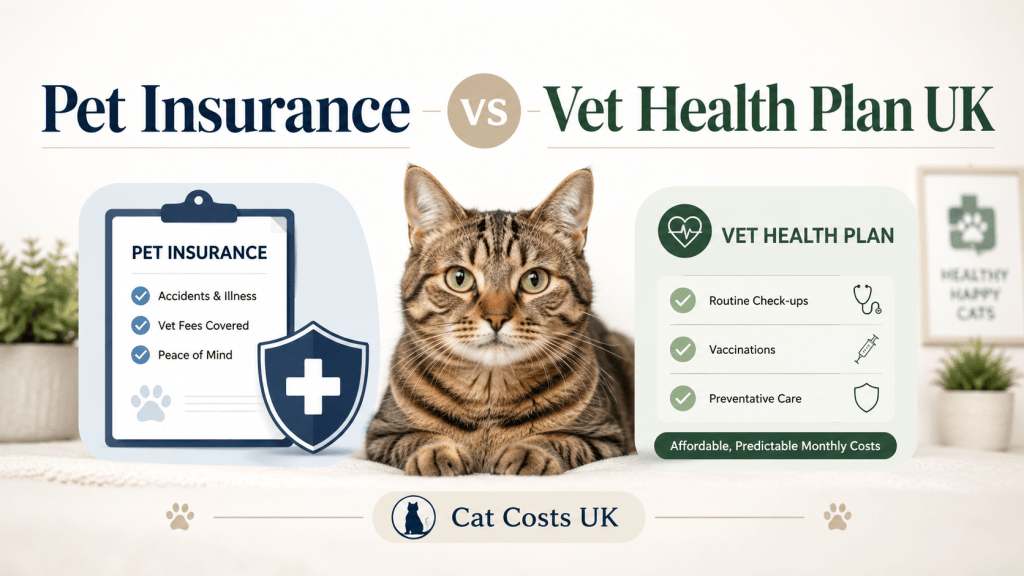
    Pet insurance and vet health plans are not the same thing. Insurance is usually designed to help with eligible unexpected illness or injury costs. A vet health plan usually helps spread predictable routine care costs, such as check-ups, flea and worming treatment or vaccinations, depending on the plan.

    The key point for cat owners is simple: a vet health plan should not be treated as a replacement for insurance unless you have checked exactly what is and is not included.

    Quick comparison

    FeaturePet insuranceVet health plan
    Main purposeEligible illness or injury claimsRoutine preventive care
    ProviderInsurer or brokerUsually a vet practice or vet group
    Common examplesDiagnostics, surgery and treatment, subject to termsVaccinations, flea and worming, check-ups, subject to plan
    Key limitsExcess, exclusions, claim limits and pre-existing conditionsUsually not emergency or major treatment cover
    Best useProtection against larger eligible billsSmoothing predictable routine costs

    Can you have both?

    Yes. Some cat owners use a vet health plan for routine care and insurance for eligible illness or injury claims. Others use insurance plus a savings pot, or a savings pot only. The right answer depends on your budget, your cat and the level of risk you are comfortable carrying yourself.

    Questions to ask before choosing

    • What exactly is included?
    • What is excluded?
    • What is the monthly cost?
    • Can the price change?
    • What happens if I move vets?
    • Are dental issues included?
    • What excess or co-payment applies?
    • Are pre-existing conditions excluded?

    My recommendation

    Do not compare these products by monthly price alone. Compare what problem they solve. A vet health plan can help with predictable routine care. Insurance can help with eligible unexpected claims. A savings pot can support either approach.

    Before choosing, read the wording carefully and ask for written details from your vet or insurer.

    Related guides

    FAQs

    Does a vet health plan cover emergency treatment?

    Usually no, but plans vary. Check the terms directly with your vet practice before relying on it.

    Is pet insurance better than a vet health plan?

    They solve different problems. Insurance is generally for eligible unexpected claims, while health plans are usually for routine preventive care.

    Can I use savings instead?

    Yes, some owners self-fund vet costs, but a large bill can arrive before enough money has been saved.

    Last updated: 1 July 2026

  • Kitten First-Year Cost UK: 2026 Budget Guide

    Kitten First-Year Cost UK: 2026 Budget Guide

    Affiliate disclosure: This article contains Amazon affiliate links. As an Amazon Associate, Cat Costs UK earns from qualifying purchases.

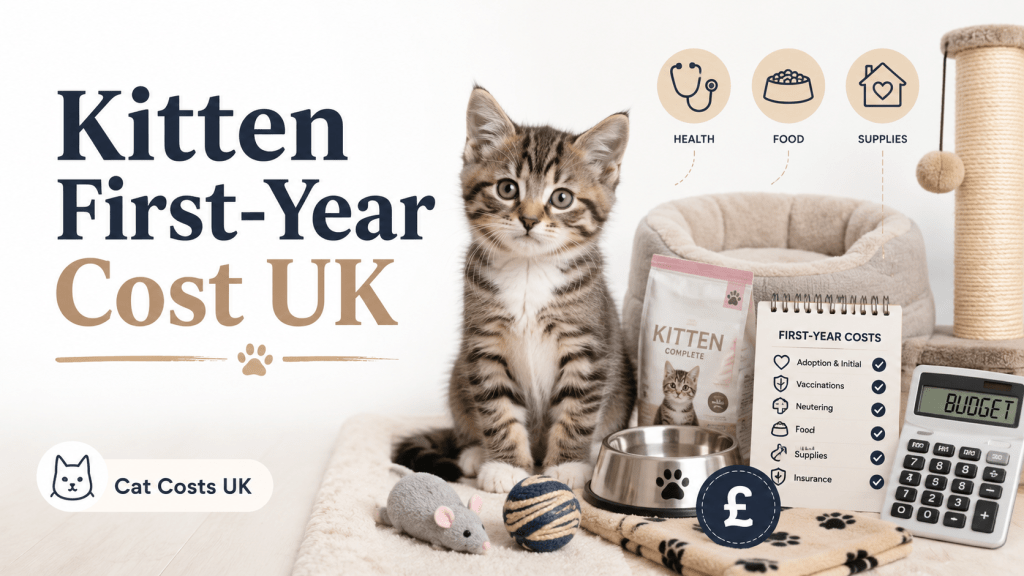
    A kitten’s first year is usually more expensive than a normal adult-cat year. You may need to pay for starter equipment, food, litter, routine vet care, insurance and one-off essentials before your monthly costs settle down.

    The key is to buy the essentials first and avoid wasting money on products your kitten may ignore. Start practical, then upgrade once you know your kitten’s habits.

    Kitten first-year cost checklist

    CostWhen it happensCompare options
    CarrierBefore collectionKitten carriers
    Litter tray and litterBefore collectionKitten litter trays
    Food and bowlsImmediatelyKitten bowls
    Scratching postFirst weekKitten scratching posts
    ToysFirst weekKitten toys
    Vet careEarly monthsCheck with your vet or rescue
    InsuranceEarly monthsCompare policy limits and exclusions

    Starter kit costs

    The first shop normally includes a carrier, litter tray, litter, bowls, a scratching post, a bed or blanket, toys and grooming basics. You do not need the most expensive version of every item.

    For kittens, choose practical products that are safe, easy to clean and not too fragile. Avoid buying a huge cat tree until you have measured your space and know whether your kitten enjoys climbing.

    Food and litter costs

    Kitten food is an ongoing cost from day one. If your kitten is already eating a specific food, do not switch suddenly just to save money. A gradual change is usually safer if you decide to move to another food.

    Litter can also become a steady monthly cost, especially for indoor kittens. Start with a tray and litter type your kitten will actually use.

    Vet and insurance costs

    Ask the rescue, breeder or previous owner exactly what vet care has already been completed. Depending on your kitten’s age, you may need to budget for vaccinations, microchipping, neutering and routine checks.

    Insurance is optional, but it is worth comparing early, before known health problems appear. Always check exclusions, excesses and annual vet fee limits.

    What not to overbuy in year one

    • Expensive beds before you know where your kitten sleeps.
    • Large cat trees before checking your space.
    • Too many toys before learning your kitten’s preferences.
    • Premium gadgets before basic routines are sorted.
    • Specialist food unless recommended by a vet or rescue.

    My recommendation

    For the first year, plan for three separate budgets: starter kit, routine monthly costs and vet or insurance costs. This gives you a more realistic view than only looking at the price of the kitten.

    Buy the essentials before collection, then add optional products like fountains, automatic feeders and cat trees once you understand your kitten’s behaviour.

    Helpful buying guides

    FAQs

    Is a kitten more expensive than an adult cat?

    The first year can be more expensive because of starter items and early vet care. After that, costs may become more predictable.

    What should I buy before getting a kitten?

    Buy a carrier, litter tray, litter, bowls, suitable food, a scratching post, a few toys and a quiet safe space.

    Do kittens need insurance?

    Insurance is optional, but many owners compare cover early. Read the policy wording carefully and check exclusions.

    Last updated: 1 July 2026

  • How Much Does a Cat Cost Per Month in the UK? 2026 Guide

    How Much Does a Cat Cost Per Month in the UK? 2026 Guide

    Affiliate disclosure: This article contains Amazon affiliate links. As an Amazon Associate, Cat Costs UK earns from qualifying purchases.

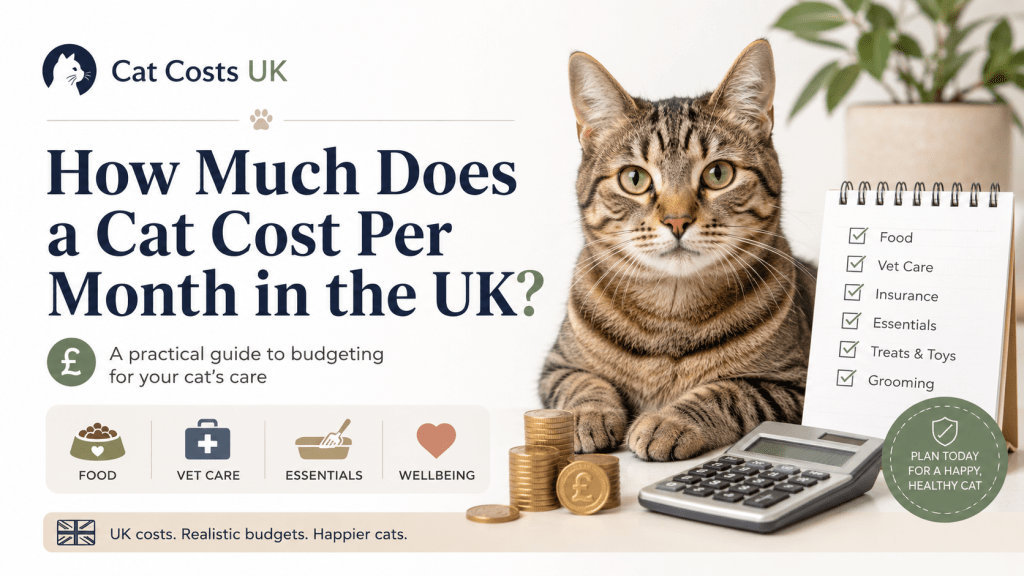
    The cost of owning a cat in the UK can vary a lot, but a realistic monthly budget should include more than food. You also need to think about litter, insurance or vet savings, routine care, replacement products and one-off starter items.

    As a practical starting point, many owners should budget at least around £80 per month for a cat, before unexpected vet bills or premium product choices. Your actual cost may be lower or higher depending on your cat’s age, diet, health, lifestyle and insurance decision.

    Typical monthly cat costs UK

    Cost areaWhat it coversHow to control it
    FoodWet food, dry food or mixed feedingCompare cost per portion, not just pack price
    LitterClumping, pellet, silica or plant-based litterBuy the type your cat uses reliably
    Insurance or vet fundCover or savings for unexpected treatmentCompare policy limits, excess and exclusions
    Routine careVaccines, flea/worming, check-upsAsk your vet about routine care plans
    ReplacementsToys, scratchers, bowls, bedding, carriersBuy durable basics and replace only when needed

    Cat food costs

    Food is usually one of the biggest monthly costs. Wet food, dry food, premium recipes and specialist diets can all change the total quickly.

    When comparing food, look at portion guidance and pack size rather than only the headline price. A cheaper box is not always cheaper per day.

    Cat litter costs

    Indoor cats usually cost more in litter because they rely on trays all the time. Odour control, tracking and dust are often worth paying attention to, especially in smaller homes.

    Clumping litter can be easier to scoop. Wood pellet litter may track less. Silica litter can be lighter, but some cats dislike the texture. The best litter is the one your cat uses consistently.

    Insurance and vet costs

    Insurance is optional, but unexpected vet bills can be expensive. If you do not take out insurance, consider building a separate vet savings pot. If you do choose insurance, read the policy wording carefully.

    • Check annual vet fee limits.
    • Check excess and co-payment rules.
    • Check whether dental issues are covered.
    • Check pre-existing condition exclusions.
    • Check how premiums may change as your cat ages.

    One-off costs to remember

    The first month can be much more expensive because you may need a carrier, litter tray, bowls, scratcher, bed, toys, microchipping, neutering or vaccinations depending on your cat’s age and where they come from.

    How to reduce cat costs safely

    • Buy durable essentials instead of replacing cheap items often.
    • Compare food by cost per day, not just pack price.
    • Do not switch food suddenly just to save money.
    • Keep up with routine care to reduce avoidable problems.
    • Use scratchers and toys to protect furniture and keep indoor cats active.
    • Avoid buying premium gadgets unless they solve a real problem.

    My recommendation

    Budget for food, litter, insurance or savings, routine care and replacements. Then treat products like feeders, fountains, cat trees and premium beds as optional upgrades, not essential day-one spending.

    If you are getting a cat soon, start with a practical starter kit and avoid overbuying until you know your cat’s preferences.

    Useful product guides for controlling cat costs

    Some products cost more upfront but can help with daily routines, waste, mess or repeat purchases. Start with essentials first, then compare upgrades once you know your cat’s habits.

    Helpful buying guides

    FAQs

    How much does a cat cost per month in the UK?

    A practical minimum budget is around £80 per month, but this can rise depending on food, litter, insurance, vet care and your cat’s individual needs.

    Is a cat expensive to own?

    Cats are usually cheaper than many dogs, but they are not low-cost pets. Food, litter, vet care and insurance can add up quickly.

    What is the biggest monthly cat cost?

    Food, litter and insurance are often the biggest regular costs. Unexpected vet bills can be the biggest occasional cost.

    Last updated: 1 July 2026