Category: Cat Food & Litter

Compare cat food and litter choices for UK homes, including dry and wet food, odour control, tracking, low-dust options, storage and the features worth paying for.

  • Weight Management Cat Food UK: What to Look For Before You Buy

    Weight Management Cat Food UK: What to Look For Before You Buy

    Affiliate disclosure: This article contains Amazon affiliate links. As an Amazon Associate, Cat Costs UK earns from qualifying purchases.

    If you are comparing weight management cat food UK options, the best result usually comes from combining the right food with better portion control. The food matters, but so does how much you serve, how often you feed, and whether your cat can access extra food around the home.

    This guide explains what to check before buying, how wet and dry options compare, and which feeding products can make mealtimes easier to manage. For any major change to your cat’s feeding routine, speak to your vet first.

    Weight management cat food UK: quick buying guide

    Product typeWhy it can helpBest forCompare
    Dry weight management foodEasy to measure and storeCats that eat biscuits(Ad) Dry food
    Wet weight management foodGood for set mealtimesCats that prefer wet meals(Ad) Wet food
    Automatic cat feederControls meal timingBusy households(Ad) Automatic feeders
    Microchip feederStops food stealingMulti-cat homes(Ad) Microchip feeders
    Slow feeder bowlSlows fast eatingCats that rush meals(Ad) Slow feeders
    Pet food scalesMakes portions more accurateOwners who guess portions(Ad) Food scales

    What to check before buying

    • Complete food: choose a complete cat food, not just toppers or treats.
    • Life stage: check whether it is for adult, senior or kitten feeding.
    • Feeding guide: look for clear daily serving guidance.
    • Texture: choose wet or dry based on what your cat eats reliably.
    • Storage: larger dry bags need airtight storage.
    • Budget: choose a food you can keep buying consistently.

    Wet vs dry weight management cat food

    Wet and dry food can both work, but they suit different homes. Wet food is useful for set mealtimes and cats that prefer softer meals. Dry food is convenient and works well with automatic feeders, but it is easier to over-pour unless you measure it.

    TypeProsWatch-outsShop
    Wet foodGood for set mealsOpened food needs storing properly(Ad) Wet options
    Dry foodConvenient and easy to storeBest measured accurately(Ad) Dry options
    Mixed feedingUseful for varietyCount both wet and dry meals(Ad) Measuring tools

    Best products to make feeding easier

    1. Food scales

    If you currently pour dry food by eye, small digital scales are one of the most useful low-cost buys. They make it easier to follow the serving guide and keep meals consistent.

    2. Automatic feeders

    An automatic feeder can help when mealtimes are inconsistent or when your cat asks for food between meals. They are especially useful for dry food and busy households.

    3. Slow feeder bowls and puzzle feeders

    Slow feeders and puzzle feeders can make meals last longer and add enrichment. They are useful for cats that finish their food quickly and then immediately look for more.

    4. Microchip feeders

    In multi-cat homes, one cat may eat from another cat’s bowl. A microchip feeder can help keep meals separate and make feeding more controlled.

    Common feeding mistakes to avoid

    • Guessing dry food portions instead of measuring them.
    • Leaving food down all day for a cat that keeps returning to the bowl.
    • Not counting treats, lickable snacks or leftovers.
    • Switching food too quickly.
    • Buying a new food but serving the old portion size.
    • Letting one cat steal another cat’s food.

    Simple buying checklist

    • Start with a complete food that matches your cat’s life stage.
    • Buy a small pack first if your cat is fussy.
    • Add food scales if you do not measure portions.
    • Consider an automatic feeder if mealtimes are inconsistent.
    • Consider a microchip feeder if you have more than one cat.
    • Use a slow feeder or puzzle feeder if your cat eats too quickly.

    Useful Cat Costs UK guides

    FAQs

    What is the best weight management cat food in the UK?

    The best option depends on your cat’s age, routine and food preferences. Look for a complete food with clear feeding guidance and ask your vet if you are unsure.

    Is wet or dry food better?

    Wet food can work well for set meals, while dry food is convenient and works well with feeders. The most important thing is feeding a consistent amount.

    Are automatic feeders worth it?

    They can be worth it if your cat asks for food between meals or if your household needs a more consistent routine.

    Last updated: 6 July 2026

  • Eco-Friendly Cat Food UK: Sustainable Options for Cat Owners

    Eco-Friendly Cat Food UK: Sustainable Options for Cat Owners

    Affiliate disclosure: This article contains Amazon affiliate links. As an Amazon Associate, Cat Costs UK earns from qualifying purchases.

    If you are looking for eco-friendly cat food UK options, the best place to start is not just the front of the pack. More sustainable cat food usually comes down to ingredients, sourcing, packaging, food waste and whether your cat will actually eat it.

    This guide explains what to look for when comparing environmentally friendly cat food UK options, including organic dry cat food, recyclable packaging, responsibly sourced meat or fish, and practical ways to reduce waste without compromising your cat’s diet.

    Eco-friendly cat food UK: quick comparison

    OptionWhy it may helpBest for
    Organic dry cat foodMay use organic ingredients and simpler recipesOwners searching for organic cat food
    Responsibly sourced fish recipesCan support better sourcing standardsCats that prefer fish-based food
    Natural meat-based cat foodOften focuses on clearer ingredient listsOwners comparing premium food
    Recyclable packagingHelps reduce household packaging wasteOwners who buy multipacks
    Bulk dry food bagsCan reduce packaging per servingHomes with good airtight storage
    Reusable pouch lids and storage tubsCan reduce wasted wet foodCats that eat smaller portions

    What does eco-friendly cat food actually mean?

    Eco-friendly cat food is not one single product type. It can mean food made with more responsible sourcing, recyclable packaging, organic ingredients, less waste, or better storage formats. The most useful approach is to compare the whole product, not just one claim on the label.

    For cats, nutrition still comes first. Choose a complete food that is suitable for your cat’s age and needs, and speak to your vet if your cat has dietary issues or a medical condition.

    Organic dry cat food UK: is it worth considering?

    Organic dry cat food UK searches usually come from owners who want a more natural or lower-impact option. Organic cat food may appeal if you want clearer sourcing and fewer artificial additives, but it is still important to check whether it is complete, suitable and something your cat will consistently eat.

    Dry food can also be easier to store, and larger bags may reduce packaging per meal. The downside is that dry food needs airtight storage to stay fresh, especially if you buy in bulk.

    Environmentally friendly cat food UK: what to check before buying

    • Complete food: check whether the food is complete or complementary.
    • Age suitability: kitten, adult and senior cats can need different formulas.
    • Protein source: look for clearly named meat or fish sources.
    • Packaging: check whether pouches, tins, trays or bags are recyclable locally.
    • Portion size: food that gets wasted is not very sustainable.
    • Storage: airtight tubs can help keep dry food fresher for longer.
    • Value: eco-friendly options only work long term if they fit your budget.

    Wet food vs dry food: which is more sustainable?

    There is no perfect answer. Wet food often uses tins, trays or pouches and can create more packaging per meal. Dry food is usually easier to store and can be bought in larger bags, but it still needs to be nutritionally suitable for your cat.

    The most practical choice is often the one your cat eats reliably with minimal waste. If half the bowl ends up in the bin, the environmental benefit is reduced, even if the product looks better on paper.

    Practical ways to reduce cat food waste

    • Buy smaller trial packs before committing to a large bag.
    • Use reusable pouch lids or tin covers for opened wet food.
    • Store dry food in an airtight container.
    • Measure portions instead of overfilling bowls.
    • Avoid switching food too often if your cat is settled.
    • Check dates before buying large multipacks.
    Useful itemWhy it helpsCompare options
    Airtight cat food containerKeeps dry food fresher for longer(Ad) Cat food storage containers
    Reusable pouch lidsHelps save opened wet food(Ad) Cat food pouch lids
    Wet food tin coversUseful for tins and trays(Ad) Tin covers
    Measuring scoopHelps avoid overfeeding and waste(Ad) Measuring scoops
    Slow feeder bowlUseful for cats that eat too quickly(Ad) Slow feeder cat bowls

    Best eco-friendly cat food approach for most owners

    For most UK cat owners, the best approach is to choose a complete food your cat eats well, then reduce waste around it. That may mean buying a better-quality dry food in a larger bag, choosing recyclable packaging where possible, or using storage products to stop food being thrown away.

    If you want to test a more eco-friendly cat food, start small. Buy one trial bag or mixed pack before switching fully. This reduces the risk of wasting money on food your cat refuses.

    Useful Cat Costs UK guides

    FAQs

    What is the best eco-friendly cat food in the UK?

    The best eco-friendly cat food is a complete food your cat eats well, with sensible sourcing, packaging and storage. There is no single best option for every cat.

    Is organic dry cat food better?

    Organic dry cat food may appeal if you want organic ingredients and clear sourcing, but it still needs to be nutritionally complete and suitable for your cat.

    Is wet or dry cat food more eco-friendly?

    It depends on the product, packaging and waste. Dry food is often easier to store in larger bags, while wet food may create more packaging per meal.

    How can I make cat food more environmentally friendly?

    Reduce waste, store food properly, buy suitable portions and choose recyclable packaging where possible. A food your cat actually eats is usually better than one that ends up in the bin.

    Last updated: 6 July 2026

  • How to Stop Cat Litter Tracking: Mats, Trays & Setup

    How to Stop Cat Litter Tracking: Mats, Trays & Setup

    Affiliate disclosure: This article contains Amazon affiliate links. As an Amazon Associate, Cat Costs UK earns from qualifying purchases.

    Cat litter tracking is one of the most common annoyances for indoor cat owners. Litter can spread from the tray into hallways, kitchens, bedrooms and sofas, especially if the tray is in a busy area or your cat kicks litter when digging.

    How to stop cat litter tracking: quick answer

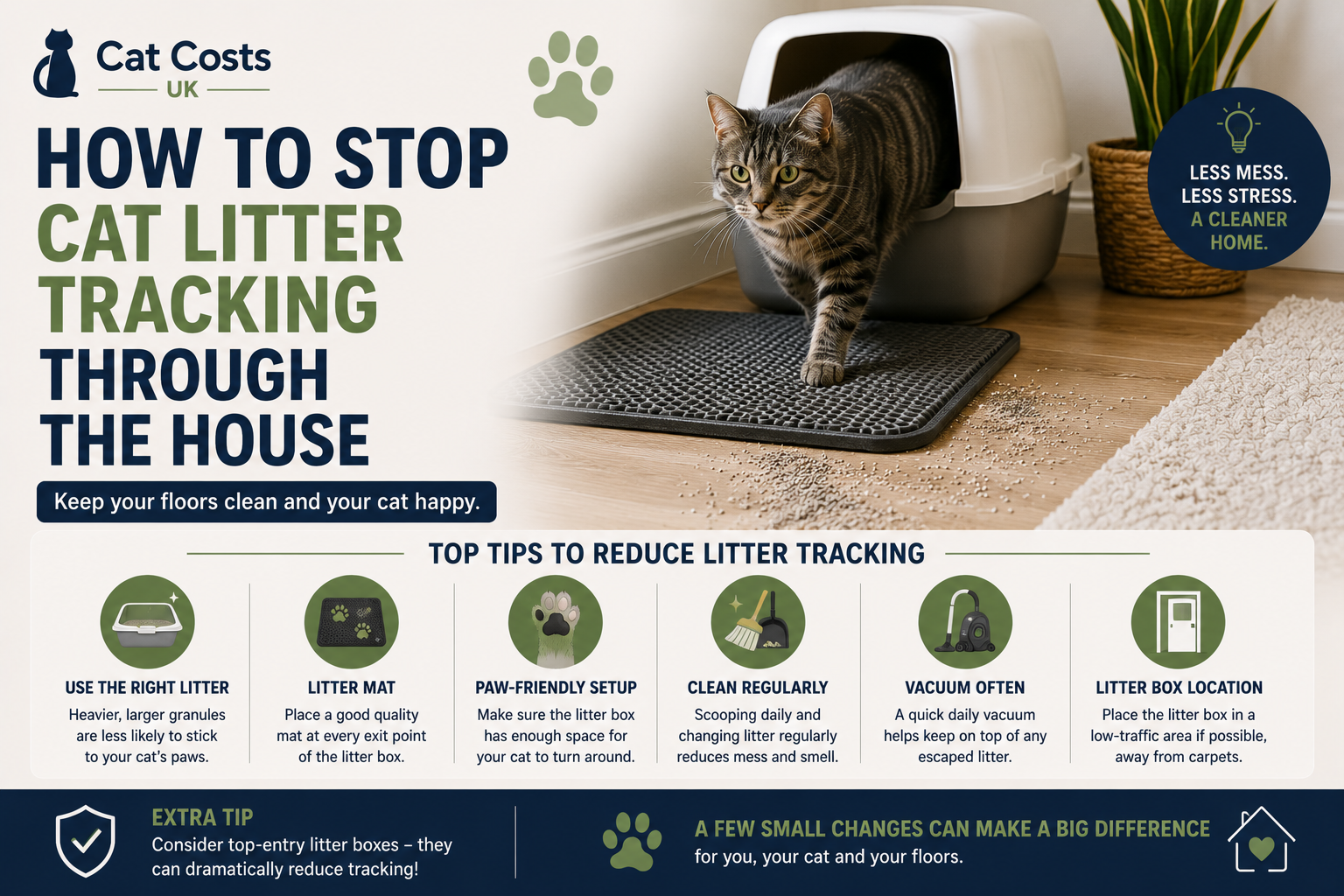
    The best way to reduce cat litter tracking is to use a good litter mat, place the tray in a lower-traffic area, keep the tray clean, and consider a larger or covered litter box if your cat kicks litter out. Changing litter type may also help, but do it gradually.

    Quick fixes for litter tracking

    FixBest forCompare options
    Litter matCatching litter as your cat exits the tray(Ad) Compare litter mats
    Larger litter trayCats that dig or kick litter out(Ad) Compare large trays
    Covered litter boxContaining kicked litter(Ad) Compare covered boxes
    Low-tracking litterReducing spread from paws(Ad) Compare low-tracking litter

    1. Use a proper litter mat

    A litter mat is usually the easiest first fix. Place it directly outside the tray entrance so your cat has to step onto it when leaving. Larger mats usually work better than tiny mats because cats often jump or step over small ones.

    (Ad) Compare large cat litter mats on Amazon.

    2. Move the tray away from high-traffic areas

    If the tray sits beside a doorway, kitchen walkway or living room entrance, litter is more likely to spread. Moving the tray slightly can reduce how far litter travels, as long as the new location still feels safe and accessible for your cat.

    3. Try a larger litter tray

    Some cats track litter because the tray is too small or they kick litter over the sides. A larger tray gives them more room to turn, dig and cover without throwing as much litter onto the floor.

    (Ad) Compare large cat litter trays on Amazon.

    4. Consider a covered litter box

    Covered litter boxes can help contain kicked litter, but not every cat likes them. If your cat dislikes enclosed spaces or stops using the tray, switch back to an open tray and try a mat or larger tray instead.

    (Ad) Compare covered cat litter boxes on Amazon.

    5. Change litter type carefully

    Some litters track more than others. Larger granules may spread less, while very lightweight litter can travel further. Change litter gradually where possible, as sudden changes can put some cats off using the tray.

    (Ad) Compare low-tracking cat litter on Amazon.

    What to avoid

    • Do not move the tray somewhere your cat feels unsafe.
    • Do not suddenly change every part of the litter setup at once.
    • Do not use strong-smelling cleaning products around the tray.
    • Do not force a covered box if your cat clearly dislikes it.
    • Do not ignore sudden litter tray issues, as they can sometimes indicate stress or health concerns.

    My recommendation

    Start with a large litter mat and a sensible tray position. If litter still spreads, try a larger tray or covered litter box before changing litter type completely.

    Related guides

    FAQs

    What is the best way to stop cat litter tracking?

    The best first step is usually a large litter mat placed directly outside the tray, combined with a clean, well-positioned litter tray.

    Do covered litter boxes stop tracking?

    They can reduce kicked litter, but they do not stop all tracking from paws. Some cats also dislike covered boxes.

    Does low-tracking cat litter work?

    It may help, but results vary by cat, tray and home layout. Change litter gradually to avoid putting your cat off the tray.

    Plan the wider cat setup

    The product is only one part of the decision. Use the calculator to estimate the wider monthly budget, then browse the product hub for related essentials before you buy.

    Last updated: 2 July 2026

  • Are Self-Cleaning Litter Boxes Worth It in the UK?

    Are Self-Cleaning Litter Boxes Worth It in the UK?

    Affiliate disclosure: This article contains Amazon affiliate links. As an Amazon Associate, Cat Costs UK earns from qualifying purchases.

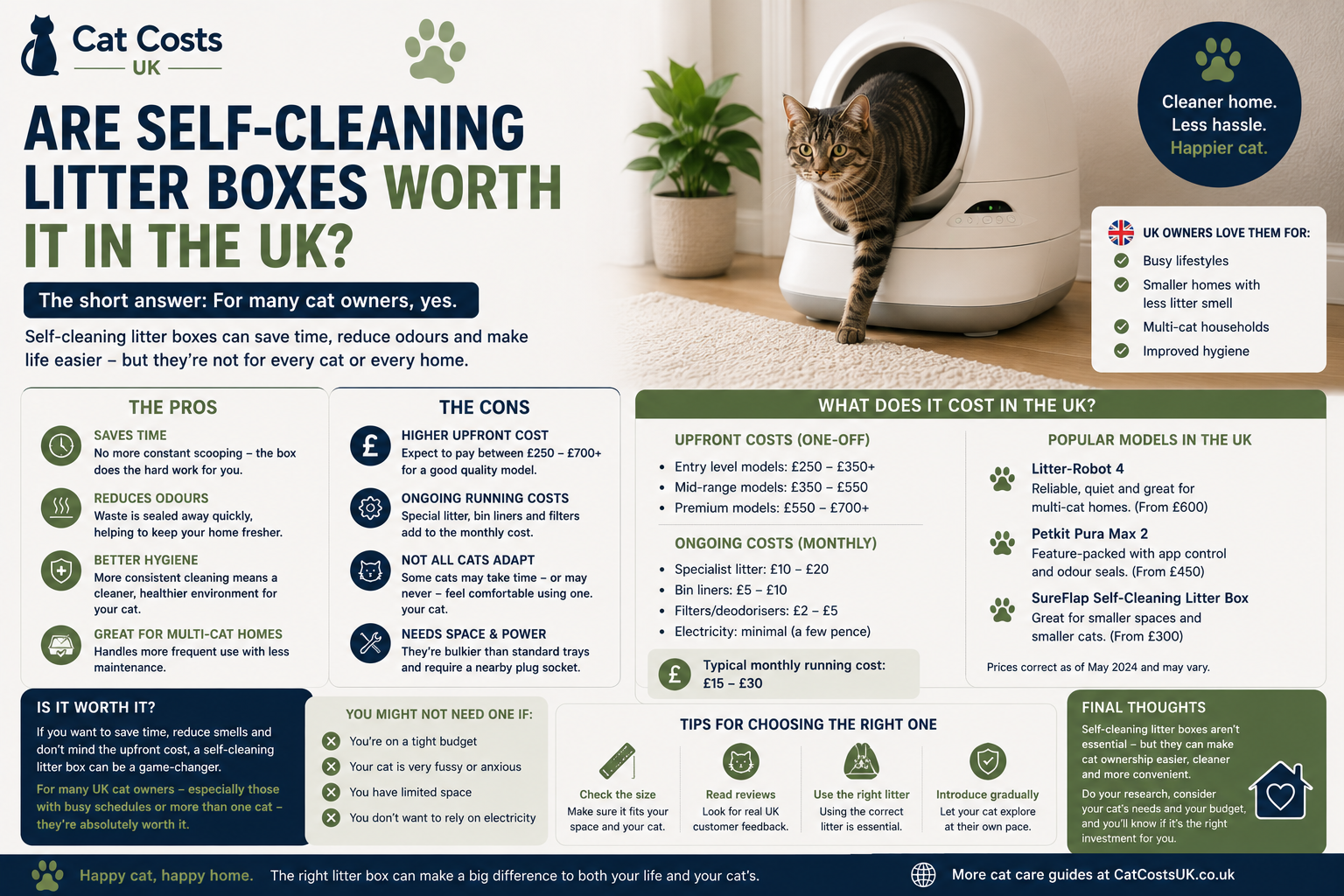
    Self-cleaning litter boxes can be appealing because they promise less scooping and a cleaner litter area. They can be useful for some homes, but they are expensive, take up space and not every cat will accept them.

    Are self-cleaning litter boxes worth it? Quick answer

    A self-cleaning litter box can be worth it if you want to reduce daily scooping, have the budget, and your cat is confident with enclosed or mechanical litter boxes. A normal litter tray is usually better if your cat is nervous, the space is small, or you want the simplest low-cost setup.

    Quick comparison

    OptionBest forWatch out forCompare
    Self-cleaning litter boxReducing daily scoopingHigh cost, space and cat acceptance(Ad) Compare self-cleaning boxes
    Covered litter boxContaining mess and odourSome cats dislike enclosed trays(Ad) Compare covered boxes
    Large open traySimple, low-cost litter setupNeeds regular scooping(Ad) Compare large trays
    Litter matReducing tracked litterDoes not replace scooping(Ad) Compare litter mats

    When a self-cleaning litter box is worth it

    It may be worth it if you have a confident cat, enough room, and you strongly dislike daily scooping. It can also be useful in multi-cat homes, but you should check capacity and whether the product is suitable for more than one cat before buying.

    (Ad) Compare automatic self-cleaning litter boxes on Amazon.

    When it may not be worth it

    It may not be worth it if your cat is nervous, dislikes covered trays, is sensitive to noise, or you do not have space for a large unit. It is also not maintenance-free: you still need to empty waste, clean parts and monitor whether your cat is using it normally.

    Hidden costs and practical issues

    • Upfront cost: self-cleaning boxes are usually much more expensive than normal trays.
    • Consumables: some models need liners, bags, filters or specific litter.
    • Space: many units are larger than expected.
    • Noise: mechanical movement may worry some cats.
    • Cleaning: automatic does not mean no cleaning.
    • Reliability: check recent customer feedback carefully.
    • Returns: important if your cat refuses to use it.

    Safety and cat acceptance checks

    • Introduce the new box gradually and keep the old tray available at first.
    • Do not force your cat into the unit.
    • Check sensor and safety information before use.
    • Watch for changes in litter habits.
    • Speak to a vet if your cat suddenly avoids the tray, strains, cries or changes toilet behaviour.

    My recommendation

    Buy a self-cleaning litter box only if you have a clear reason to upgrade and can afford the risk that your cat may not accept it. For many homes, a large tray, good litter mat and regular scooping is still the best-value setup.

    Related guides

    FAQs

    Are self-cleaning litter boxes worth the money?

    They can be worth it if reducing scooping is a high priority and your cat accepts the box, but they are not the best-value option for every home.

    Do self-cleaning litter boxes still need cleaning?

    Yes. You still need to empty waste, clean parts, replace consumables where required and check the unit is working properly.

    Will my cat use a self-cleaning litter box?

    Some cats use them well, while others dislike the movement, noise or enclosed design. Keep the old tray available during the changeover.

    Plan the wider cat setup

    The product is only one part of the decision. Use the calculator to estimate the wider monthly budget, then browse the product hub for related essentials before you buy.

    Last updated: 2 July 2026

  • Best Self-Cleaning Litter Boxes UK: 2026 Buying Guide

    Best Self-Cleaning Litter Boxes UK: 2026 Buying Guide

    Affiliate disclosure: This article contains Amazon affiliate links. As an Amazon Associate, Cat Costs UK earns from qualifying purchases.

    Self-cleaning litter boxes can reduce daily scooping, but they are expensive and not every cat accepts them. The best option should be safe, easy to clean, suitable for your cat’s size and practical for your home.

    Best self-cleaning litter boxes UK: quick answer

    For most buyers, the best self-cleaning litter box is one with clear safety sensors, easy waste removal, accessible cleaning parts and enough internal space for your cat. If your cat is nervous or dislikes enclosed trays, a large open tray may be better.

    Quick picks: self-cleaning litter box options

    Best forOptionWhy it helpsCompare options
    Less scoopingAutomatic litter boxReduces daily manual scooping.(Ad) Compare automatic boxes
    Odour controlCovered litter boxLower-cost alternative to automatic boxes.(Ad) Compare covered boxes
    Best valueLarge open traySimple, cheap and widely accepted by cats.(Ad) Compare large trays
    Less messLitter matUseful add-on whichever tray you choose.(Ad) Compare litter mats

    How to choose safely

    This guide compares self-cleaning litter boxes by practical factors such as safety sensors, internal space, waste drawer size, cleaning access, consumables, noise, power, litter compatibility and cat acceptance.

    Unless stated otherwise, products have not been hands-on tested by Cat Costs UK. Always check current safety information, dimensions, litter requirements, return policies and customer feedback before buying.

    Best overall: automatic self-cleaning litter boxes

    An automatic self-cleaning litter box may be worth comparing if your main goal is reducing scooping. Check recent reviews for reliability, noise and how easy the unit is to deep clean.

    (Ad) Compare automatic self-cleaning litter boxes on Amazon.

    Best lower-cost alternative: covered litter boxes

    A covered litter box will not clean itself, but it can help contain mess and may cost much less. It can be a sensible step before committing to a high-price automatic unit.

    (Ad) Compare covered cat litter boxes on Amazon.

    What to check before buying

    • Safety sensors: check how the unit detects your cat.
    • Internal size: make sure your cat has enough room.
    • Noise: mechanical movement may put cats off.
    • Consumables: check liners, filters, bags or specific litter needs.
    • Cleaning: automatic does not mean no cleaning.
    • Returns: important because some cats refuse new trays.
    • Health changes: speak to a vet if litter habits suddenly change.

    My recommendation

    Choose a self-cleaning litter box only if reducing scooping is worth the cost and your cat is likely to accept the design. For many homes, a large tray, good litter and litter mat remain the best-value setup.

    Related guides

    FAQs

    Are self-cleaning litter boxes worth it?

    They can be worth it if reducing scooping is a high priority, but they are expensive and not every cat accepts them.

    Do automatic litter boxes still need cleaning?

    Yes. You still need to empty waste, clean parts and check the unit is working correctly.

    What is a cheaper alternative?

    A large open tray, covered litter box and good litter mat is usually much cheaper and works well for many cats.

    Plan the wider cat setup

    The product is only one part of the decision. Use the calculator to estimate the wider monthly budget, then browse the product hub for related essentials before you buy.

    Who should avoid a self-cleaning litter box? Avoid paying for one if your cat refuses enclosed or moving trays, your home cannot accommodate the footprint, or you will not keep up with waste removal, cleaning and replacement consumables. A simpler open tray may be better value.

    Last updated: 8 August 2026

  • Best Covered Cat Litter Boxes UK: Compare Hooded & Top-Entry

    Best Covered Cat Litter Boxes UK: Compare Hooded & Top-Entry

    Affiliate disclosure: This article contains Amazon affiliate links. As an Amazon Associate, Cat Costs UK earns from qualifying purchases.

    Covered cat litter boxes can help contain kicked litter and make a litter area look tidier. They can also help with odour control, but they are not right for every cat. Some cats prefer an open tray, especially if they dislike enclosed spaces.

    Best covered cat litter boxes UK: quick answer

    For most cats that tolerate enclosed trays, the best covered litter box is spacious, easy to clean, well ventilated and simple for your cat to enter. If your cat avoids covered boxes, use a large open tray with a good litter mat instead.

    Quick picks: covered litter box options

    Best forOptionWhy it helpsCompare options
    Most homesHooded litter boxHelps contain kicked litter and mess.(Ad) Compare hooded boxes
    Tracking controlTop-entry litter boxCan reduce litter spread from exits.(Ad) Compare top-entry boxes
    Large catsExtra-large covered boxMore room to turn and dig.(Ad) Compare large covered boxes
    Simple setupLarge open trayOften easier for cats to accept.(Ad) Compare large trays

    How to choose safely

    This guide compares covered litter boxes by practical factors such as size, entry height, ventilation, cleaning access, lid removal, odour filters, litter tracking and whether your cat is likely to accept an enclosed tray.

    Unless stated otherwise, products have not been hands-on tested by Cat Costs UK. Always check current product dimensions, cleaning instructions, return policies and customer feedback before buying.

    Best overall: hooded cat litter boxes

    Hooded litter boxes are the most common covered option. They can help contain mess, but choose one large enough for your cat to turn around comfortably and avoid designs that are awkward to clean.

    (Ad) Compare hooded cat litter boxes on Amazon.

    Best for litter tracking: top-entry boxes

    Top-entry litter boxes can reduce tracking because cats leave through the top and may drop some litter before stepping onto the floor. They are not ideal for every cat, especially kittens, older cats or cats with mobility issues.

    (Ad) Compare top-entry litter boxes on Amazon.

    What to check before buying

    • Size: your cat should be able to turn comfortably.
    • Entry height: avoid high entrances for kittens or older cats.
    • Cleaning: removable lids and wide openings are useful.
    • Ventilation: enclosed boxes still need airflow.
    • Odour filters: helpful, but not a replacement for cleaning.
    • Cat preference: some cats simply prefer open trays.
    • Tracking: pair with a litter mat for best results.

    My recommendation

    Choose a covered litter box only if your cat is comfortable using enclosed spaces. For many cats, a large open tray with a litter mat is simpler and better value.

    Related guides

    FAQs

    Are covered litter boxes better?

    They can be better for containing mess, but not every cat likes enclosed trays. Cat preference matters more than appearance.

    Do covered litter boxes reduce smell?

    They may help contain odour, but regular scooping and cleaning are still essential.

    Are top-entry litter boxes good?

    They can reduce tracking, but they may not suit kittens, older cats or cats with mobility issues.

    Plan the wider cat setup

    The product is only one part of the decision. Use the calculator to estimate the wider monthly budget, then browse the product hub for related essentials before you buy.

    Last updated: 8 August 2026

  • Best Cat Litter Mats UK: Compare Tracking & Easy-Clean Options

    Best Cat Litter Mats UK: Compare Tracking & Easy-Clean Options

    Affiliate disclosure: This article contains Amazon affiliate links. As an Amazon Associate, Cat Costs UK earns from qualifying purchases.

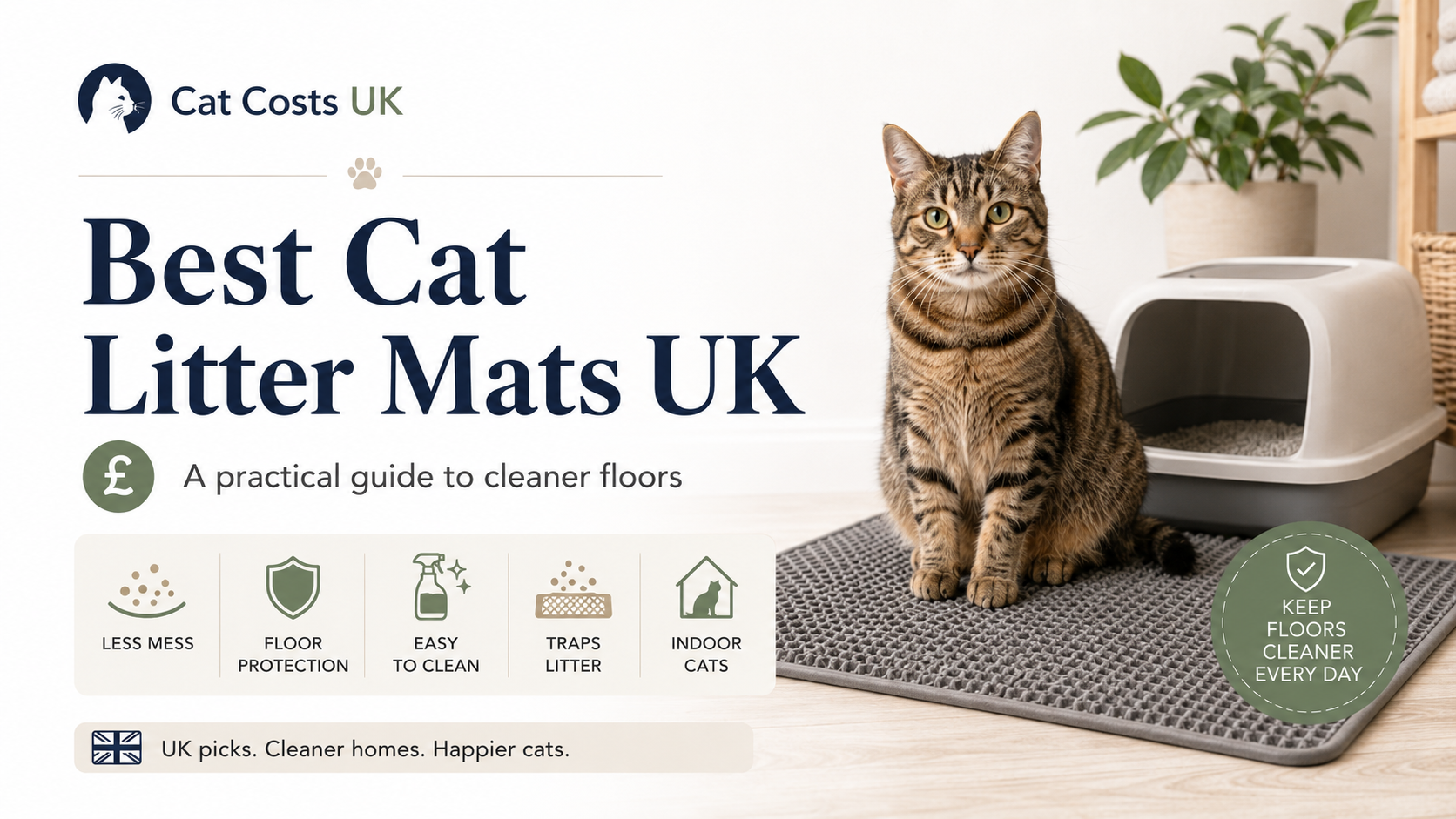
    A cat litter mat is one of the easiest ways to reduce litter tracking around the house. It will not stop every grain of litter, but the right mat can catch a lot of mess as your cat leaves the tray.

    Best cat litter mats UK: quick answer

    For most homes, the best cat litter mat is a large, easy-clean mat placed directly outside the tray entrance. Honeycomb mats can be good for trapping litter, while waterproof mats are useful if you want easier cleaning around the litter area.

    Quick picks: cat litter mats

    Best forMat typeWhy it helpsCompare options
    Most homesLarge litter matCatches more litter than small mats.(Ad) Compare large mats
    TrackingHoneycomb litter matDesigned to trap litter in the top layer.(Ad) Compare honeycomb mats
    CleaningWaterproof litter matUseful around messy litter areas.(Ad) Compare waterproof mats
    Covered boxesEntry matWorks well outside a hooded tray entrance.(Ad) Compare entry mats

    How to choose a litter mat

    This guide compares cat litter mats by practical factors such as size, texture, cleaning method, waterproofing, comfort under paws, placement and how well the mat suits your tray setup.

    Unless stated otherwise, products have not been hands-on tested by Cat Costs UK. Always check current product dimensions, material, cleaning instructions, return policies and customer feedback before buying.

    Best overall: large cat litter mats

    A larger mat usually works better than a tiny one because cats often step or jump beyond small mats. Place the mat so your cat naturally walks across it when leaving the tray.

    (Ad) Compare large cat litter mats on Amazon.

    Best for trapping litter: honeycomb mats

    Honeycomb litter mats are designed to trap litter in holes or layers, making it easier to tip the litter back into the tray or empty it into the bin. Check whether the mat opens easily for cleaning.

    (Ad) Compare honeycomb cat litter mats on Amazon.

    What to check before buying

    • Size: bigger mats usually catch more litter.
    • Texture: avoid mats your cat refuses to walk on.
    • Cleaning: check whether it can be shaken, vacuumed or rinsed.
    • Waterproofing: useful for messy litter areas.
    • Placement: put it where your cat exits the tray.
    • Tray type: match the mat to an open, covered or top-entry box.
    • Durability: check if the material copes with scratching.

    My recommendation

    Start with a large, easy-clean litter mat before changing your whole litter setup. If tracking remains a problem, combine the mat with a larger tray or covered litter box.

    Related guides

    FAQs

    Do cat litter mats actually work?

    They can reduce tracking, but they will not stop every bit of litter. Size and placement make a big difference.

    What type of litter mat is best?

    A large, easy-clean mat is best for most homes. Honeycomb mats can be especially useful for trapping litter.

    Where should I put a cat litter mat?

    Place it directly outside the tray entrance so your cat naturally walks across it when leaving the tray.

    Plan the wider cat setup

    The product is only one part of the decision. Use the calculator to estimate the wider monthly budget, then browse the product hub for related essentials before you buy.

    Last updated: 8 August 2026

  • Best Cat Food Storage Containers UK: Airtight & Practical Options

    Best Cat Food Storage Containers UK: Airtight & Practical Options

    Affiliate disclosure: This article contains Amazon affiliate links. As an Amazon Associate, Cat Costs UK earns from qualifying purchases.

    Cat food storage containers can help keep dry food tidier, easier to pour and better protected from spills. They are especially useful if you buy larger bags of dry food, have limited cupboard space, or want to keep food away from curious cats.

    Best cat food storage containers UK: quick answer

    For most homes, the best cat food storage container is an airtight dry food bin that is easy to open, easy to clean and large enough for your usual bag size. For treats or small bags, smaller tubs or stackable containers may be more practical.

    Quick picks: cat food storage options

    Best forStorage typeWhy it helpsCompare options
    Dry food bagsAirtight food binHelps keep food contained and tidy.(Ad) Compare airtight containers
    Bulk buyingLarge pet food containerUseful for bigger dry food bags.(Ad) Compare large food bins
    Small spacesStackable containerBetter for cupboards and utility rooms.(Ad) Compare stackable containers
    TreatsTreat storage tubKeeps treats separate from main food.(Ad) Compare treat tubs

    How to choose a cat food container

    This guide compares cat food storage containers by practical factors such as capacity, seal, cleaning, pouring, stackability, cupboard fit, durability and whether the container suits your usual food bag size.

    Unless stated otherwise, products have not been hands-on tested by Cat Costs UK. Always check current product dimensions, capacity, cleaning instructions, return policies and customer feedback before buying.

    Best overall: airtight dry food containers

    An airtight dry food container is the most useful option for many homes. Choose one with a secure lid and enough space for your usual bag, but avoid buying a huge container if you only buy small amounts of food at a time.

    (Ad) Compare airtight cat food containers on Amazon.

    Best for small homes: stackable containers

    Stackable containers can work well if you store cat food in a cupboard, utility space or under a counter. Check the dimensions carefully, including height once the lid is open.

    (Ad) Compare stackable pet food containers on Amazon.

    What to check before buying

    • Capacity: match the container to your usual bag size.
    • Seal: look for a secure, airtight-style lid.
    • Cleaning: choose a container you can empty and wash easily.
    • Shape: square or stackable designs often store more neatly.
    • Pouring: scoops or flip lids can make feeding easier.
    • Space: measure cupboards or floor space before buying.
    • Safety: keep containers out of reach if your cat chews or raids food.

    My recommendation

    Choose an airtight container that fits your normal dry food bag and your storage space. For most homes, a practical mid-size bin is better than an oversized container that is awkward to clean or move.

    Related guides

    FAQs

    Do I need a cat food storage container?

    You may not need one for small bags, but a container is useful if you buy larger dry food bags or want tidier storage.

    Should cat food be stored airtight?

    A secure airtight-style container can help keep food contained and protected. Always follow the storage guidance on the food packaging.

    What size pet food container should I buy?

    Choose a size that fits your usual dry food bag without leaving you with an awkward, half-empty container that is hard to store or clean.

    Last updated: 2 July 2026

  • Best Cat Litter Trays UK: Compare Open & Covered Options

    Best Cat Litter Trays UK: Compare Open & Covered Options

    Affiliate disclosure: This article contains Amazon affiliate links. As an Amazon Associate, Cat Costs UK earns from qualifying purchases.

    A good litter tray should be easy for your cat to use, easy for you to clean and large enough for your cat to turn around comfortably. The best choice depends on your cat’s size, age, mobility and whether litter tracking or odour is your biggest issue.

    Best cat litter trays UK: quick answer

    For most cats, the best litter tray is a large open tray with enough room to turn, dig and cover comfortably. High-sided trays can help with kicked litter, while covered boxes may suit some cats but are not accepted by all.

    Quick picks: cat litter trays

    Best forTray typeWhy it helpsCompare options
    Most catsLarge open traySimple and easy for cats to access.(Ad) Compare large trays
    Kicked litterHigh-sided trayHelps contain digging and scattering.(Ad) Compare high-sided trays
    Odour and tidinessCovered litter boxCan contain mess, if your cat accepts it.(Ad) Compare covered boxes
    Kittens or older catsLow-entry trayEasier to step into.(Ad) Compare low-entry trays

    How to choose a litter tray

    This guide compares cat litter trays by practical factors such as size, entry height, side height, cleaning, litter tracking, odour control, cat acceptance and whether an open or covered design suits your home.

    Unless stated otherwise, products have not been hands-on tested by Cat Costs UK. Always check current product dimensions, cleaning instructions, return policies and customer feedback before buying.

    Best overall: large open litter trays

    A large open tray is usually the safest starting point because most cats understand and accept it. Choose a tray that gives your cat enough room to turn around rather than squeezing into the smallest option.

    (Ad) Compare large cat litter trays on Amazon.

    Best for kicked litter: high-sided trays

    High-sided trays can help if your cat digs strongly or kicks litter over the edge. Make sure the entrance is still low enough for your cat to access comfortably.

    (Ad) Compare high-sided cat litter trays on Amazon.

    What to check before buying

    • Size: your cat should be able to turn and dig comfortably.
    • Entry height: lower entries help kittens and older cats.
    • Side height: higher sides can reduce kicked litter.
    • Cleaning: avoid awkward shapes that are hard to scoop.
    • Cat preference: some cats dislike covered boxes.
    • Placement: choose somewhere quiet and accessible.
    • Health changes: speak to a vet if your cat suddenly avoids the tray or changes toilet habits.

    My recommendation

    Start with a large open litter tray and add a litter mat. If kicked litter is the main issue, try a high-sided tray. Use covered boxes only if your cat is comfortable with enclosed spaces.

    Related guides

    FAQs

    What type of litter tray is best for cats?

    A large open tray is best for many cats because it is simple, accessible and easy to clean.

    Are covered litter trays better?

    They can help contain mess, but not every cat likes enclosed trays. Cat preference matters more than appearance.

    How many litter trays do I need?

    A common rule is one tray per cat plus one extra, but the right setup depends on your home and your cats.

    Plan the wider cat setup

    The product is only one part of the decision. Use the calculator to estimate the wider monthly budget, then browse the product hub for related essentials before you buy.

    Last updated: 8 August 2026

  • Best Cat Litter for Odour Control UK: Compare Types & Cost

    Best Cat Litter for Odour Control UK: Compare Types & Cost

    Affiliate disclosure: This article contains Amazon affiliate links. As an Amazon Associate, Cat Costs UK earns from qualifying purchases.

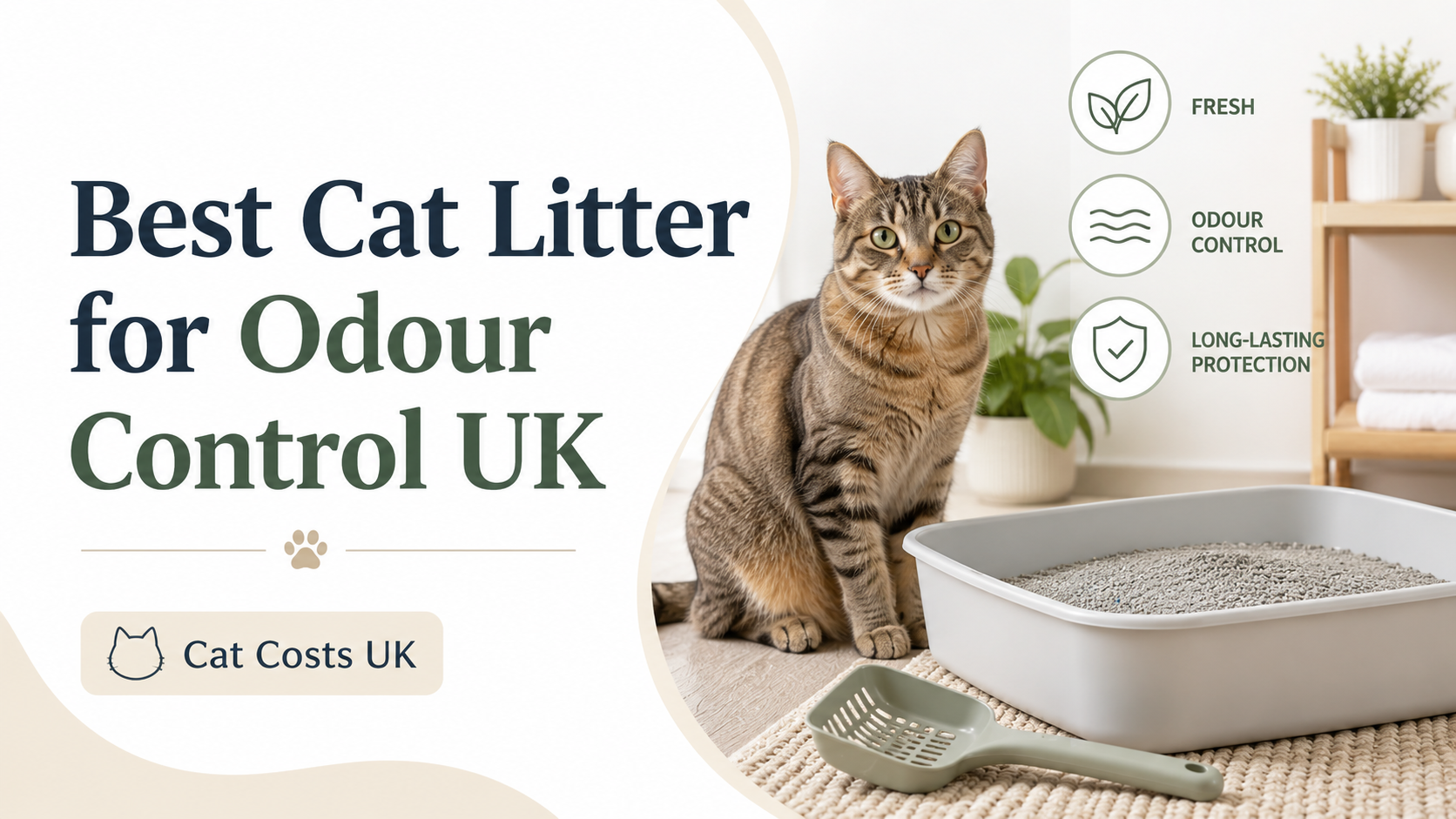
    The best cat litter for odour control is not just the strongest-smelling litter on the shelf. It is the litter your cat will use consistently, that you can scoop easily, and that keeps your home fresher without putting your cat off the tray.

    For most UK cat owners, the best starting point is an unscented clumping litter or a low-tracking pellet-style litter. Scented litter can sound appealing, but some cats dislike strong fragrance.

    Quick picks: best cat litter for odour control UK

    Best forLitter typeCompare options
    Most ownersClumping litter(Ad) Clumping cat litter
    Lower trackingWood pellet litter(Ad) Wood pellet cat litter
    Lightweight optionSilica or crystal litter(Ad) Silica cat litter
    Eco-conscious buyersTofu or plant-based litter(Ad) Tofu cat litter
    Indoor catsLow-dust litter(Ad) Low-dust cat litter

    Best cat litter for most owners

    Clumping litter is a strong choice for many homes because it makes daily scooping easier. If you can remove soiled clumps quickly, the tray usually stays fresher for longer.

    Look for a litter that clumps firmly, does not create too much dust, and is not overly fragranced. Recent buying guides often highlight unscented litter as a safer starting point because strong added scent can be off-putting for cats.

    Best low-tracking cat litter

    If litter gets dragged around the house, try comparing wood pellet or larger-grain litters. Pellet-style litter can track less than fine litter, although some cats dislike the texture at first.

    Change litter gradually if your cat is used to another type. A sudden switch can make some cats avoid the tray.

    Best cat litter for indoor cats

    Indoor cats rely on litter trays full time, so odour control, dust and tracking matter more. A low-dust clumping litter or good pellet litter is usually worth comparing first.

    A litter mat, scoop and spare tray can also make a bigger difference than upgrading litter alone.

    What to check before buying

    • Clumping: firm clumps make scooping easier.
    • Dust: lower dust can be better for small indoor spaces.
    • Tracking: larger particles may spread less around the house.
    • Scent: unscented is often a safer first choice.
    • Weight: heavy bags can be awkward to carry and store.
    • Cat preference: the best litter is useless if your cat refuses it.

    My recommendation

    Start with an unscented clumping litter if you want the easiest all-round option. If tracking is your biggest issue, compare wood pellet or low-tracking formulas. If carrying heavy bags is the problem, look at lighter silica or plant-based options.

    Whatever you choose, scoop regularly and keep the tray clean. Litter alone cannot fix a tray that is not cleaned often enough.

    Related litter setup guides

    Litter choice is only one part of keeping smells and mess under control. The tray, mat and cleaning routine can matter just as much.

    Related guides

    These guides can help you compare the wider cost and setup around litter, trays and new cat essentials.

    FAQs

    What cat litter is best for odour control?

    For many homes, unscented clumping litter is a strong starting point because it makes waste easier to remove quickly.

    Is scented cat litter better?

    Not always. Scent may appeal to humans, but some cats dislike strong fragrance and may avoid the tray.

    How can I stop cat litter smell?

    Scoop regularly, use enough litter, clean the tray properly and choose a litter your cat will use consistently.

    See your likely monthly spend

    Product choices are only part of the budget. Use the Cat Cost Calculator to estimate your own monthly spend across food, litter, care and extras.

    Compare the wider setup

    Use this guide for one decision, then browse the product hub for related essentials before you buy.

    Last updated: 8 August 2026