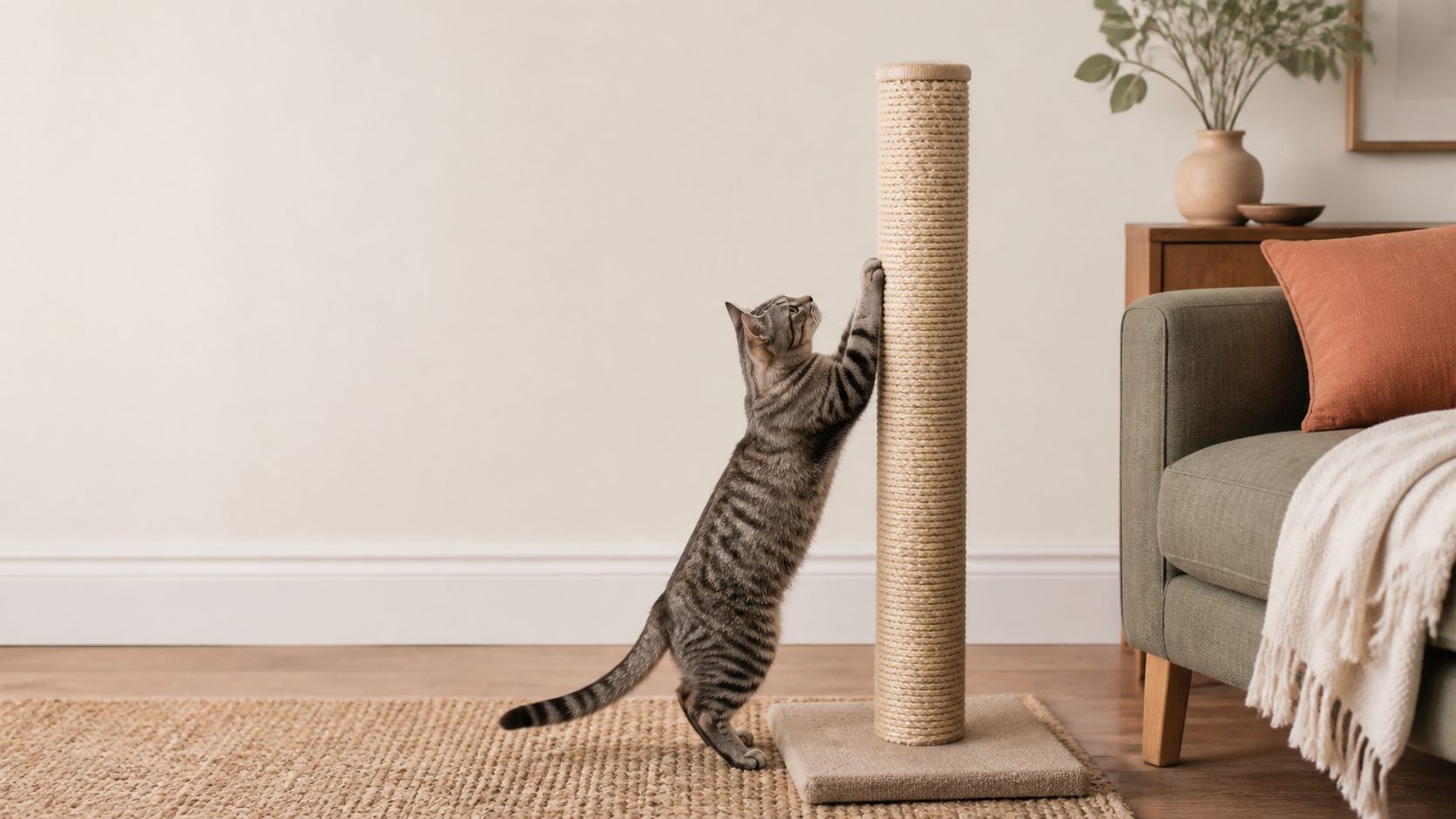
Author: Cat Costs UK

  • Amazon Cat Scratching Post UK: What to Look For Before You Buy

    Amazon Cat Scratching Post UK: What to Look For Before You Buy

    Affiliate disclosure: This article contains Amazon affiliate links. As an Amazon Associate, Cat Costs UK earns from qualifying purchases.

    If you are searching for an Amazon cat scratching post UK, you are likely looking for a quick, affordable way to give your cat somewhere better to scratch than your sofa, carpet or door frames. Amazon has plenty of options, but the cheapest post is not always the best value.

    The best scratching post is tall enough, stable enough and made from a texture your cat actually wants to use. This guide explains what to check before buying, which types suit different cats, and how to avoid wasting money on a post your cat ignores.

    Amazon cat scratching post UK: quick buying guide

    TypeWhy it helpsBest forCompare
    Tall scratching postLets cats stretch fullyAdult cats and sofa scratchers(Ad) Tall posts
    Sisal scratching postDurable, satisfying scratching textureMost cats(Ad) Sisal posts
    Kitten scratching postSmaller and easier to useKittens and small cats(Ad) Kitten posts
    Cat tree with scratching postsCombines scratching, climbing and restingIndoor cats(Ad) Cat tree posts
    Cardboard scratcherCheap and easy to replaceCats that scratch flat surfaces(Ad) Cardboard scratchers
    Budget scratching postLow-cost first optionTrying a new scratcher style(Ad) Budget posts

    What to check before buying a cat scratching post on Amazon

    • Height: adult cats need enough height to stretch properly.
    • Stability: a wobbly post can put cats off using it.
    • Material: sisal rope and sisal fabric are popular scratching surfaces.
    • Base size: wider bases usually feel more secure.
    • Replacement value: cheaper cardboard scratchers may need replacing more often.
    • Placement: the best post still needs to be placed where your cat wants to scratch.
    • Reviews: check comments on wobbling, shedding, size and durability.

    Tall scratching post vs cheap scratching post

    A cheap scratching post can be fine for kittens or as a trial, but adult cats often need more height and stability. If your cat scratches sofa arms, curtains or door frames, a taller post is usually a better long-term buy.

    OptionProsWatch-outsShop
    Tall scratching postBetter stretch and usually more stableCosts more and takes more space(Ad) Tall posts
    Cheap scratching postLower cost and good for testingMay be too short or wobbly(Ad) Cheap posts
    Cat tree scratcherAdds climbing, resting and scratchingNeeds more floor space(Ad) Cat tree scratchers

    Best Amazon scratching post options by cat type

    1. Best for most adult cats: tall sisal scratching posts

    For most adult cats, a tall sisal post is the safest starting point. It gives enough height for stretching and the sisal surface offers a satisfying texture for claws.

    2. Best for kittens: smaller kitten scratching posts

    Kittens may not need a huge post straight away. A smaller post can help them learn where to scratch, but make sure it is still stable and not too light.

    3. Best for indoor cats: cat trees with scratching posts

    Indoor cats often benefit from products that do more than one job. A cat tree with scratching posts gives them somewhere to climb, perch, scratch and rest, which can be better value than buying several separate items.

    4. Best for flat scratching: cardboard scratchers

    Some cats prefer scratching horizontally rather than upright. If your cat scratches carpets, rugs or flat sofa sections, a cardboard scratcher or scratch mat may work better than a post.

    How to get your cat to use a new scratching post

    Place the post where your cat already scratches or stretches, not where it looks neatest. If your cat scratches the sofa, put the post beside that sofa arm first. You can also use treats, toys, catnip or silvervine to make the post more interesting.

    Common buying mistakes

    • Buying a post that is too short for an adult cat.
    • Choosing a lightweight post that wobbles.
    • Putting the post in a room your cat rarely uses.
    • Buying only by price and ignoring height or base size.
    • Choosing a vertical post when your cat prefers flat scratching.
    • Not checking reviews for shedding or weak sisal.
    • Replacing a sofa problem with a post placed too far away.

    Simple shopping checklist

    • Choose tall and stable for adult cats.
    • Choose kitten-sized only for young or small cats.
    • Look for sisal if your cat likes rough textures.
    • Consider cardboard if your cat scratches flat surfaces.
    • Choose a cat tree if your indoor cat needs climbing space too.
    • Place the post near the problem scratching area.
    • Use catnip, toys or treats to encourage first use.

    Useful Cat Costs UK guides

    FAQs

    What is the best cat scratching post on Amazon UK?

    The best option depends on your cat’s size and scratching style. Most adult cats need a tall, stable post with a strong scratching surface such as sisal.

    Are cheap cat scratching posts worth it?

    Cheap posts can be useful for kittens or testing a new style, but very light or short posts may wobble and be ignored by adult cats.

    Is sisal better for cat scratching posts?

    Sisal is a popular option because it gives cats a rough, satisfying texture. It is usually more durable than very soft fabric coverings.

    Where should I put a cat scratching post?

    Place it near where your cat already scratches or stretches. If your cat scratches the sofa, start by putting the post beside that sofa area.

    Last updated: 6 July 2026

  • Sofa Protect Cat Scratcher UK: How to Stop Cats Scratching Your Sofa

    Sofa Protect Cat Scratcher UK: How to Stop Cats Scratching Your Sofa

    Affiliate disclosure: This article contains Amazon affiliate links. As an Amazon Associate, Cat Costs UK earns from qualifying purchases.

    If you are searching for a sofa protect cat scratcher UK, your cat has probably chosen the sofa as their favourite scratching spot. The best solution is usually not one product on its own, but a combination of protection and a better scratching alternative placed exactly where your cat wants to scratch.

    This guide compares sofa corner scratchers, sofa guards, scratch mats, vertical posts and furniture protectors so you can choose the right setup for your home.

    Sofa protect cat scratcher UK: quick buying guide

    OptionHow it helpsBest forCompare
    Sofa corner cat scratcherCovers the area cats commonly scratchSofa arms and corners(Ad) Corner scratchers
    Sofa scratch protectorProtects fabric from clawsPreventing further damage(Ad) Sofa protectors
    Cat scratch matGives a scratchable surface near the sofaFloor or sofa-side scratching(Ad) Scratch mats
    Vertical scratching postRedirects stretching and scratchingCats that scratch upright(Ad) Scratching posts
    Sisal scratch boardCan be placed near problem areasBudget-friendly protection(Ad) Sisal boards
    Furniture tape or guardsMakes the sofa less appealing to scratchShort-term deterrent use(Ad) Furniture protectors

    Why cats scratch sofas

    Cats scratch to stretch, mark territory, maintain claws and relieve energy. Sofas are often targeted because they are stable, textured and in a busy social part of the home. If the sofa arm gives your cat the perfect scratching angle, a small flimsy post in another room is unlikely to solve the problem.

    The best approach is to protect the sofa while offering a better scratching option in the same area. That means matching the height, angle and texture your cat already likes.

    Sofa corner scratcher vs sofa protector

    A sofa corner scratcher gives your cat something acceptable to scratch on the sofa corner. A sofa protector is more about stopping damage. Many homes need both: protection first, then a proper scratcher nearby to redirect the behaviour.

    ProductProsWatch-outsShop
    Sofa corner scratcherTargets the exact problem areaNeeds to fit your sofa shape(Ad) Corner scratchers
    Sofa protector guardHelps stop further damageMay not redirect scratching alone(Ad) Sofa protectors
    Scratching post nearbyGives a better long-term outletMust be stable and tall enough(Ad) Tall scratching posts

    Best sofa protection options by problem

    1. Best for sofa arms: corner cat scratchers

    If your cat scratches the arm or front corner of the sofa, a corner scratcher is the most targeted option. Look for one that fits securely, covers the damaged area and gives your cat a satisfying texture such as sisal.

    2. Best for stopping more damage: sofa scratch guards

    Scratch guards and furniture protectors are useful when your sofa is already being targeted. They help protect fabric while you redirect your cat to a better scratching surface.

    3. Best for cats that scratch flat surfaces: scratch mats

    If your cat scratches rugs, carpets or the base of the sofa, a scratch mat may work better than an upright post. Place it where your cat already scratches rather than hiding it away.

    4. Best long-term fix: tall scratching posts

    A tall, stable scratching post gives your cat a proper place to stretch. If your cat scratches upright sofa arms, choose a post that is tall enough and heavy enough not to wobble.

    How to make a new scratcher more appealing

    Put the scratcher next to the sofa area your cat already uses. Reward your cat when they use it, keep it stable and avoid placing it in a quiet corner they never visit. Some cats also respond well to catnip or silvervine on the new scratcher.

    Common buying mistakes

    • Buying a scratcher that is too short for a full stretch.
    • Putting the scratcher far away from the sofa.
    • Buying a flimsy post that wobbles.
    • Using only deterrents without providing a better scratching option.
    • Choosing a protector that does not fit your sofa shape.
    • Ignoring whether your cat scratches vertically or horizontally.
    • Expecting instant results without moving the scratcher to the right spot.

    Simple shopping checklist

    • Identify where your cat scratches: arm, corner, base, carpet or cushion.
    • Choose a corner scratcher for sofa arms and corners.
    • Choose a scratch mat for flat or floor-level scratching.
    • Add a sofa guard if you need to protect fabric immediately.
    • Use a tall post if your cat likes a full stretch.
    • Place the scratcher next to the problem area.
    • Use catnip or treats to encourage the new scratcher.

    Useful Cat Costs UK guides

    FAQs

    What is the best sofa protect cat scratcher in the UK?

    The best option depends on where your cat scratches. Sofa corner scratchers suit arms and corners, scratch mats suit floor-level scratching, and tall posts suit cats that stretch upwards.

    Do sofa scratch protectors actually work?

    They can help protect the fabric, but they work best when paired with a proper scratcher nearby. Protection alone may not stop your cat wanting to scratch.

    Should I buy a sofa corner scratcher or a scratching post?

    If your cat scratches the sofa corner, a corner scratcher is more targeted. A tall scratching post is better as a long-term outlet, especially if your cat likes stretching upright.

    Where should I put a cat scratcher to protect my sofa?

    Place it next to the exact sofa area your cat already scratches. Once your cat uses it reliably, you can gradually move it if needed.

    Last updated: 6 July 2026

  • Fluffy Cat Bed UK: What to Look For Before You Buy

    Fluffy Cat Bed UK: What to Look For Before You Buy

    Affiliate disclosure: This article contains Amazon affiliate links. As an Amazon Associate, Cat Costs UK earns from qualifying purchases.

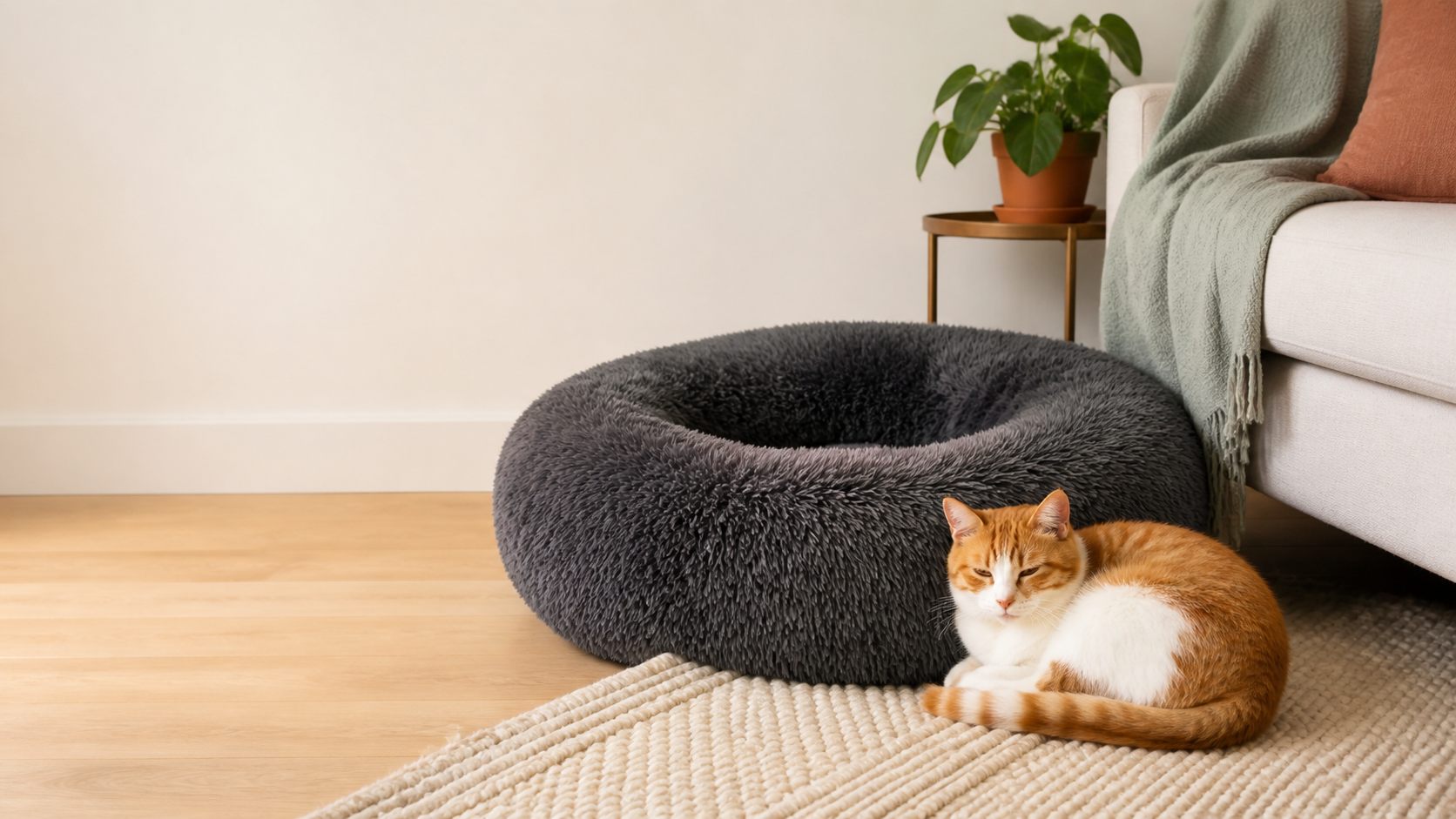
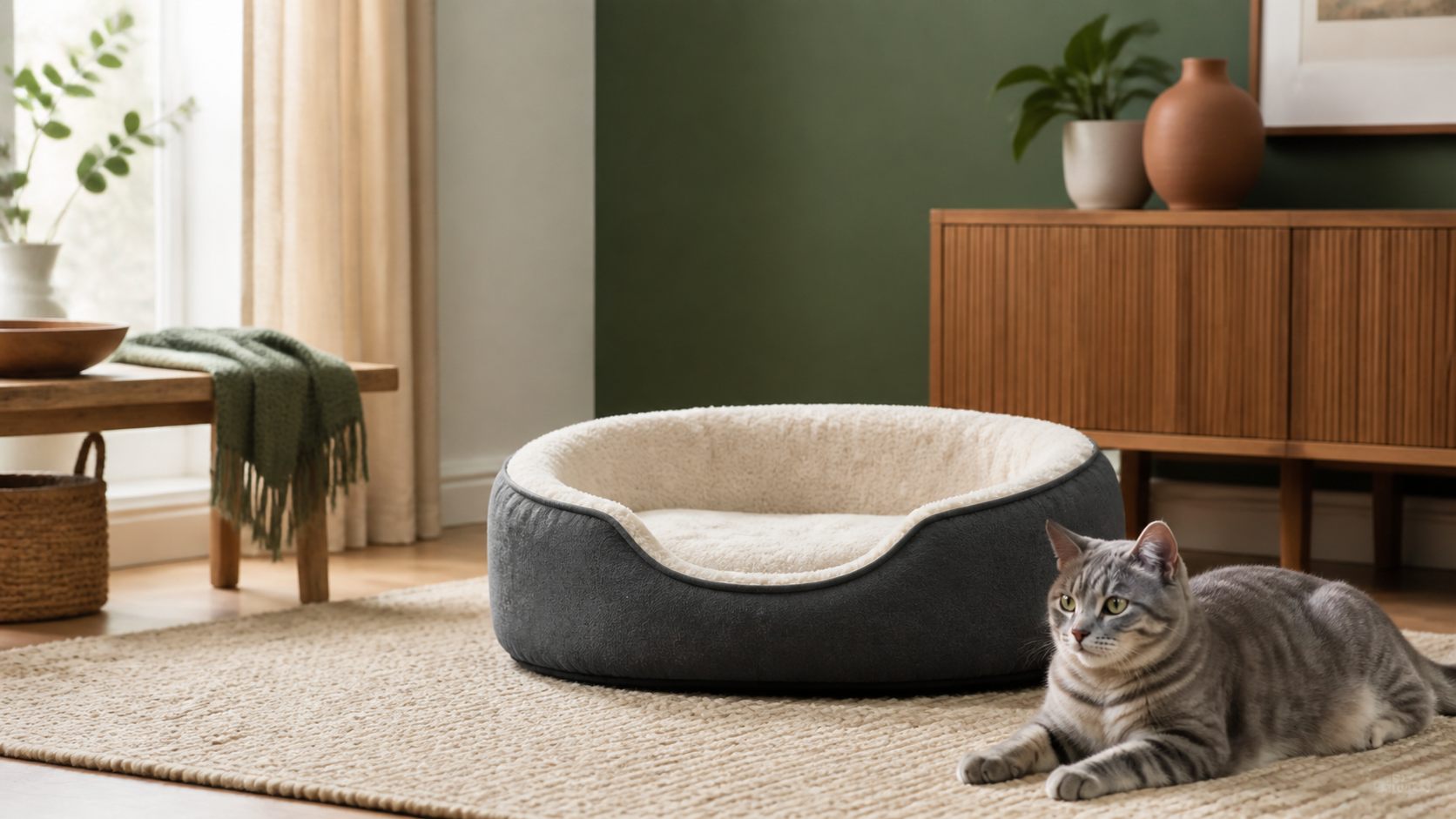
    If you are searching for a fluffy cat bed UK, you are probably looking for a soft, cosy bed your cat will actually use. Fluffy beds can be ideal for cats that knead, curl up tightly, sleep on blankets or seek out soft laundry piles.

    The challenge is choosing a bed that looks comfortable but is also practical. Some fluffy beds are lovely at first but difficult to wash, too small, too flat, or not supportive enough. This guide explains what to check before buying and which styles are worth comparing.

    Fluffy cat bed UK: quick buying guide

    Bed typeWhy cats like itBest forCompare
    Fluffy donut bedSoft raised edges for curling upCats that sleep in a ball(Ad) Donut beds
    Plush open bedSoft surface with easy accessCats that stretch out(Ad) Plush beds
    Fluffy cave bedEnclosed warmth and privacyCats that hide under blankets(Ad) Cave beds
    Washable fluffy bedEasier to keep freshEveryday use(Ad) Washable beds
    Large fluffy bedMore room to stretchBigger cats or multi-cat cuddles(Ad) Large fluffy beds
    Fluffy blanketTurns existing spots into cosy spacesSofas, beds and carriers(Ad) Cat blankets

    What to check before buying a fluffy cat bed

    • Size: check the actual measurements, not just small, medium or large.
    • Washability: removable or machine-washable covers are much easier to maintain.
    • Depth: some cats like deep beds, while others prefer easy step-in access.
    • Support: very soft beds can flatten quickly if they have weak filling.
    • Non-slip base: useful on hard floors and windowsills.
    • Material: long fluffy fabric can collect hair, litter and crumbs.
    • Shape: match the bed to how your cat already sleeps.

    Fluffy donut bed vs fluffy cave bed

    Most buyers end up choosing between a donut-style bed and a cave-style bed. Donut beds are open, soft and easy for cats to curl into. Cave beds are more enclosed and suit cats that like hiding or sleeping under blankets.

    StyleProsWatch-outsShop
    Fluffy donut bedSoft, open, easy to useSome flatten over time(Ad) Donut beds
    Fluffy cave bedWarm, private and enclosedSome cats dislike covered beds(Ad) Cave beds
    Fluffy blanketFlexible and easy to moveLess structured than a bed(Ad) Cat blankets

    Best fluffy bed options by cat type

    1. Best for cats that curl up: fluffy donut beds

    Donut beds are a strong choice for cats that curl into a ball or lean against cushions. The raised edge gives them something to nest into, while the middle stays soft and cosy.

    2. Best for cats that hide: fluffy cave beds

    If your cat sleeps under duvets, behind cushions or inside boxes, a fluffy cave bed may be a better fit than an open bed. Look for one that keeps its shape and has an opening your cat can enter comfortably.

    3. Best for easy cleaning: washable fluffy beds

    Fluffy beds pick up fur, litter and crumbs quickly. If your cat uses the bed daily, washable covers or machine-washable designs are worth prioritising over looks alone.

    4. Best budget option: fluffy cat blankets

    If your cat already has a favourite chair, sofa corner or windowsill, a fluffy blanket may be a better first buy than a full bed. It is cheaper, easier to move and useful in carriers too.

    Where should you put a fluffy cat bed?

    The best place is usually somewhere your cat already chooses to sleep. A quiet corner, sunny window area, sofa end or bedroom spot is more likely to work than a random empty space. If your cat ignores the new bed, try moving it to a favourite sleeping area before assuming they dislike it.

    Common buying mistakes

    • Choosing the fluffiest-looking bed without checking measurements.
    • Buying a bed with no washable cover.
    • Picking a cave bed for a cat that prefers open spaces.
    • Picking an open bed for a cat that prefers hiding.
    • Putting the bed somewhere your cat never sleeps.
    • Choosing a bed that is too small for stretching out.
    • Ignoring reviews about flattening, shedding or poor stitching.

    Simple shopping checklist

    • Check how your cat sleeps: curled, stretched, hidden or elevated.
    • Measure your cat or compare against their current favourite spot.
    • Prioritise washable covers for daily use.
    • Choose a non-slip base for hard floors.
    • Start with a blanket if your cat is fussy about new beds.
    • Choose donut beds for curling and cave beds for hiding.
    • Place the bed somewhere your cat already naps.

    Useful Cat Costs UK guides

    FAQs

    What is the best fluffy cat bed in the UK?

    The best option depends on how your cat sleeps. Donut beds suit cats that curl up, cave beds suit cats that hide, and fluffy blankets suit cats that already have a favourite spot.

    Are fluffy cat beds washable?

    Some are fully machine washable, some have removable covers and some are harder to clean. Always check the washing instructions before buying.

    Do cats prefer donut beds or cave beds?

    Cats that curl up often like donut beds, while cats that hide under blankets may prefer cave beds. Your cat’s current sleeping habits are the best clue.

    Why does my cat ignore a new fluffy bed?

    It may be in the wrong place, smell unfamiliar, or not match how your cat likes to sleep. Try putting it in a favourite nap spot and adding a familiar blanket.

    Last updated: 6 July 2026
  • Heated Cat Beds UK: What to Look For Before You Buy

    Heated Cat Beds UK: What to Look For Before You Buy

    Affiliate disclosure: This article contains Amazon affiliate links. As an Amazon Associate, Cat Costs UK earns from qualifying purchases.

    If you are searching for heated cat beds UK, you are probably looking for a warmer, cosier sleeping spot for your cat during colder months. Heated cat beds can be useful for cats that love warmth, older cats that seek out radiators, or indoor cats that spend a lot of time napping in one place.

    The main thing is choosing the right type. Some beds are genuinely electric, some are self-warming, and some use removable heat pads. This guide explains the differences, what to check before buying, and which extras are worth considering.

    Heated cat beds UK: quick buying guide

    OptionHow it worksBest forCompare
    Self-warming cat bedReflects your cat’s body heatOwners wanting warmth without plugs(Ad) Self-warming beds
    Plug-in heated cat bedUses an electric heating elementHomes where supervised warmth is needed(Ad) Plug-in heated beds
    Microwave heat padRemovable pad warmed before useOccasional extra warmth(Ad) Microwave heat pads
    Heated pet matFlat heated or self-warming matCrates, sofas or favourite nap spots(Ad) Heated mats
    Cosy cave bedEnclosed bed that traps warmthCats that like hiding away(Ad) Cave beds
    Thermal blanketAdds an extra warm layerExisting beds and sofas(Ad) Thermal blankets

    Self-warming vs electric heated cat beds

    Self-warming beds are usually the easiest starting point. They do not need electricity and are designed to reflect your cat’s own body heat. Electric heated cat beds may provide more noticeable warmth, but they need more care, sensible placement and regular checking.

    TypeProsWatch-outsShop
    Self-warming bedNo plug, simple, lower-maintenanceWarmth is more subtle(Ad) Self-warming beds
    Plug-in heated bedMore active warmthCheck safety features, cable and supervision needs(Ad) Electric heated beds
    Microwave heat padUseful for occasional warmthNeeds reheating and careful use(Ad) Heat pads

    What to check before buying a heated cat bed

    • Heating type: check whether it is electric, self-warming or pad-based.
    • Washability: removable, washable covers are much easier to maintain.
    • Cable protection: for plug-in options, check cable placement and chew-resistant design.
    • Size: your cat should be able to curl up comfortably without feeling exposed.
    • Base: non-slip bases are useful on hard floors.
    • Placement: avoid damp areas, draughts and places where cables can be pulled.
    • Escape option: your cat should always be able to move away if they get too warm.

    Best heated bed options by cat type

    1. Best for most cats: self-warming cat beds

    For most owners, a self-warming cat bed is the safest and simplest starting point. It adds comfort without needing a plug, making it ideal for bedrooms, living rooms and quiet corners.

    2. Best for cold rooms: plug-in heated cat beds

    A plug-in heated cat bed may suit a colder room, but choose carefully. Look for pet-specific products, clear safety information, a sensible temperature range and a cable setup that works in your home.

    3. Best for occasional warmth: microwave cat heat pads

    Microwave heat pads are useful when you want warmth without leaving something plugged in. They are often used under a blanket or inside an existing bed, but always follow the heating instructions carefully.

    4. Best for cats that hide: heated mats and cave beds

    Some cats prefer a covered, enclosed space rather than an open bed. If your cat likes hiding under blankets, a cave-style bed or a warm mat inside a cosy corner may be more appealing.

    Safety tips for heated cat beds

    Heated products should be used sensibly. Choose pet-specific products, read the instructions, check cables regularly and place the bed somewhere dry and stable. Avoid using damaged products, and do not force your cat to stay on a heated surface.

    For elderly cats, kittens or cats with health conditions, take extra care and ask your vet if you are unsure whether extra heat is suitable.

    Common buying mistakes

    • Buying an electric bed when a self-warming bed would be enough.
    • Forgetting to check the cable setup before ordering.
    • Choosing a bed that is too small or too exposed.
    • Buying a bed with no removable washable cover.
    • Putting the bed somewhere damp, draughty or awkward.
    • Assuming every cat will use a new bed immediately.
    • Not checking reviews for warmth, durability and washability.

    Simple shopping checklist

    • Start with self-warming if you want the lowest-maintenance option.
    • Choose plug-in only if you are comfortable with the safety checks.
    • Measure your cat’s current favourite sleeping spot.
    • Look for removable, washable covers.
    • Check cable length and placement for electric beds.
    • Use a blanket or cave bed if your cat likes enclosed spaces.
    • Place the bed where your cat already chooses to nap.

    Useful Cat Costs UK guides

    FAQs

    Are heated cat beds safe?

    They can be safe when you choose a pet-specific product, follow the instructions and check it regularly. Self-warming beds are a simpler no-plug option for many homes.

    Are self-warming cat beds actually warm?

    Self-warming beds usually provide gentle warmth by reflecting body heat. They are not as warm as electric beds, but many cats like the cosy feel.

    Do cats prefer heated beds or cave beds?

    It depends on the cat. Some prefer open warm mats, while others prefer enclosed cave-style beds that trap warmth and feel more private.

    Where should I put a heated cat bed?

    Place it somewhere dry, stable and quiet, ideally close to where your cat already likes to sleep. For plug-in beds, make sure the cable is safely positioned.

    Last updated: 6 July 2026

  • Organic Dry Cat Food UK: What to Look For Before You Buy

    Organic Dry Cat Food UK: What to Look For Before You Buy

    Affiliate disclosure: This article contains Amazon affiliate links. As an Amazon Associate, Cat Costs UK earns from qualifying purchases.

    If you are searching for organic dry cat food UK, you are probably looking for a more natural dry food option that is still practical, affordable and easy to store. Dry cat food can be convenient, but it is worth checking the label carefully before buying purely because a pack looks premium or eco-friendly.

    This guide explains what to look for in organic dry cat food, how it compares with natural dry food, and which feeding and storage products can help you get better value from each bag.

    Organic dry cat food UK: quick buying guide

    OptionWhy it may helpBest forCompare
    Organic dry cat foodFocuses on organic ingredients and dry convenienceOwners wanting a more natural dry option(Ad) Organic dry food
    Natural dry cat foodMay offer simpler ingredient positioningOwners comparing alternatives to standard dry food(Ad) Natural dry food
    Grain-free dry cat foodDifferent recipe style, not the same as organicCats already suited to grain-free recipes(Ad) Grain-free dry food
    Senior organic dry foodOlder-cat life stage with a more natural positioningSenior cats that still enjoy biscuits(Ad) Senior dry food
    Airtight storage containerKeeps dry food fresher after openingOwners buying larger bags(Ad) Storage containers
    Measuring scoop or scalesMakes portions more consistentOwners feeding dry food daily(Ad) Measuring tools

    What does organic dry cat food mean?

    Organic dry cat food usually means the brand is positioning the recipe around organic ingredients and a more natural style of production. However, every product is different, so do not rely on the front of the pack alone. Check the ingredient list, feeding guide and whether the food is complete for daily feeding.

    Organic does not automatically mean the food is the best choice for every cat. The right food still needs to suit your cat’s age, appetite, routine and any advice from your vet.

    What to check before buying organic dry cat food

    • Complete food: check it is suitable as a main daily food, not just a complementary product.
    • Life stage: adult, kitten and senior cats need different food types.
    • Named ingredients: look for clearly named meat or fish sources.
    • Feeding guide: dry food should be measured rather than poured by eye.
    • Bag size: larger bags may offer better value but need airtight storage.
    • Texture and kibble size: make sure the biscuits suit your cat’s eating style.
    • Budget: organic options may cost more, so choose something sustainable monthly.

    Organic dry cat food vs natural dry cat food

    Organic and natural are not always the same thing. Organic usually refers to how ingredients are produced, while natural is often used more broadly by brands to describe a simpler or less processed positioning. When comparing products, look past the wording and check the actual ingredients, life stage and feeding guide.

    TypeMain appealWatch-outShop
    Organic dry cat foodOrganic ingredient positioningUsually more expensive(Ad) Organic dry food
    Natural dry cat foodSimple, natural-style recipesNot always certified organic(Ad) Natural dry food
    Grain-free dry cat foodDifferent recipe formatNot the same as organic(Ad) Grain-free dry food

    Best products to use with organic dry cat food

    Organic dry food can be more expensive than standard dry food, so storage and portion control matter. These add-on products are useful because they help reduce waste, keep food fresh and make each bag go further.

    1. Airtight cat food storage containers

    Once a dry food bag is opened, a storage container helps protect the food from air, moisture and household smells. This is especially useful if you buy larger organic dry food bags to improve value.

    2. Measuring scoops and food scales

    Dry food is easy to over-serve if you guess portions. A scoop or small digital scale makes feeding more consistent and helps you follow the pack guidance more closely.

    3. Automatic cat feeders

    Automatic feeders can work well with dry food if you want more consistent mealtimes. They are useful for busy households or cats that ask for food between meals.

    4. Slow feeder bowls

    If your cat eats biscuits quickly, a slow feeder bowl can make meals last longer and add a little enrichment. This is a useful extra if you are feeding dry food every day.

    Is organic dry cat food worth it?

    Organic dry cat food may be worth considering if you want a more natural-style food and are comfortable paying more for that positioning. It can also appeal if you are already trying to make your cat care routine more environmentally friendly.

    However, it is not always the cheapest route. If budget is tight, compare organic dry food with natural dry food and standard complete dry food before deciding. The best choice is one your cat likes, you can afford consistently, and you can store properly.

    Common buying mistakes

    • Assuming organic automatically means best for every cat.
    • Buying a large bag before checking if your cat likes the food.
    • Forgetting to check whether the food is complete.
    • Confusing organic, natural and grain-free claims.
    • Leaving dry food in an opened bag without airtight storage.
    • Guessing portions instead of measuring them.
    • Choosing a premium food that is too expensive to keep buying.

    Simple shopping checklist

    • Choose a complete dry food that matches your cat’s life stage.
    • Compare organic, natural and grain-free options before buying.
    • Start with a smaller bag if your cat is fussy.
    • Check the feeding guide and measure portions.
    • Use an airtight container for larger bags.
    • Consider an automatic feeder if you want consistent mealtimes.
    • Link food choice back to your monthly cat budget.

    Useful Cat Costs UK guides

    FAQs

    What is the best organic dry cat food in the UK?

    The best option depends on your cat’s age, food preferences, budget and whether the product is complete for daily feeding. Compare ingredients, feeding guidance and bag size before buying.

    Is organic dry cat food better than normal dry cat food?

    Not automatically. Organic dry cat food may appeal if you want a more natural or environmentally minded option, but the food still needs to suit your cat and your budget.

    Is organic dry cat food the same as grain-free cat food?

    No. Organic refers to ingredient production, while grain-free refers to recipe format. A food can be organic, grain-free, both or neither.

    What should I buy with dry cat food?

    Useful extras include an airtight storage container, measuring scoop, pet food scales, slow feeder bowl or automatic feeder.

    Last updated: 6 July 2026

  • Cat Food for Older Cats UK: Senior Cat Food Buying Guide

    Cat Food for Older Cats UK: Senior Cat Food Buying Guide

    Affiliate disclosure: This article contains Amazon affiliate links. As an Amazon Associate, Cat Costs UK earns from qualifying purchases.

    If you are searching for cat food for older cats UK, you are probably trying to find something that suits a senior cat’s appetite, routine and changing needs. Older cats may become fussier, prefer softer food, drink less than you would like, or need a more consistent feeding setup.

    This guide compares senior wet cat food, senior dry cat food and useful feeding products that can make life easier for older cats. If your cat’s appetite, weight, drinking habits or behaviour has changed, speak to your vet before simply changing food.

    Cat food for older cats UK: quick buying guide

    RouteBest for and benefitCost per day and monthWatch-out and next action
    Senior wet foodCats that prefer softer meals or set mealtimes.Use the food calculator with the current pack price, grams and daily amount.Check the pack says complete where needed. Compare food routes.
    Senior dry foodOwners who value storage and simple portioning.Calculate a live pack rather than relying on price per bag; the tool shows daily and 30-day estimates.Check kibble size, storage and whether your cat will eat it. Compare lower-cost routes.
    Mixed wet and dry feedingHouseholds combining texture, routine and convenience.Calculate wet and dry packs separately, then add the two monthly figures.It is easy to undercount the total. Calculate the combined budget.
    Smaller trial packFussy cats or owners testing a new texture before buying in bulk.Usually a higher cost per gram; compare the real 30-day cost after feeding amount.A lower unit price is not a saving if the food is refused. Check subscription terms later.
    Food storage and feeding supportOwners managing smaller portions, opened packs or multi-cat routines.Add one-off products and replacement filters or parts to the wider budget.These do not replace suitable food or veterinary advice. Browse feeding products.
    Retailer prices, delivery, stock and feeding guidance change. Use the current pack information in the calculator; this table is a comparison route, not a fixed price list.

    Who should avoid switching food solely by age? If your cat is eating reliably and has no reason to change, do not switch simply because a label says senior. If appetite, weight, drinking, chewing or behaviour changes, ask your vet before treating food as the answer.

    When is a cat classed as older or senior?

    Many cat foods use senior ranges for cats from around seven years old, although every cat ages differently. Some cats stay active and settled for years, while others need changes to food texture, bowl position, hydration or routine sooner.

    Rather than buying only by age, look at your actual cat. Appetite, chewing comfort, activity level, body condition and litter habits can all affect what food and feeding setup works best.

    What to look for in senior cat food

    • Complete food: check the food is complete for daily feeding.
    • Senior life stage: choose food designed for older cats where appropriate.
    • Texture: pate, mousse, chunks, gravy and dry biscuits suit different cats.
    • Clear feeding guide: look for simple daily guidance on the pack.
    • Palatability: older cats can become fussier, so start with smaller packs.
    • Storage: wet food needs lids or covers once opened, while dry food needs airtight storage.
    • Vet advice: ask your vet if appetite, weight, drinking or behaviour changes.

    Senior wet cat food vs senior dry cat food

    Wet and dry senior cat food can both be useful, but they solve different problems. Wet food can suit older cats that prefer softer textures or set mealtimes. Dry food is convenient, easier to store and works well with some feeders, but it should be measured carefully.

    Food typeProsWatch-outsShop
    Senior wet foodSofter texture and useful for routine mealsOpened food needs safe storage(Ad) Wet senior food
    Senior dry foodConvenient and easy to use in feedersMay not suit cats with chewing issues(Ad) Dry senior food
    Mixed feedingGives variety and flexibilityCount both wet and dry meals(Ad) Mixed senior packs

    Useful products for older cats at mealtimes

    Before buying feeding accessories, check whether your current bowls, storage containers and feeding routine already do the job. The options below are worth comparing only when they address a specific problem in your home.

    1. Raised cat bowls

    A raised bowl can make mealtimes feel easier for some older cats, especially if they seem uncomfortable eating from floor-level bowls. Choose a stable, easy-clean option rather than something too tall.

    2. Shallow bowls

    Some cats dislike deep bowls because their whiskers touch the sides. A shallow bowl can be a simple, low-cost upgrade if your older cat leaves food around the edges or pulls food onto the floor.

    3. Cat water fountains

    Some cats prefer moving water. A fountain can be worth considering if your older cat ignores a normal bowl, although it needs regular cleaning and filter changes.

    4. Microchip feeders

    If you have more than one cat, a microchip feeder can stop a younger or greedier cat eating the older cat’s food. This is especially useful when one cat needs a different food or feeding routine.

    5. Wet food lids and storage containers

    Older cats may eat smaller portions more often, which can leave opened tins, trays or pouches. Lids and airtight containers help reduce waste and keep food fresher between meals.

    Common mistakes when buying food for older cats

    • Buying a large case before knowing if your cat likes the texture.
    • Assuming every senior food is the same.
    • Ignoring changes in appetite, drinking or litter habits.
    • Switching food too quickly.
    • Forgetting to check whether the food is complete.
    • Letting another cat steal the senior cat’s food.
    • Not adapting bowls or feeding setup as your cat gets older.

    Simple shopping checklist

    • Choose complete senior food if your cat is ready for an older-cat formula.
    • Start with a smaller pack or mixed box if your cat is fussy.
    • Choose wet, dry or mixed feeding based on what your cat eats reliably.
    • Add a shallow or raised bowl if mealtimes look awkward.
    • Consider a fountain if your cat prefers moving water.
    • Use a microchip feeder if another cat steals food.
    • Speak to your vet if appetite, weight or behaviour changes.

    Plan the food budget: Use the UK cat cost calculator to compare food, litter and routine costs before you commit to a recurring order.

    Useful Cat Costs UK guides

    FAQs

    What is the best cat food for older cats in the UK?

    The best option depends on your cat’s age, appetite, teeth, routine and preferences. Look for a complete senior food and ask your vet if your cat’s eating habits have changed.

    Is wet or dry food better for older cats?

    Wet food can suit older cats that prefer softer meals, while dry food is convenient and easy to store. Some cats do well with a mix of both.

    Do older cats need senior cat food?

    Not always, but many owners move to senior food as their cat gets older. Check the life stage on the pack and speak to your vet if you are unsure.

    What should I buy for an older cat’s feeding area?

    Useful products include shallow bowls, raised bowls, water fountains, wet food lids, storage containers and microchip feeders for multi-cat homes.

    Last updated: 8 August 2026

  • High Calorie Wet Cat Food UK: Calories, Choices & Cost

    High Calorie Wet Cat Food UK: Calories, Choices & Cost

    Affiliate disclosure: This article contains Amazon affiliate links. As an Amazon Associate, Cat Costs UK earns from qualifying purchases.

    If your vet has agreed that your cat needs a more energy-dense food, compare the exact recipe’s kilocalories (kcal) per 100g, nutritional purpose and cost. “Senior”, “premium” or “high protein” on the front of a pack does not tell you its calorie density.

    Our practical choices: start with ZIWI Peak canned Chicken if an ordinary complete wet food fits the plan. Consider KatKin Mooo if you want a denser fresh-food alternative and can manage frozen deliveries. Discuss Hill’s a/d Urgent Care with your vet when recovery feeding is the actual need. These serve different purposes; the highest calorie figure does not decide which is right.

    If your cat stops eating, contact your vet. Do not wait for a new food delivery. PDSA’s appetite guidance explains why assessment matters. If your cat is underweight, Cats Protection recommends veterinary assessment to establish the cause and appropriate plan.

    Two canned foods and a fresh alternative

    Exact recipekcal per 100gPurpose and main trade-off
    ZIWI Peak Original canned Chicken for cats132.5Complete everyday food; check acceptance before a multipack
    KatKin Mooo157Complete fresh food; freezer space and recurring-order management
    Hill’s Prescription Diet a/d Urgent Care129.7Vet-directed recovery diet; not a routine long-term choice

    Figures are manufacturer declarations checked on 4 October 2026, for the food as served, not its dry matter. Sources and limits are linked below. The table is a focused comparison, not a claim to cover every UK food or establish a universal “high calorie” threshold.

    ZIWI Peak Chicken: our canned-food starting point

    The UK manufacturer’s Original canned Chicken recipe declares 1,325 kcal/kg, which converts to 132.5 kcal/100g. It is described as complete and balanced. Compare this with your cat’s current food: you may not need to change brands if the existing complete diet already meets the agreed plan.

    Choose it for: a canned-food routine when your vet agrees an ordinary complete recipe is suitable. The drawback: the Amazon offer checked is a 12 × 185g multipack. That is a substantial commitment if your cat has never tried this recipe. Look for a small trial quantity elsewhere before committing, and compare the delivered cost per calorie.

    This is not a replacement for a prescribed therapeutic diet. Do not apply the calorie figure to ZIWI dog food, dry food or another flavour. Check the exact can and recipe when it arrives.

    KatKin Mooo: a denser fresh-food alternative

    KatKin’s Mooo recipe page declares 157 kcal/100g. This is a fresh cooked beef recipe, supplied frozen, rather than a shelf-stable tin. KatKin describes its recipes as complete and balanced.

    Choose it for: a fresh-food routine when the recipe suits your cat and a freezer delivery fits your household. The drawback: you need freezer space, fridge defrosting and attention to recurring orders. A denser food is not necessarily cheaper or more acceptable to your cat.

    Read KatKin’s delivery and plan information before ordering. Its trial information says a trial creates a subscription. Compare the ongoing total, including delivery, and the deadline for changing or cancelling the next order. A first-box offer does not establish the continuing cost. These KatKin links are ordinary information links, not affiliate links.

    Hill’s a/d: discuss recovery feeding with your vet

    The UK a/d Urgent Care information declares 1,297 kcal/kg, or 129.7 kcal/100g. Hill’s positions it for nutritional restoration and convalescence and advises veterinary input. Its page also limits use to intermittent or supplemental feeding and advises against long-term feeding beyond six months.

    Choose it only as part of the vet-agreed recovery plan. It is not our everyday weight-gain pick. Ask the vet which food, amount and duration are appropriate; do not substitute an ordinary high-energy recipe for a prescribed diet. The link above is manufacturer information, not an affiliate shopping link.

    How much smaller is an energy-dense portion?

    For comparison, 100 kcal is approximately 75.5g of ZIWI Chicken, 63.7g of Mooo or 77.1g of a/d, using the declared figures above. These are comparison portions, not daily feeding recommendations. Your cat’s target and any mixed feeding need an individual plan.

    An illustrative food at 80 kcal/100g would need 125g to supply the same 100 kcal. ZIWI’s declared density would require about 40% less food mass in that comparison. That does not prove better nutrition, lower cost or that your cat will eat enough of it.

    Compare feeding cost, not just price per tin

    Use delivered pack price ÷ total calories in the pack × 100 to calculate the cost per 100 kcal. Total pack calories are pack grams × kcal per 100g ÷ 100. Compare foods only after checking they suit the same feeding purpose.

    Worked example, using invented prices: ten 100g trays at 125 kcal/100g contain 1,250 kcal. If the delivered pack costs £15, that is £1.20 per 100 kcal. This is not a current offer for any food above. Include delivery and food you cannot use before it needs discarding.

    For a daily budget, use delivered pack price ÷ total pack grams × daily grams fed. Enter your actual pack price and agreed feeding amount in our cat food cost calculator. It estimates spending; it does not set a calorie target. For fresh subscriptions, compare the recurring delivered total for the same period using our subscription checklist.

    Check the food’s purpose before changing meals

    Cats Protection’s feeding guidance explains the difference between complete and complementary food. A complementary chicken tin or topper is not automatically a suitable main diet, however appealing its ingredients look. Check the label for the exact recipe and life stage.

    Kitten food serves growth; do not make it the default adult weight-gain recommendation. A senior label also does not establish calorie density. If your cat has a prescribed diet, discuss any replacement with the vet. Introduce an agreed new food gradually unless the vet gives different instructions.

    Measure what your cat actually eats, not just what you put in the bowl. Start with a manageable quantity, follow the pack’s storage instructions, and account for other food and treats in the agreed plan. A new bowl or a topper is not a substitute for assessing poor appetite.

    How we selected these foods

    This is a research-based comparison with no hands-on feeding trial or independently measured calorie results. We checked the named UK manufacturer recipe information and general PDSA/Cats Protection guidance on 4 October 2026. We verified the exact ZIWI Chicken 12 × 185g Amazon listing. Stock, sellers, formulations and plan terms can change; compare the current label and checkout details.

    The choices cover an ordinary canned recipe, a fresh alternative and veterinary recovery feeding. Medical suitability and palatability remain individual; the sources provide product facts, not a diagnosis.

  • Weight Management Cat Food UK: What to Look For Before You Buy

    Weight Management Cat Food UK: What to Look For Before You Buy

    Affiliate disclosure: This article contains Amazon affiliate links. As an Amazon Associate, Cat Costs UK earns from qualifying purchases.

    If you are comparing weight management cat food UK options, the best result usually comes from combining the right food with better portion control. The food matters, but so does how much you serve, how often you feed, and whether your cat can access extra food around the home.

    This guide explains what to check before buying, how wet and dry options compare, and which feeding products can make mealtimes easier to manage. For any major change to your cat’s feeding routine, speak to your vet first.

    Weight management cat food UK: quick buying guide

    Product typeWhy it can helpBest forCompare
    Dry weight management foodEasy to measure and storeCats that eat biscuits(Ad) Dry food
    Wet weight management foodGood for set mealtimesCats that prefer wet meals(Ad) Wet food
    Automatic cat feederControls meal timingBusy households(Ad) Automatic feeders
    Microchip feederStops food stealingMulti-cat homes(Ad) Microchip feeders
    Slow feeder bowlSlows fast eatingCats that rush meals(Ad) Slow feeders
    Pet food scalesMakes portions more accurateOwners who guess portions(Ad) Food scales

    What to check before buying

    • Complete food: choose a complete cat food, not just toppers or treats.
    • Life stage: check whether it is for adult, senior or kitten feeding.
    • Feeding guide: look for clear daily serving guidance.
    • Texture: choose wet or dry based on what your cat eats reliably.
    • Storage: larger dry bags need airtight storage.
    • Budget: choose a food you can keep buying consistently.

    Wet vs dry weight management cat food

    Wet and dry food can both work, but they suit different homes. Wet food is useful for set mealtimes and cats that prefer softer meals. Dry food is convenient and works well with automatic feeders, but it is easier to over-pour unless you measure it.

    TypeProsWatch-outsShop
    Wet foodGood for set mealsOpened food needs storing properly(Ad) Wet options
    Dry foodConvenient and easy to storeBest measured accurately(Ad) Dry options
    Mixed feedingUseful for varietyCount both wet and dry meals(Ad) Measuring tools

    Best products to make feeding easier

    1. Food scales

    If you currently pour dry food by eye, small digital scales are one of the most useful low-cost buys. They make it easier to follow the serving guide and keep meals consistent.

    2. Automatic feeders

    An automatic feeder can help when mealtimes are inconsistent or when your cat asks for food between meals. They are especially useful for dry food and busy households.

    3. Slow feeder bowls and puzzle feeders

    Slow feeders and puzzle feeders can make meals last longer and add enrichment. They are useful for cats that finish their food quickly and then immediately look for more.

    4. Microchip feeders

    In multi-cat homes, one cat may eat from another cat’s bowl. A microchip feeder can help keep meals separate and make feeding more controlled.

    Common feeding mistakes to avoid

    • Guessing dry food portions instead of measuring them.
    • Leaving food down all day for a cat that keeps returning to the bowl.
    • Not counting treats, lickable snacks or leftovers.
    • Switching food too quickly.
    • Buying a new food but serving the old portion size.
    • Letting one cat steal another cat’s food.

    Simple buying checklist

    • Start with a complete food that matches your cat’s life stage.
    • Buy a small pack first if your cat is fussy.
    • Add food scales if you do not measure portions.
    • Consider an automatic feeder if mealtimes are inconsistent.
    • Consider a microchip feeder if you have more than one cat.
    • Use a slow feeder or puzzle feeder if your cat eats too quickly.

    Useful Cat Costs UK guides

    FAQs

    What is the best weight management cat food in the UK?

    The best option depends on your cat’s age, routine and food preferences. Look for a complete food with clear feeding guidance and ask your vet if you are unsure.

    Is wet or dry food better?

    Wet food can work well for set meals, while dry food is convenient and works well with feeders. The most important thing is feeding a consistent amount.

    Are automatic feeders worth it?

    They can be worth it if your cat asks for food between meals or if your household needs a more consistent routine.

    Last updated: 6 July 2026

  • Best Eco-Friendly Cat Food UK: 4 Practical Picks

    Best Eco-Friendly Cat Food UK: 4 Practical Picks

    Ad: This guide contains Amazon affiliate links. As an Amazon Associate I earn from qualifying purchases.

    The best eco-friendly cat food is a complete food your cat will eat, with a packaging or sourcing benefit you can actually check. For a cat that already eats kibble, our starting pick is Scrumbles Chicken dry food. For wet-food households, start with the small Scrumbles pâté tin selection.

    We also recommend Scrumbles gravy pouches for cats that prefer chunks, and Lily’s Kitchen Organic Turkey pâté if organic ingredients are your priority. These are four different buying choices, not a ranking of their total carbon footprints: we do not have comparable life-cycle measurements for the finished foods.

    All four showed a Prime-eligible offer on Amazon UK when checked on 1 October 2026. Confirm your selected pack, seller and delivery date; the gravy pouches had a longer delivery estimate. These are researched recommendations, not hands-on feeding tests.

    Best eco-friendly cat food UK: quick comparison

    Our pickWhy it is worth comparing
    Dry food
    Scrumbles Chicken, 2.5kg (Ad)
    Complete kibble in a mono-PE recyclable bag.
    Best for: cats already happy with dry food.
    Catch: usually needs a soft-plastic collection route.
    Wet food in tins
    Scrumbles pâté selection, 6 × 80g (Ad)
    Complete chicken, salmon and turkey recipes in recyclable tins.
    Best for: trying a smooth wet-food texture.
    Catch: a six-tin box is a trial, not a month’s supply.
    Gravy texture
    Scrumbles gravy selection, 8 × 85g (Ad)
    Chicken, chicken with turkey and chicken with duck in recyclable mono-material pouches.
    Best for: cats that reject pâté.
    Catch: check soft-plastic recycling and delivery.
    Organic ingredients
    Lily’s Kitchen Organic Turkey, 19 × 85g (Ad)
    Complete adult pâté with organic meat ingredients and a published recycling guide.
    Best for: an established organic-food preference.
    Catch: not turkey-only, and organic does not prove lower emissions.

    1. Scrumbles Chicken dry cat food: our dry-food pick

    Choose this if: your cat eats kibble reliably and you want a straightforward packaging benefit.

    Our dry-food pick
    Scrumbles Chicken dry cat food, 2.5kg
    £19.49

    Complete chicken dry food in a recyclable mono-PE bag. A useful choice for cats that already eat kibble; check your local soft-plastic collection route.

    We earn a commission if you make a purchase, at no additional cost to you.
    11/04/2026 03:17 am GMT

    This 2.5kg bag contains complete chicken dry food. Scrumbles says its dry bags use mono-PE plastic, with a resealable closure. Its packaging guide directs owners to recycle the bags alongside carrier bags at suitable supermarket collections.

    The reason to choose it is practical: you can keep feeding a familiar dry-food format while using a pack with an explained disposal route. Resealing between meals also helps protect the food you have paid for.

    The catch: this is a 2.5kg bag, so it is a commitment if your cat has never tried the recipe. Try a smaller pack first where available. Recyclability also depends on getting the empty bag to an accepting collection point; it does not automatically belong in your household recycling.

    Our verdict: the starting choice for a dry-food household with access to soft-plastic recycling. There is no need to switch a contented wet-food cat to kibble just to buy it.

    2. Scrumbles pâté selection tins: our wet-food pick

    Choose this if: your cat likes smooth wet food and you want a small variety pack before buying larger quantities.

    Our wet-food pick
    Scrumbles pâté selection tins, 6 × 80g
    £6.00

    Complete wet food in six recyclable tins: chicken, salmon and turkey pâtés. A small variety pack to try before buying in bulk; check that your cat likes the smooth texture.

    We earn a commission if you make a purchase, at no additional cost to you.
    11/04/2026 03:17 am GMT

    The 6 × 80g selection contains two each of chicken, salmon and turkey pâtés. These are complete recipes. Scrumbles confirms that the tins and lids can be recycled with metals and the outer cardboard with card; rinse the tins and follow your local collection instructions.

    We would start here for a wet-food household because the small box lets you see which flavours your cat accepts. The tin format is also useful if your council accepts metal food containers but you cannot conveniently use a soft-plastic drop-off.

    The catch: the six tins total 480g, so a low box price can hide a higher ongoing food bill. Work out the cost of the daily feeding quantity before committing to regular purchases. Keep opened food refrigerated and follow the pack’s storage limit.

    Our verdict: our first wet-food option to compare. Choose the gravy pouches below if your cat prefers pieces in sauce to a smooth pâté.

    3. Scrumbles gravy pouches: for cats that prefer chunks

    Choose this if: your cat enjoys gravy and you can use a collection scheme that accepts the pouch material.

    For cats that prefer gravy
    Scrumbles poultry gravy pouches, 8 × 85g
    £6.48

    Chicken, chicken with turkey and chicken with duck in recyclable pouches. A small texture trial for gravy-loving cats; check your recycling route and current delivery date.

    We earn a commission if you make a purchase, at no additional cost to you.
    11/04/2026 03:17 am GMT

    This 8 × 85g poultry selection offers chicken, chicken with turkey and chicken with duck. Scrumbles describes its wet recipes as complete and balanced. The distinguishing feature here is texture: pieces in gravy give you another option if a smooth pâté goes untouched.

    The brand says these pouches use a single plastic material and can go through accepting soft-plastic collections. That is a specific claim about this range, so do not assume that every cat food pouch can use the same route.

    The catch: clean the empty pouch as instructed and check collection rules. At our check, this pack’s Prime delivery estimate was later than the other Scrumbles options; read the date before ordering if you are nearly out of food.

    Our verdict: the useful alternative for a gravy-loving cat. It is a better fit than buying tins purely for their packaging if your cat refuses the texture.

    4. Lily’s Kitchen Organic Turkey pâté: the organic option

    Choose this if: you specifically want organic meat ingredients and your adult cat already accepts smooth pâté.

    Organic ingredient option
    Lily’s Kitchen Organic Turkey pâté, 19 × 85g
    £24.55

    Complete adult wet food with organic turkey, pork and beef. Choose it for organic ingredients and a smooth pâté texture; the recipe is not turkey-only.

    We earn a commission if you make a purchase, at no additional cost to you.
    11/04/2026 03:17 am GMT

    This 19 × 85g adult wet-food pack is a complete recipe. The current manufacturer recipe includes organic turkey, pork and beef, so the turkey name does not mean a single-protein food. Check the ingredients on the pack you receive, particularly if you are avoiding an ingredient.

    Lily’s Kitchen publishes a packaging recycling guide and advises checking the actual pack during packaging changes. This option belongs here for its organic ingredients and an explained recycling route, not because it has been shown to have the smallest carbon footprint.

    The catch: 19 trays are a bigger taste commitment than the six-tin selection. Organic sourcing also does not establish that this finished food has lower emissions than the alternatives.

    Our verdict: choose it when organic sourcing matters to you and the recipe suits your cat. For a first wet-food trial, the smaller Scrumbles selection is the easier starting point.

    How to choose more sustainable cat food without wasting money

    Start with suitability. Look for “complete” food appropriate to your cat’s age. Complementary foods and treats are not full diets on their own. If your cat needs a veterinary diet, discuss any change with your vet first. A recyclable pack is not a reason to replace a diet prescribed for a medical need.

    Compare the daily cost, not just the pack price. Divide the current pack price by the total grams, then multiply by the daily grams needed for your cat. Wet and dry food have different water content and feeding quantities, so price per kilogram alone is not a fair meal-cost comparison. Use the product feeding guide and account for any other food or treats.

    Check the disposal route you will actually use. “Recyclable” describes a possibility, not a guarantee that your council accepts the material. Follow the instructions on the pack and local collection rules. “Natural”, “grain-free” and a green bag do not establish a lower environmental impact.

    Buy a trial before stocking up. Keep the texture close to what your cat already likes. Measure portions, store opened food as directed and keep dry food’s original date and batch details. Our cat food storage guide covers keeping kibble secure between meals.

    Changing your cat’s food gradually

    PDSA recommends introducing a new food over a couple of weeks, offering small amounts separately at first and progressing when your cat accepts it. Avoid an abrupt swap. Keep fresh water available and use the pack feeding guidance. If your cat stops eating or becomes unwell, contact your vet.

    Eco-friendly cat food UK: frequently asked questions

    What is our best eco-friendly cat food pick?

    Scrumbles Chicken is our dry-food pick for its explained recyclable-bag route. The Scrumbles pâté selection is our wet-food starting point. Choose the gravy pouches for a different texture or Lily’s Kitchen if organic ingredients are the priority. None is established here as the lowest-carbon food.

    Is organic cat food automatically better for the environment?

    Organic sourcing is one consideration. It does not tell you the finished food’s total impact from ingredients, manufacturing, transport and disposal. Our organic pick is an option for that preference, not a carbon ranking.

    Are tins better than cat food pouches?

    It depends on the exact packaging and your collection options. The Scrumbles tins have a metal recycling route; its newer gravy pouches use mono-material plastic. Choose a format your cat eats and recycle it as instructed. Packaging alone does not determine the whole food’s footprint.

    What about insect-based cat food?

    Yora makes a complete insect-based cat food and is worth investigating if the protein source is your priority. We did not find a verified Prime offer in our Amazon check, so it is outside the Amazon shortlist above. Check suitability and the manufacturer’s current evidence before treating an ingredient change as a measured environmental saving.

    How we selected these recommendations

    We checked exact Amazon UK pack sizes and Prime offers, then compared manufacturer recipe and packaging information: Scrumbles Chicken dry food, pâté tins, gravy recipes, pouch recycling and Lily’s Kitchen Organic Turkey. We favoured clear buyer fit and specific checkable claims. We have not independently measured emissions or tested which food your cat will prefer.

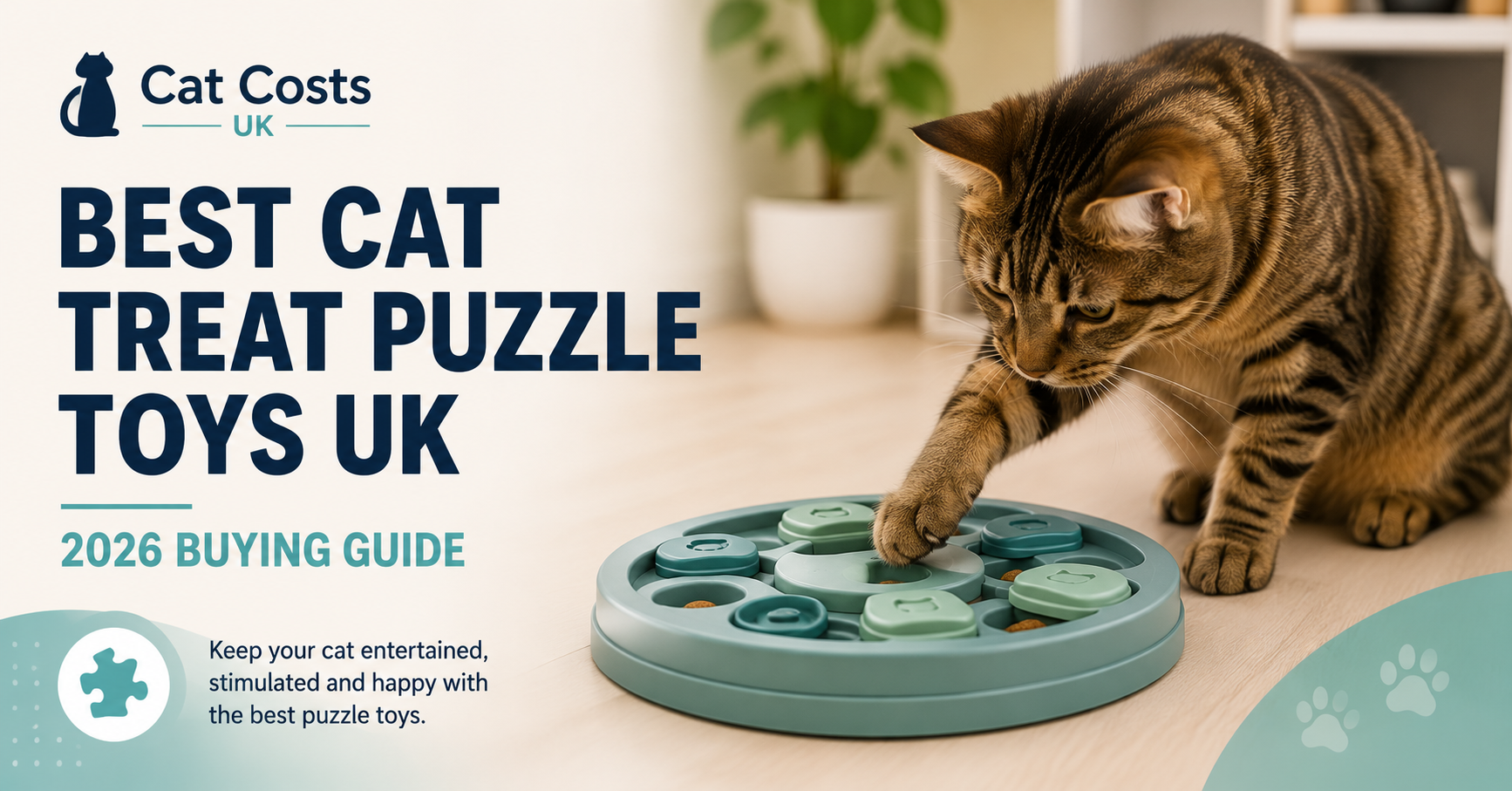
  • Best Cat Treat Puzzle Toys UK: 2026 Buying Guide

    Best Cat Treat Puzzle Toys UK: 2026 Buying Guide

    Affiliate disclosure: This article contains Amazon affiliate links. As an Amazon Associate, Cat Costs UK earns from qualifying purchases.

    Cat treat puzzle toys can be a low-cost way to add enrichment to your cat’s routine. They encourage your cat to work for small rewards, which can be especially useful for indoor cats, food-motivated cats and cats that need more activity at home.

    Best cat treat puzzle toys UK: quick answer

    For most cats, the best first choice is a simple beginner treat puzzle or lick mat. They are usually easier to introduce than complex puzzle boards, easier to clean than some multi-part toys, and a safer starting point before spending more on advanced enrichment toys.

    Quick picks: cat treat puzzle toys UK

    Best forProduct typeWhy it makes senseCompare options
    BeginnersSimple treat puzzleGood first step before buying harder puzzles.(Ad) Compare beginner treat puzzles
    Wet treatsLick matUseful for paste treats and slower treat time.(Ad) Compare cat lick mats
    Active catsRolling treat toyAdds movement for cats that enjoy chasing.(Ad) Compare treat balls
    Indoor catsEnrichment toy setHelps rotate play and feeding activities.(Ad) Compare cat enrichment toys

    How to choose safely

    This guide compares enrichment toys by practical factors such as difficulty level, cleaning, stability, supervision, food suitability and whether the toy fits your cat’s interest level.

    Unless stated otherwise, products have not been hands-on tested by Cat Costs UK. Always check current product details, safety notes, dimensions, return policies and customer feedback before buying.

    Best for beginners: simple treat puzzles

    A simple treat puzzle is usually the safest first buy. Look for a design with shallow sections, smooth edges and no small loose parts. If the toy is too difficult, many cats simply walk away, so beginner-friendly is usually better than clever-looking.

    (Ad) Compare beginner cat treat puzzles on Amazon.

    Best for wet treats: cat lick mats

    Lick mats can work well with cat-safe paste treats or wet food. They are useful if you want a simple enrichment product that slows treat time without needing lots of moving pieces. Choose one that is easy to wash and check whether it is suitable for dishwasher cleaning before buying.

    (Ad) Compare cat lick mats on Amazon.

    Best for active cats: treat balls

    Treat balls can suit cats that enjoy chasing, batting and moving around. They are less ideal for nervous cats or cats that become frustrated quickly. Check that the opening works with the treats you already buy, otherwise the toy may release food too quickly or not at all.

    (Ad) Compare cat treat balls on Amazon.

    What to check before buying

    • Difficulty: start with an easy toy and increase complexity later.
    • Cleaning: choose simple shapes if you plan to use soft treats or wet food.
    • Stability: avoid toys that slide around too easily or frustrate your cat.
    • Size and parts: small pieces should not come loose.
    • Supervision: watch your cat the first few times they use it.
    • Food suitability: check whether it works with dry treats, kibble, wet food or paste treats.
    • Interest: some cats prefer wand toys, tunnels, scratchers or climbing furniture instead.

    Are cat puzzle toys worth it?

    Cat puzzle toys can be worth it for indoor cats, playful cats and cats that enjoy treat-based games. They are usually a lower-cost enrichment option compared with larger products like cat trees, cat wall shelves or exercise wheels.

    They are less useful if your cat is not food-motivated, gets frustrated quickly, or already prefers interactive play with you. In that case, a wand toy, tunnel, scratching post or window perch may be a better first purchase.

    My recommendation

    Start with a simple treat puzzle or lick mat rather than an expensive advanced puzzle. If your cat enjoys it, rotate different enrichment toys to keep things interesting and avoid relying on one toy every day.

    Related guides

    FAQs

    Are treat puzzle toys good for cats?

    They can be good for enrichment, especially for indoor cats that enjoy treat-based games. Start with an easy puzzle and supervise your cat at first.

    What is the best first puzzle toy for a cat?

    A simple beginner treat puzzle or lick mat is usually the best first option. It lets you see whether your cat enjoys food-based enrichment before buying more complex toys.

    Can cats use dog puzzle toys?

    Some dog puzzle toys may be too large, heavy or difficult for cats. If you use one, check the size, moving parts and treat openings carefully and supervise your cat.

    Plan the wider cat setup

    The product is only one part of the decision. Use the calculator to estimate the wider monthly budget, then browse the product hub for related essentials before you buy.

    Last updated: 2 July 2026