Affiliate disclosure: This article contains Amazon affiliate links. As an Amazon Associate, Cat Costs UK earns from qualifying purchases.
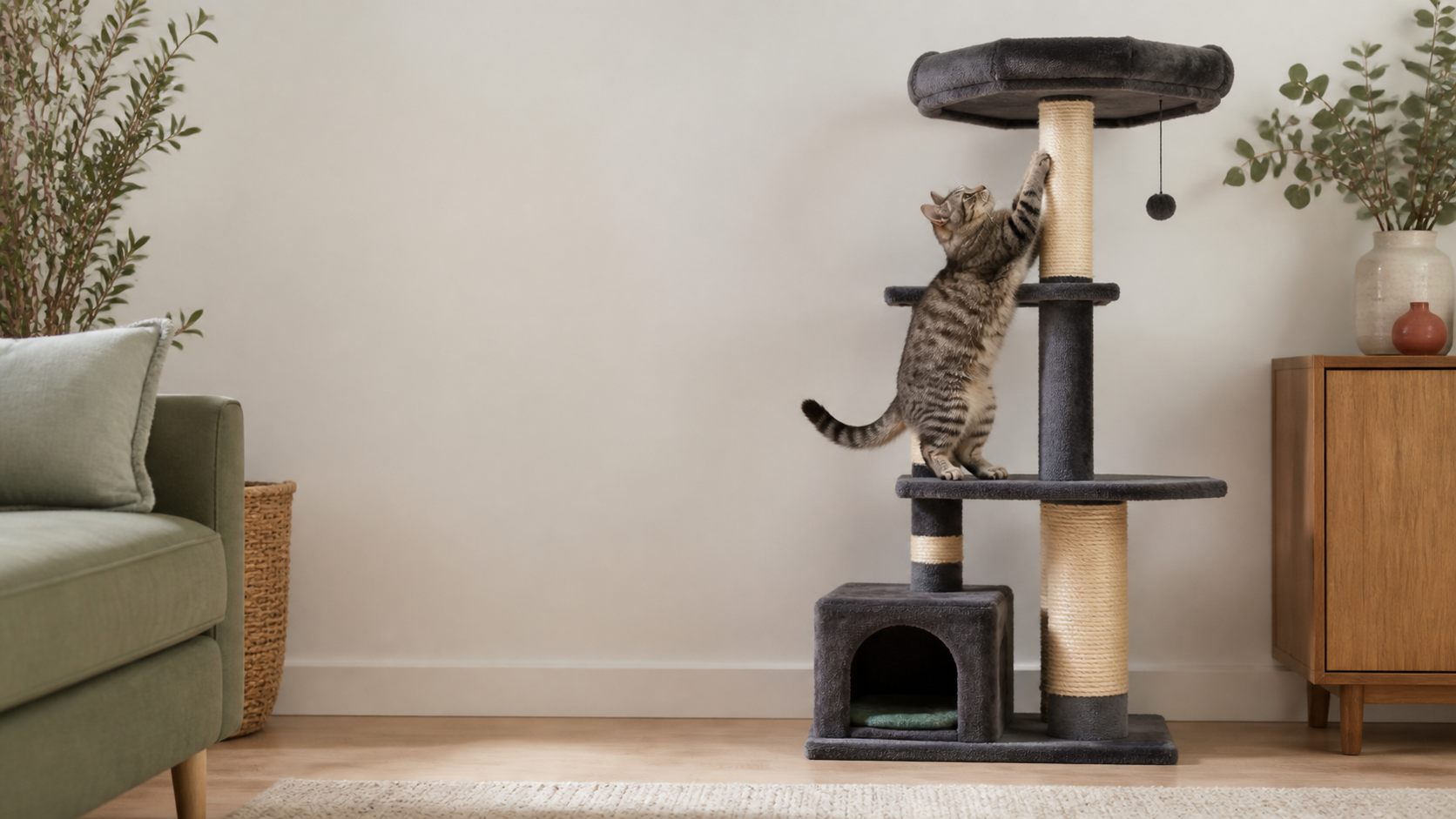
If you are searching for a cat gym UK, you are probably looking for a way to give your cat more climbing, scratching, playing and exercise space indoors. This is especially useful for indoor cats, young cats, energetic cats or cats that keep climbing furniture they should not be climbing.
A cat gym can mean different things: a large cat tree, a climbing frame, a wall-mounted setup, a tunnel system or a scratching and activity station. This guide explains the main options and how to choose the best setup for your home.
Cat gym UK: quick buying guide
| Cat gym type | What it offers | Best for | Compare |
|---|---|---|---|
| Cat tree gym | Climbing, scratching, perching and resting | Most indoor cats | (Ad) Cat tree gyms |
| Large cat climbing frame | More vertical space and activity | Energetic cats | (Ad) Climbing frames |
| Wall-mounted cat gym | Uses wall space for climbing | Smaller homes with free wall space | (Ad) Wall cat gyms |
| Cat tunnel and play set | Running, hiding and play | Kittens and playful cats | (Ad) Tunnel play sets |
| Scratching post activity centre | Scratching plus basic play | Budget-friendly enrichment | (Ad) Activity centres |
| Cat shelves | Creates climbing routes on walls | Cats that like high places | (Ad) Cat shelves |
What is a cat gym?
A cat gym is any product or setup that gives your cat more opportunities to climb, scratch, jump, hide, perch and play. It does not have to look like a human gym. For cats, the key features are vertical height, stable scratching areas, interesting levels and safe places to rest.
For indoor cats, a cat gym can be one of the most useful purchases because it adds activity and enrichment without needing outdoor access. It can also help redirect energy away from sofas, curtains and worktops.
Cat gym vs cat tree
A cat tree is often the easiest type of cat gym to buy. It usually combines platforms, scratching posts, beds and hiding spaces in one product. A cat gym can be broader and may include wall shelves, tunnels, climbing frames or multiple pieces arranged together.
| Option | Pros | Watch-outs | Shop |
|---|---|---|---|
| Cat tree | All-in-one climbing and scratching option | Needs floor space | (Ad) Cat trees |
| Wall cat gym | Uses vertical space and looks modern | Needs secure wall fitting | (Ad) Wall gyms |
| Tunnel play setup | Good for running, hiding and interactive play | Less vertical exercise | (Ad) Tunnel sets |
What to check before buying a cat gym
- Stability: climbing products must feel secure and not wobble.
- Height: cats often enjoy vertical space, but the setup still needs to suit your room.
- Scratching areas: sisal posts or scratch panels add practical value.
- Resting spots: platforms, hammocks or beds make the gym more useful.
- Assembly: check reviews for build quality and instructions.
- Floor space: measure the footprint before ordering.
- Cat size: bigger cats need wider platforms and stronger posts.
Best cat gym options by cat type
1. Best for most indoor cats: cat tree gyms
A cat tree gym is the best starting point for most homes because it combines multiple functions in one item. Look for a stable base, good scratching posts, usable platforms and a height that suits your room.
2. Best for energetic cats: large climbing frames
If your cat is constantly jumping, climbing or racing around the house, a larger climbing frame may be worth the space. These give more levels and usually offer better exercise than a small post.
3. Best for small homes: wall-mounted cat gyms
A wall-mounted cat gym can be a smart option if you have limited floor space. Shelves, steps and hammocks can create a climbing route, but they must be installed securely and placed at sensible heights.
4. Best budget option: tunnels and activity centres
If a full cat gym is too expensive or too large, tunnels and activity centres are a cheaper way to add play and movement. They are especially useful for kittens and playful indoor cats.
Where should you put a cat gym?
Place the cat gym where your cat already spends time. A living room corner, window area or home office can work well because cats often like to be near people while still having their own space. Avoid unstable flooring, blocked doorways and places where a tall product could be knocked.
If your cat ignores the gym at first, try moving toys, treats or a familiar blanket onto it. Placement often matters as much as the product itself.
Common buying mistakes
- Buying a cat gym that is too small for an adult cat.
- Choosing height without checking stability.
- Forgetting to measure floor space before ordering.
- Buying a wall setup without being able to install it securely.
- Choosing a product with platforms too small for bigger cats.
- Ignoring scratching surfaces and only focusing on beds.
- Putting the gym somewhere your cat never spends time.
Simple shopping checklist
- Choose a cat tree gym for the easiest all-in-one option.
- Choose a wall gym if you have secure wall space but limited floor space.
- Choose tunnels if you want a lower-cost play option.
- Measure the footprint and height before buying.
- Check platform size for larger cats.
- Prioritise scratching posts and stable bases.
- Place it somewhere your cat already likes to be.
Useful Cat Costs UK guides
- Best Products for Indoor Cats UK
- Indoor Cat Enrichment Ideas UK
- Cat Trees vs Cat Shelves UK
- Amazon Cat Scratching Post UK
- Sofa Protect Cat Scratcher UK
- Cat Starter Kit UK
FAQs
What is the best cat gym in the UK?
The best option depends on your space and your cat’s behaviour. Most homes are best starting with a stable cat tree gym, while smaller homes may suit wall-mounted shelves or tunnels.
Is a cat gym the same as a cat tree?
A cat tree can be a type of cat gym. Cat gyms can also include wall shelves, tunnels, climbing frames and activity centres.
Are cat gyms good for indoor cats?
Yes, they can be useful because they add climbing, scratching, perching and play opportunities indoors.
Where should I put a cat gym?
Put it somewhere your cat already spends time, such as a living room corner, window area or quiet home office space.
Last updated: 6 July 2026
Leave a Reply